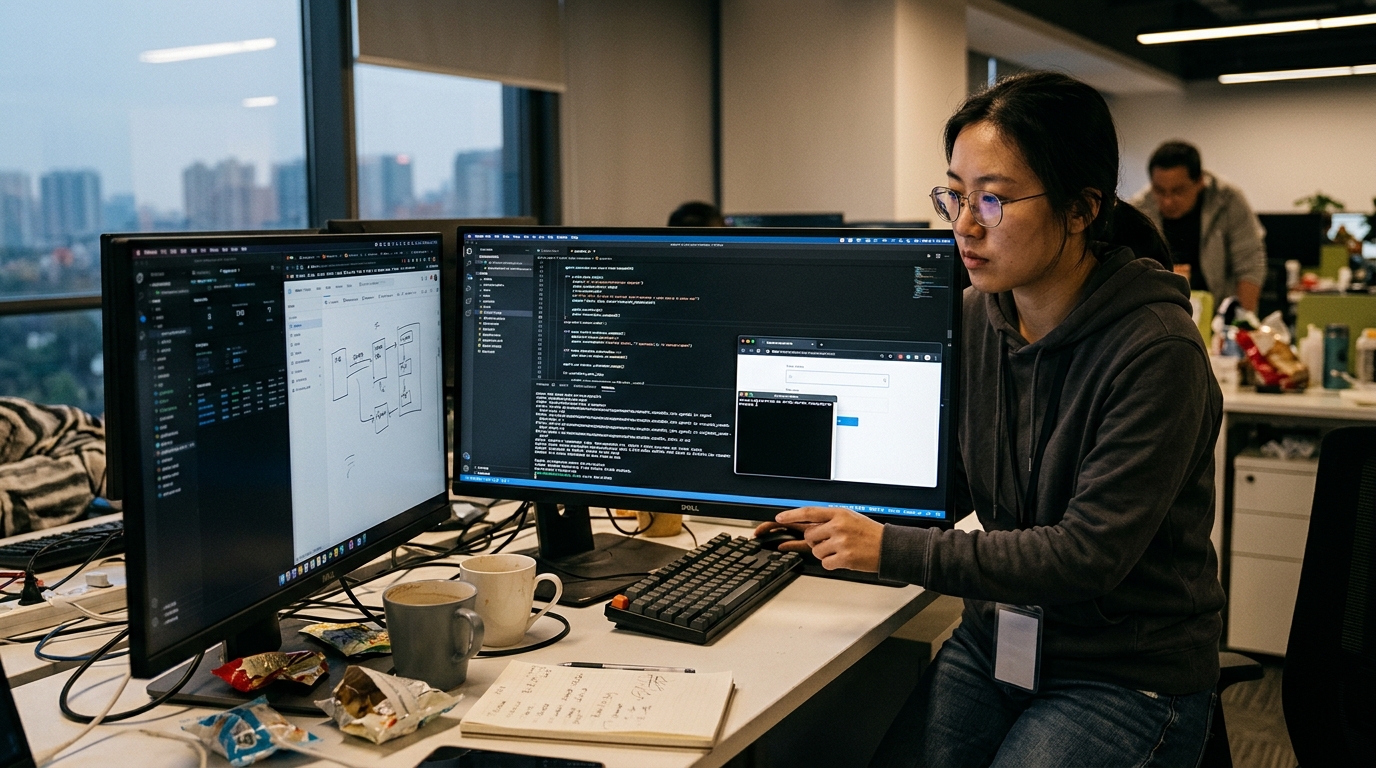
The global developer community is in a state of ferment as a new open-source tool based on the DeepSeek-V3 model managed to amass over 8,700 GitHub stars in a remarkably short period. The tool, which many are calling a "clone" of Anthropic’s Claude Code, highlights a fundamental shift in the AI balance of power: Silicon Valley-level quality is no longer the exclusive preserve of American tech giants.
The Rise of DeepSeek and the Challenge to Anthropic
Until recently, Anthropic's Claude 3.5 Sonnet was considered the undisputed king of AI-assisted coding. The release of Claude Code, a command-line interface (CLI) tool capable of autonomously writing, testing, and executing code, set the bar very high. However, high token pricing and access restrictions created a vacuum in the market.
DeepSeek, the China-based research lab, filled this gap with its V3 model. The GitHub community reacted instantly, creating tools that mimic Claude Code’s functionality but utilize the DeepSeek API, which offers similar performance at a fraction of the cost. The success of this "clone" is not just a story of imitation, but a testament to the maturity of open-weights models.
- Cost Efficiency: DeepSeek-V3 is up to 10 times cheaper than Claude 3.5 Sonnet for similar tasks.
- Performance Benchmarks: In coding-specific evaluations, DeepSeek competes neck-and-neck with top-tier proprietary models.
- Global Accessibility: Free from the geographical restrictions often imposed by US-based providers.
The Viral Moment and Community Power
The developer behind the project saw their repository go viral within hours. This phenomenon underscores a deeper truth: developers prefer tools that grant them control. Unlike closed platforms, the DeepSeek clone allows users to see exactly how their data is being processed and to customize the tool to their specific environment.
"It's no longer about who has the largest model, but who provides the best value to the end user," says a market analyst. "The fact that an independent developer can disrupt the market using DeepSeek is a loud message to Anthropic and OpenAI."
GitHub dynamics act as a democratic evaluation mechanism. The 8,700 stars are not just a number; they are a vote of confidence in an ecosystem that moves faster than corporate boards. The ease with which DeepSeek was integrated into workflows originally intended for Claude shows that API compatibility is becoming the new battlefield for AI dominance.
Geopolitical Implications and the AI Future
DeepSeek's success also carries a strong geopolitical dimension. While the US attempts to restrict China's access to advanced semiconductors, DeepSeek proves that algorithmic innovation can compensate for hardware limitations. The ability of Chinese researchers to train world-class models with greater resource efficiency is a game-changer for the industry.
For developers in Europe and the rest of the world, this development is welcome. Competition leads to lower prices and faster innovation. However, questions regarding security and code provenance persist. Depending on a model controlled by an entity in a different jurisdiction always carries risks, but for many, the economic benefit and technical excellence outweigh the concerns.
Conclusion: The End of Monopolies?
The case of the DeepSeek Claude Code clone is a warning shot. The "castles" of closed models are beginning to be besieged by the efficiency of open-source and alternative providers. As we move further into 2026, the ability of a model to be "good enough" and "extremely cheap" is proving more powerful than being "the best" but inaccessible. The AI revolution will not only happen in the offices of billionaires but in the command lines of millions of developers worldwide.