In the rapidly shifting landscape of Artificial Intelligence, efficiency is beginning to trump raw scale. The emergence of Deepclaude, a hybrid framework that bridges China’s DeepSeek-R1 with Anthropic’s Claude 3.5 Sonnet, marks a watershed moment for the developer community. The value proposition is as simple as it is disruptive: maintaining the premium experience of the Claude Code tool while slashing operational costs to one-seventeenth (1/17) of the original price. This development isn't just a technical optimization; it's a direct assault on the high-margin business models of Silicon Valley’s elite.
The Architecture of Affordability: How Deepclaude Operates
Deepclaude is built on the philosophy of "model routing" and the decoupling of cognitive labor. In traditional AI-assisted coding, a single monolithic model is tasked with everything: understanding the context, reasoning through the logic, and generating the syntax. Deepclaude bifurcates this process. It utilizes DeepSeek-R1—an open-weights model that has stunned the industry with its reasoning capabilities—to handle the "Chain of Thought" (CoT) processing. Once the logic is mapped out, the baton is passed to Anthropic’s Claude 3.5 Sonnet for the final execution and code generation.
This hybrid approach leverages the specific strengths of both models. DeepSeek-R1 is incredibly cost-effective at logical analysis, often matching or exceeding OpenAI’s o1 in specific benchmarks. However, Claude 3.5 Sonnet remains the industry benchmark for writing clean, idiomatic code that adheres to complex project structures. By limiting the expensive Anthropic model to the final output phase, the overall token expenditure is decimated without sacrificing the quality of the end product.
Challenging the Status Quo of Agentic Tools
Anthropic recently made waves with the release of Claude Code, a command-line interface (CLI) agent capable of navigating directories, executing terminal commands, and autonomously fixing bugs. While its power is undeniable, the cost associated with high-frequency API calls—especially in large codebases—can quickly become a barrier for independent developers and startups. Deepclaude effectively acts as an "alternative brain" for this agentic workflow.
Industry analysts suggest that this movement highlights a broader trend: the commoditization of reasoning. When an open-weights model can provide o1-level logic at a fraction of the cost, the competitive advantage shifts from the model itself to the orchestration layer. Deepclaude isn't merely a "hack"; it is empirical proof that the market will always gravitate toward economic efficiency, bypassing "walled gardens" if their entry fees remain prohibitively high.
Geopolitical and Economic Implications
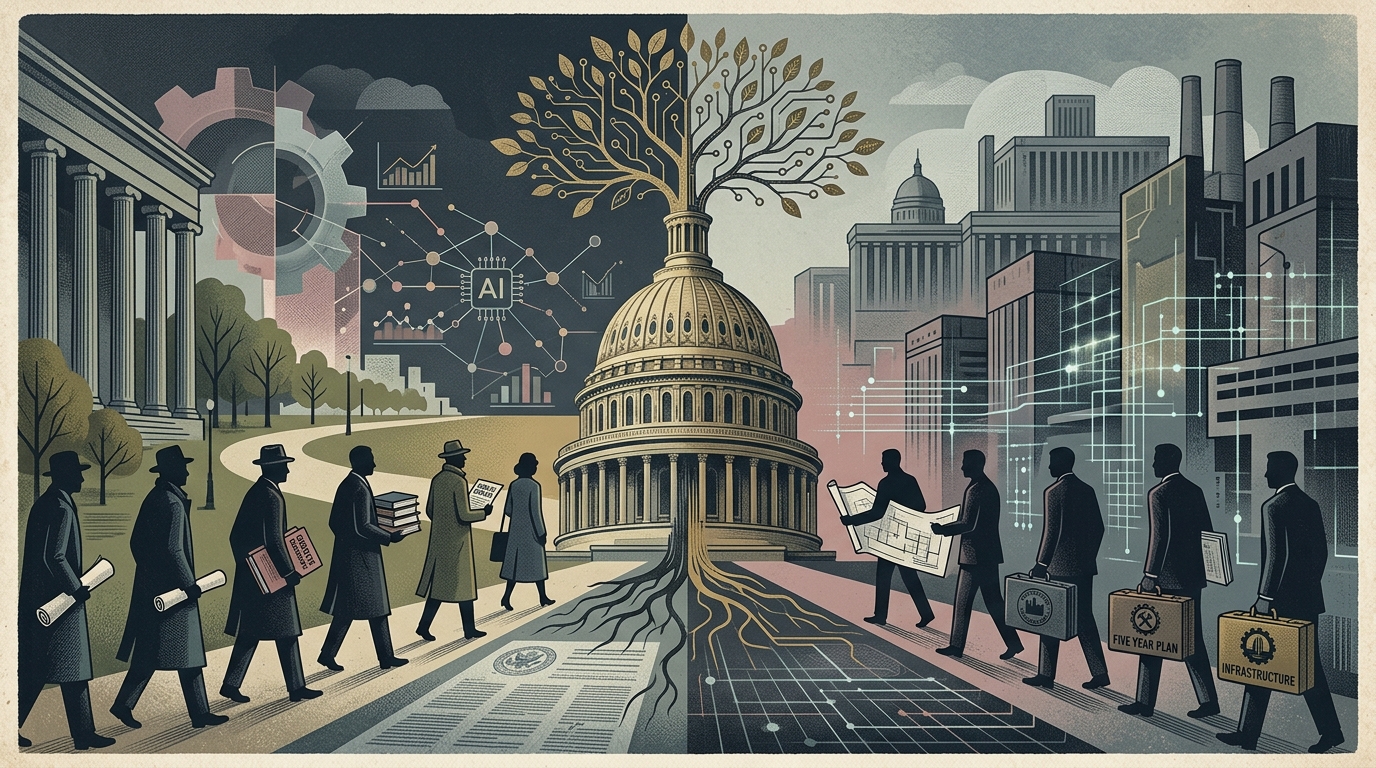
The fact that a Chinese model sits at the heart of this cost-reduction strategy cannot be overlooked. The success of DeepSeek-R1 and its seamless integration into Western developer workflows via tools like Deepclaude demonstrates that the technological barriers currently being debated in geopolitical circles are highly porous. Developers prioritize performance and ROI over the geographic origin of an algorithm. If incumbents like Anthropic and OpenAI do not aggressively pivot their pricing strategies, they risk becoming "luxury providers" in a market increasingly dominated by hybrid, cost-optimized solutions.
- A 94% reduction in costs enables AI integration into projects previously deemed financially unviable.
- The adoption of hybrid models mitigates vendor lock-in, offering developers more architectural flexibility.
- Development velocity is poised to increase as the financial penalty for iterative AI testing is removed.
In conclusion, Deepclaude serves as a harbinger for a new era in software engineering. It is an era where AI intelligence is measured not just by its parameter count, but by its ability to deliver value sustainably. For Anthropic, this is a clarion call to innovate beyond the model layer. For the global developer community, it represents the true democratization of AI-powered coding, proving that the most powerful tools are those that are both brilliant and affordable.