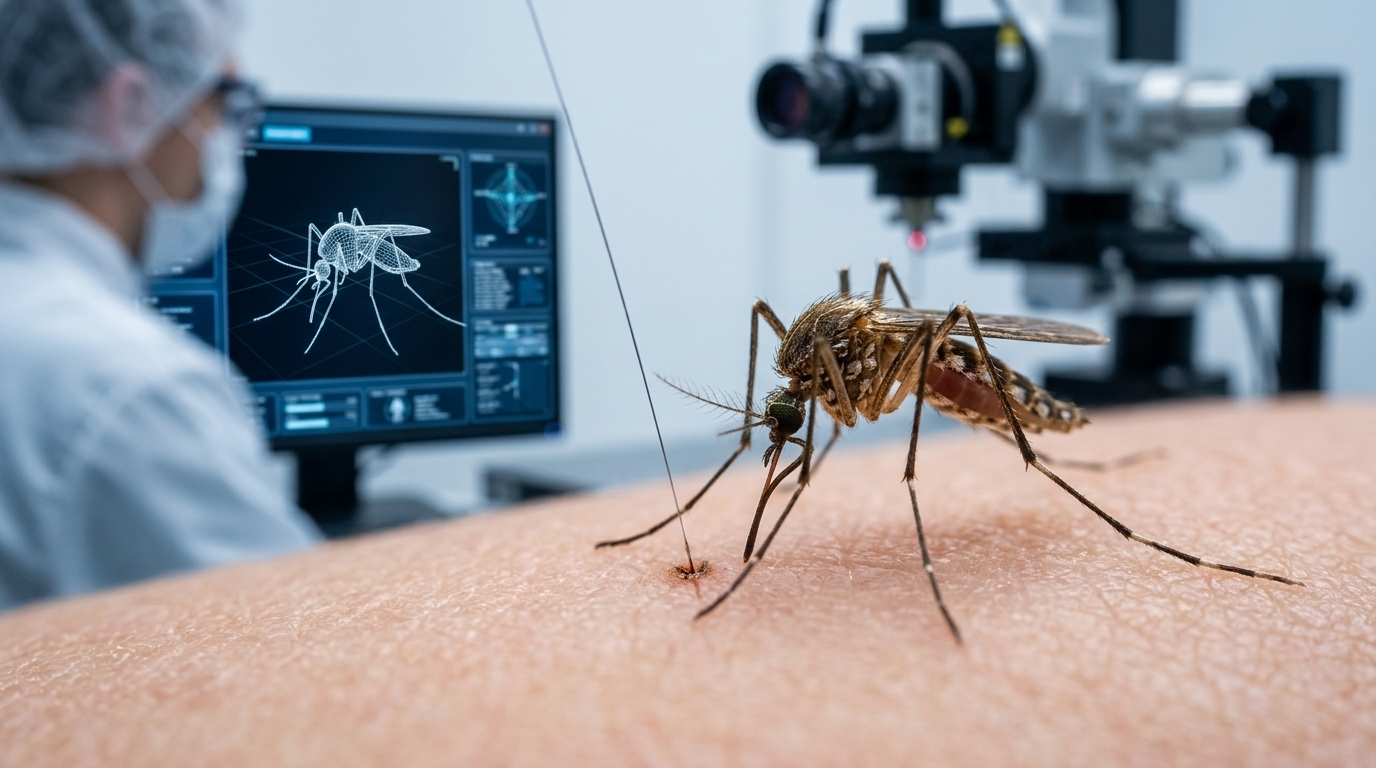
In an era where Artificial Intelligence (AI) is reshaping every facet of human activity, from coding to medical diagnostics, a new application from China aims to solve one of humanity’s oldest and most persistent nuisances: the mosquito. A Chinese tech firm has recently unveiled a portable device, resembling a miniature tank, that utilizes a sophisticated combination of LiDAR sensors, AI algorithms, and high-precision lasers to track and neutralize mosquitoes in just 3 milliseconds.
The device, which has already created a buzz on social media and within tech circles, is more than just a high-tech novelty. It represents a significant shift toward using "clean" technology for pest control, bypassing the need for chemical insecticides that often harm the environment and human health. However, the emergence of such systems also raises questions about the safety of lasers in domestic settings and the broader militarization of everyday household objects.
The Tech Behind the 'Killer' Laser
At the heart of the system lies LiDAR (Light Detection and Ranging) technology, the same tech used by autonomous vehicles to perceive their surroundings. The sensor scans the environment in 360 degrees, creating a real-time 3D map of the room. When an object enters its range, the AI algorithm takes over.
The critical factor is the AI's ability to distinguish a mosquito from other flying objects, such as dust particles, flies, or even pets. Through machine learning, the system has been trained to recognize the unique flight patterns and wing-beat frequencies of various mosquito species. Once a target is confirmed, the laser focuses and emits a concentrated beam of light that incinerates the insect instantly. The entire process, from detection to the 'kill,' happens faster than the blink of a human eye.
- 360-Degree LiDAR: Continuous spatial scanning for motion detection.
- Classification Algorithms: Millimeter-accurate target identification.
- 3ms Response Time: Making escape impossible for the insect.
- Eco-Friendly: Zero reliance on chemical substances or sprays.
Health, Environment, and the Safety Challenge
For decades, chemical insecticides and repellents have been the primary defense against mosquitoes. However, increasing mosquito resistance to these chemicals and growing concerns over their toxicity have spurred the search for alternatives. The AI laser offers a solution that is theoretically permanent, requiring no consumables other than electricity.
Nevertheless, using lasers capable of neutralizing insects carries inherent risks. Critics of the technology point out that a laser beam powerful enough to burn an insect could potentially damage the human retina if the device lacks stringent safety protocols. The Chinese manufacturer claims the device operates at wavelengths and intensities safe for humans and includes proximity sensors that disable the laser if human presence is detected in the beam's immediate path.
"This isn't just about killing an insect; it's about proving that cutting-edge technology can solve problems we once thought were inevitable," a company spokesperson stated.
The Geopolitics of Innovation
It is no coincidence that this innovation hails from China. The nation has invested billions into AI research and surveillance systems. Transitioning this expertise from the military and public security sectors to the consumer market is a strategic move. Systems capable of tracking a 3mm mosquito in a dark room are, in essence, miniaturized air-defense systems.
The international community is watching closely, as the success of such a device could pave the way for broader applications in agriculture, where pest control without pesticides remains the "Holy Grail." If the technology proves reliable and affordable, the future of summer nights might see the annoying buzz of mosquitoes replaced by the silent pulse of precision laser beams.