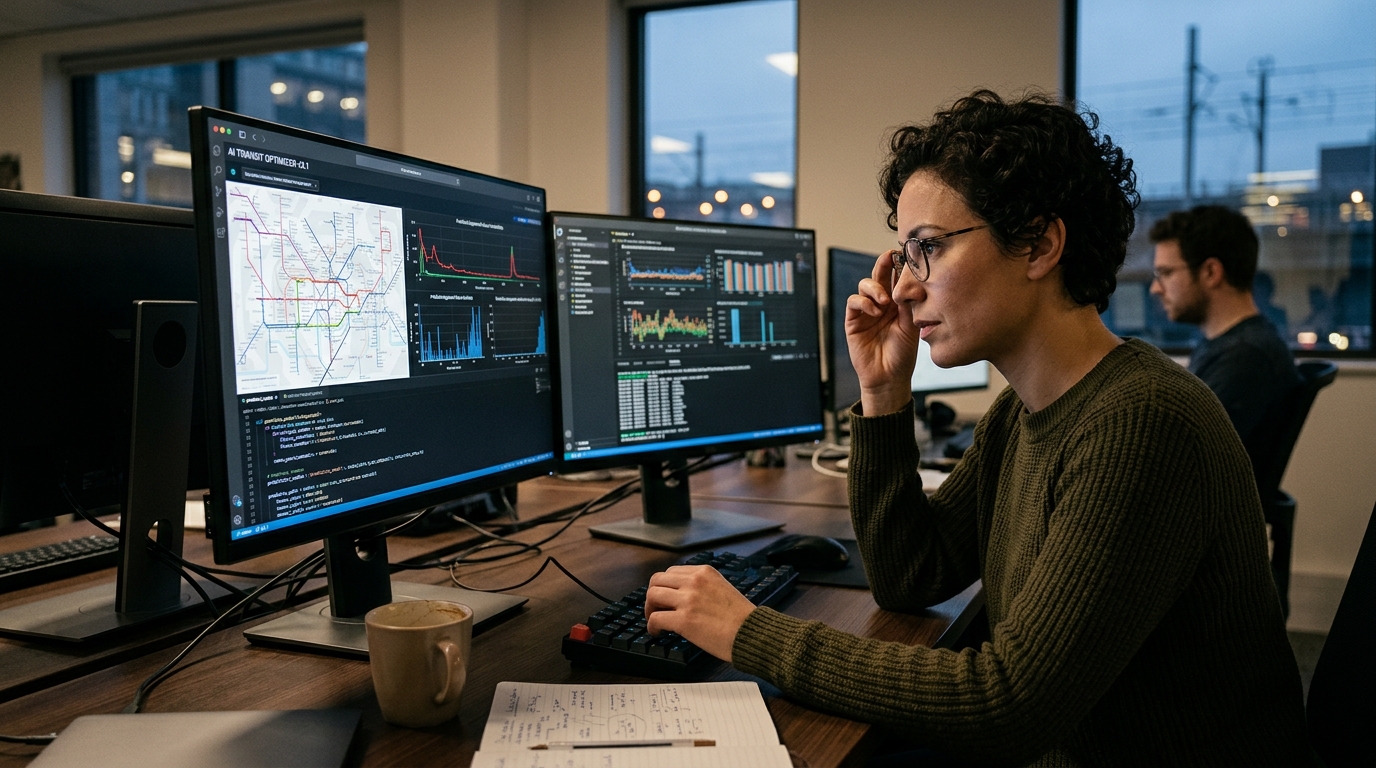
The scene is familiar to every metropolitan resident: a crowded platform, eyes fixed on the departure board, and the frustrating announcement of a "technical problem" or "delay due to signaling issues." For decades, subway systems worldwide—from London and New York to Paris and Tokyo—have struggled with aging infrastructure and the mounting pressure of rapid urbanization. However, 2026 marks a critical turning point as Artificial Intelligence (AI) moves from pilot programs to full integration within the fabric of urban transit.
Predictive Maintenance: The Antidote to Wear and Tear
The vast majority of subway delays are caused by unforeseen failures in rolling stock or tracks. Until recently, maintenance followed a reactive model: we fix it when it breaks, or based on a rigid schedule that often ignores the actual condition of the equipment. AI is fundamentally changing this approach through Predictive Maintenance.
Thousands of IoT (Internet of Things) sensors placed at critical points—from train wheels to door mechanisms and voltage transformers—feed real-time data into machine learning algorithms. These systems can detect subtle changes in vibration, temperature, or power consumption that precede a failure. For example, if an algorithm detects that a train door is closing 0.2 seconds slower than normal, it can alert the maintenance crew before the door jams during rush hour, preventing a domino effect of delays across the entire line.
Dynamic Traffic and Passenger Management
Beyond maintenance, AI is taking on the role of a traffic "orchestrator." Traditional signaling systems operate on fixed intervals. AI, however, can process data from security cameras with computer vision capabilities to estimate crowd density on platforms. If a major event or a protest causes a sudden surge of people at a station, the system can automatically adjust train speeds and reduce the distance between them (headway), increasing network capacity without human intervention.
- Optimizing energy consumption through intelligent acceleration and braking profiles.
- Automatically rerouting passenger flows via digital signage to avoid bottlenecks.
- Predicting staffing needs based on historical data and current conditions.
This "digital intelligence" allows subway systems to operate closer to their theoretical limits, offering a commuting experience that feels more like a Swiss watch than the chaotic environment we have grown accustomed to.
The Hurdle of 20th-Century Infrastructure
Despite the promise, AI implementation is not without challenges. The primary obstacle remains the integration of modern software into infrastructure that is often over a century old. In New York or London, engineers are tasked with installing sensors in tunnels built in the steam age. Interoperability between legacy mechanical systems and new digital protocols is a technical nightmare requiring massive investment.
"AI is not a magic wand. If the tracks are rusted and the tunnels are flooding, no algorithm can prevent a delay. Technology must go hand-in-hand with physical infrastructure renewal," notes a senior executive from a major transit authority.
Furthermore, the issue of privacy arises. Using cameras to analyze passenger movement raises concerns about mass surveillance, even if companies assure that data is anonymized. The balance between safety, efficiency, and civil liberties will remain a central point of debate in the coming years.
Conclusion: Toward a New Era of Urban Mobility
Artificial Intelligence is transforming the subway from a passive mode of transport into a living, perceptive organism. While it cannot eliminate every possible delay—as unpredictable factors will always exist—it can drastically reduce their frequency and duration. For the average commuter, this means less stress, more time, and a city that functions with greater harmony. The challenge is no longer whether the technology works, but how quickly cities can adopt it to provide relief to their citizens.