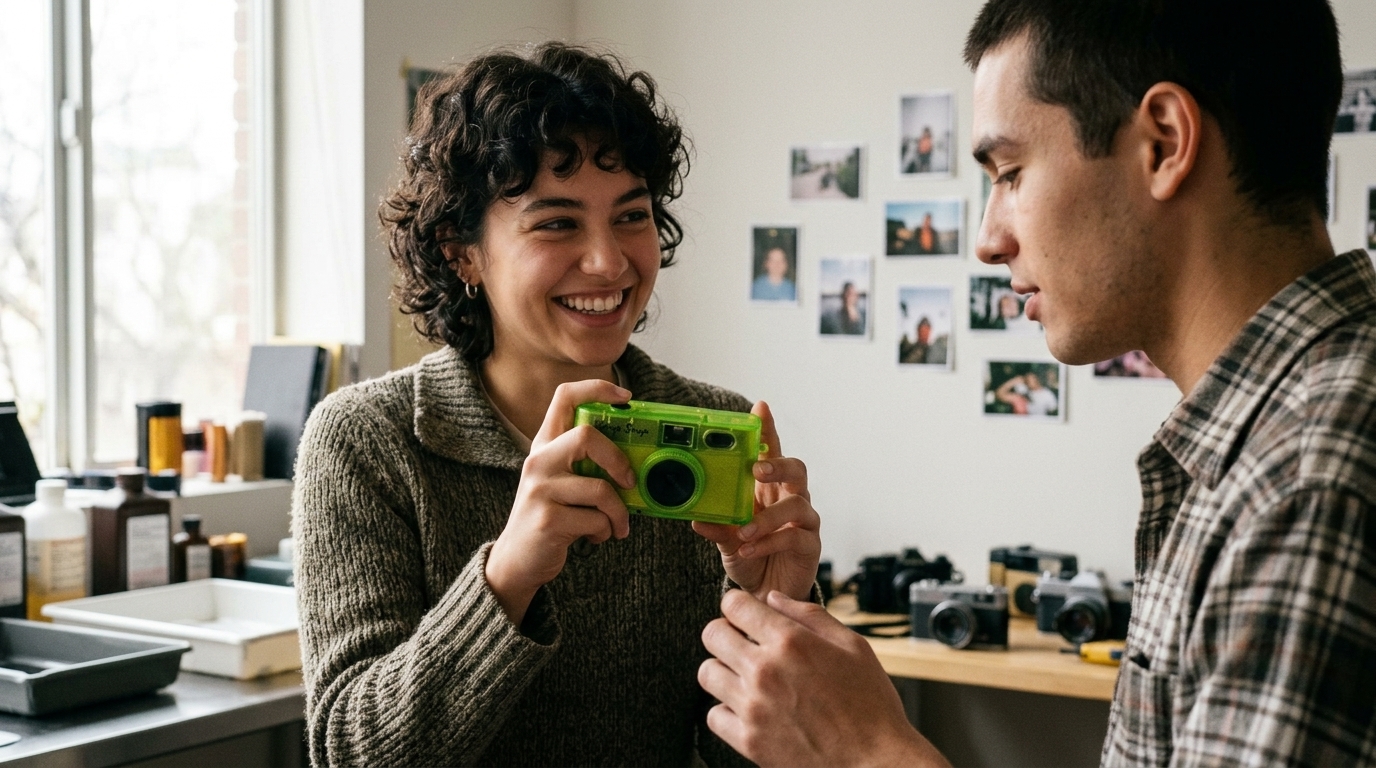
As we navigate the mid-point of 2026, where artificial intelligence processes every pixel of our images before we even press the shutter, a small company has decided to do the unthinkable: remove the screen. The Camp Snap 2 is not merely an upgrade to a quirky gadget; it is a profound statement of intent. Following the success of its first iteration and a brief foray into video with the Super 8-inspired CS-8, Camp Snap is returning to its core philosophy, offering an experience that echoes the disposable cameras of the past, but with the sustainability required for the digital age.
The Architecture of Simplicity
The new model is noticeably slimmer, addressing one of the primary ergonomic critiques of the first generation. Portability is paramount here. The device now slides effortlessly into a pocket, making it the perfect companion for hikers, festival-goers, or those simply taking a walk. Despite the reduced volume, the ruggedness remains its hallmark. Built from durable plastic designed to withstand drops and the elements, the Camp Snap 2 is built for those who want to capture the moment without worrying about the integrity of a $1,200 smartphone.
The most significant changes, however, lie beneath the hood. The processor is faster, dramatically reducing shutter lag. In the original version, there was a slight but perceptible delay that often led to missed candid moments. Now, the capture is nearly instantaneous. Furthermore, the introduction of new filters via physical switches or firmware updates allows users to choose between a vintage aesthetic, a classic high-contrast black and white, or a warmer sepia palette, all without ever needing to open a mobile app.
The Psychology of the Digital Detox
Why would anyone choose a screenless camera in 2026? The answer lies in digital fatigue. When we take a photo with a smartphone, we immediately enter a cycle of self-critique: "Do I look okay?", "Should I delete this?", "Which filter hides my flaws?". This process detaches us from the very experience we are trying to record. The Camp Snap 2 forces a return to intuition. You take the shot, and you move on. The delayed gratification of discovering your photos when connecting the camera via USB-C at the end of the day provides a dopamine hit that no social media app can replicate.
Of particular note is the "Kid Lock" feature. In an era where parents are increasingly concerned about early-age screen addiction, the Camp Snap 2 offers a sanctuary. This lock prevents accidental photo deletion or setting changes, allowing children to explore their creativity without the risks and distractions of the internet. It is a pedagogical tool that focuses on composition and light rather than likes and shares.
Market Positioning and Competition
Camp Snap is not alone in this niche. Paper Shoot has cultivated a cult following with its paper-based, modular cameras, while Leica’s M11-D caters to wealthy purists of "blind" photography. However, Camp Snap manages to strike a rare balance between affordability and functionality. It isn't a toy, yet it doesn't demand a fortune like high-end professional gear. It represents a "democratic" approach to minimalism.
In conclusion, the Camp Snap 2 serves as a reminder that technological progress does not always equate to "more features." Sometimes, true progress is the removal of barriers between the human eye and reality. In a time when visual truth is challenged by deepfakes and AI-driven perfection, the raw, simple, and often imperfect photograph from a Camp Snap 2 feels more authentic than ever. It is an invitation to look at the world, not at a glowing rectangle.