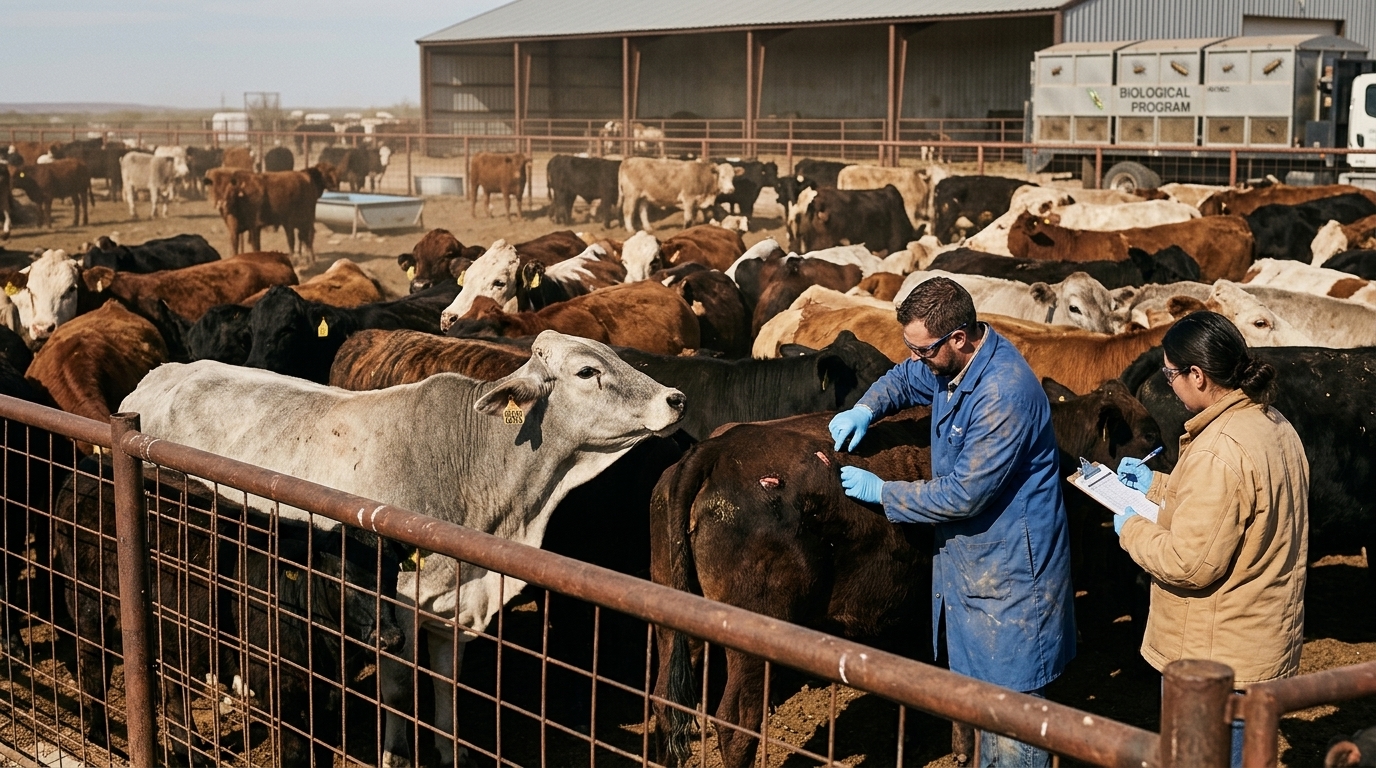
In the silent war between humanity and parasites, the New World screwworm (Cochliomyia hominivorax) stands as one of the most nightmarish adversaries. Unlike other blowflies that feed on necrotic tissue, the larvae of this species feast exclusively on the living flesh of warm-blooded animals, including humans. While the United States successfully eradicated the pest from its borders decades ago, a new crisis is looming as defensive lines in Central America buckle and the required technological solution faces a dangerous delay.
The Biological Threat and the Sterile Insect Technique
The primary weapon against the screwworm is the Sterile Insect Technique (SIT). This is a form of "biological birth control" where millions of male flies are laboratory-bred, sterilized via radiation, and released into the wild. When these sterile males mate with wild females, no offspring are produced, eventually causing the population to collapse. This method is widely regarded as one of the 20th century's greatest triumphs in agricultural science.
However, the infrastructure supporting this strategy is reaching its breaking point. The main production facility in Panama (COPEG), a joint venture between the U.S. and Panamanian governments, is grappling with aging equipment and capacity limits. News that a new, state-of-the-art facility will not be operational until November 2027 has sent shockwaves through the ranching community from Texas to Florida.
Economic Stakes and Supply Chain Vulnerability
This delay isn't just a bureaucratic hurdle; it’s a ticking time bomb for the food economy. The screwworm can decimate cattle herds in a matter of weeks. Economic losses for the meat industry could soar into the billions, driving beef prices to unprecedented levels at a time when food inflation is already a volatile political issue.
- Increased production costs due to the necessity for constant veterinary monitoring.
- Potential quarantine mandates on livestock movement, disrupting national supply chains.
- Severe risks to wildlife populations, which lack the medical intervention available to livestock.
Climate change is further complicating the landscape. Milder winters allow the parasite to survive in more northern latitudes, expanding the potential infection zone. This means the "biological moat" established by scientists at the Isthmus of Panama is becoming increasingly porous.
The Politics of Biosecurity
Managing such crises requires seamless international cooperation, yet it often stumbles over nationalist agendas and fiscal austerity. The construction delay reflects a broader neglect of biosecurity infrastructure, which remains "invisible" to the public until it fails. Analysts argue that investing in these technologies is a form of insurance for global food security that we can ill afford to let lapse.
"This isn't just about a fly; it's about the stability of our food system. Every month of delay brings us closer to a crisis we haven't seen in half a century," says a senior USDA entomologist.
In conclusion, 2027 feels like a distant horizon when the threat is already at the gates. The need to accelerate timelines and increase funding for AI-driven pest monitoring and genetic research is more urgent than ever. Nature does not wait for government schedules.