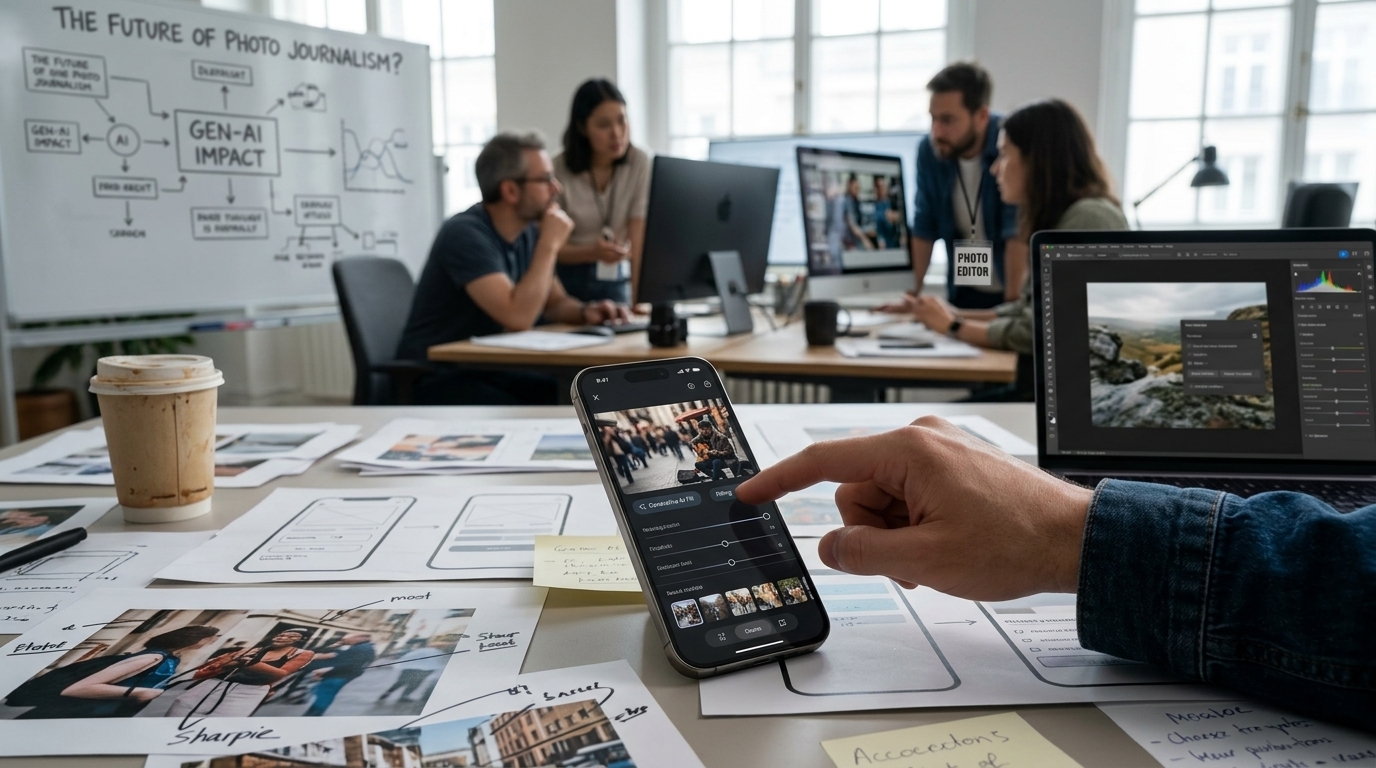
For over a decade, the iPhone has held the title of the world's most popular camera. However, Apple's philosophy surrounding photography has historically been anchored in a form of "enhanced reality"—the camera was meant to capture what was in front of it, merely improving it through computational photography. With the arrival of iOS 27 and the full integration of Apple Intelligence, that era is officially over. New editing tools such as Clean Up, Generative Extend, and Reframe promise to make every shot perfect, but they simultaneously raise profound questions about what constitutes a "photograph" today.
The AI Trifecta: Clean Up, Extend, and Reframe
The most discussed tool is undoubtedly Clean Up. While Google and Samsung have offered similar features for some time, Apple's approach is characteristically "Apple": simple, fast, and integrated directly into the Photos app. The tool allows users to remove unwanted objects or people from the background with a single tap. The AI analyzes the surroundings and fills the gap with textures and shadows that appear entirely natural. In testing, Clean Up proved remarkably capable of handling difficult elements like water or grass, though it occasionally struggles with complex human limbs.
Generative Extend goes a step further, allowing users to "zoom out" of a photo that was taken too closely. Using generative models running partly on-device and partly on Apple's Private Cloud Compute, the system imagines what exists outside the frame. If you've captured a landscape but accidentally cut off the top of a mountain, the AI can reconstruct it. The precision is impressive, though the ethical dimension of adding elements that never existed is controversial at best.
The Strategy of "Conservative" Innovation
It is interesting to observe how Apple attempts to differentiate itself from the competition. While Google encourages users to completely change the sky or move entire buildings, Apple presents these tools as means of "correction" rather than "re-creation." The company insists on using C2PA metadata, which permanently flags a photo as "edited with AI." This is a crucial step for maintaining trust in digital information in an era where deepfakes are becoming commonplace.
- Privacy: Apple claims that the majority of processing happens locally, ensuring that personal photos are not used to train third-party models.
- Ease of Use: No complex prompts are required. The system automatically suggests changes based on composition.
- Ecosystem: The tools are available across iPhone, iPad, and Mac, creating a unified creative experience.
The End of Authenticity?
The criticism Apple faces, however, is not negligible. Many photographers argue that the ease with which we can now erase the "clutter" of reality leads to a homogenized, sterile aesthetic. If every vacation photo is perfect, if every stranger has been removed from the background, and every cloudy sky has turned blue, then what is the value of the memory? Photography has always been a choice of what to include in the frame, but now it is becoming a choice of what to invent.
"Technology isn't just fixing our photos; it's redesigning our memories," notes a digital media analyst.
In conclusion, Apple's new tools work impressively well. They are fast, intuitive, and deliver results that two years ago would have required hours in Photoshop. However, their success brings the responsibility of distinguishing between art and reality. Apple seems aware of this, but competitive pressure may soon force it to cross even its final red lines of authenticity.