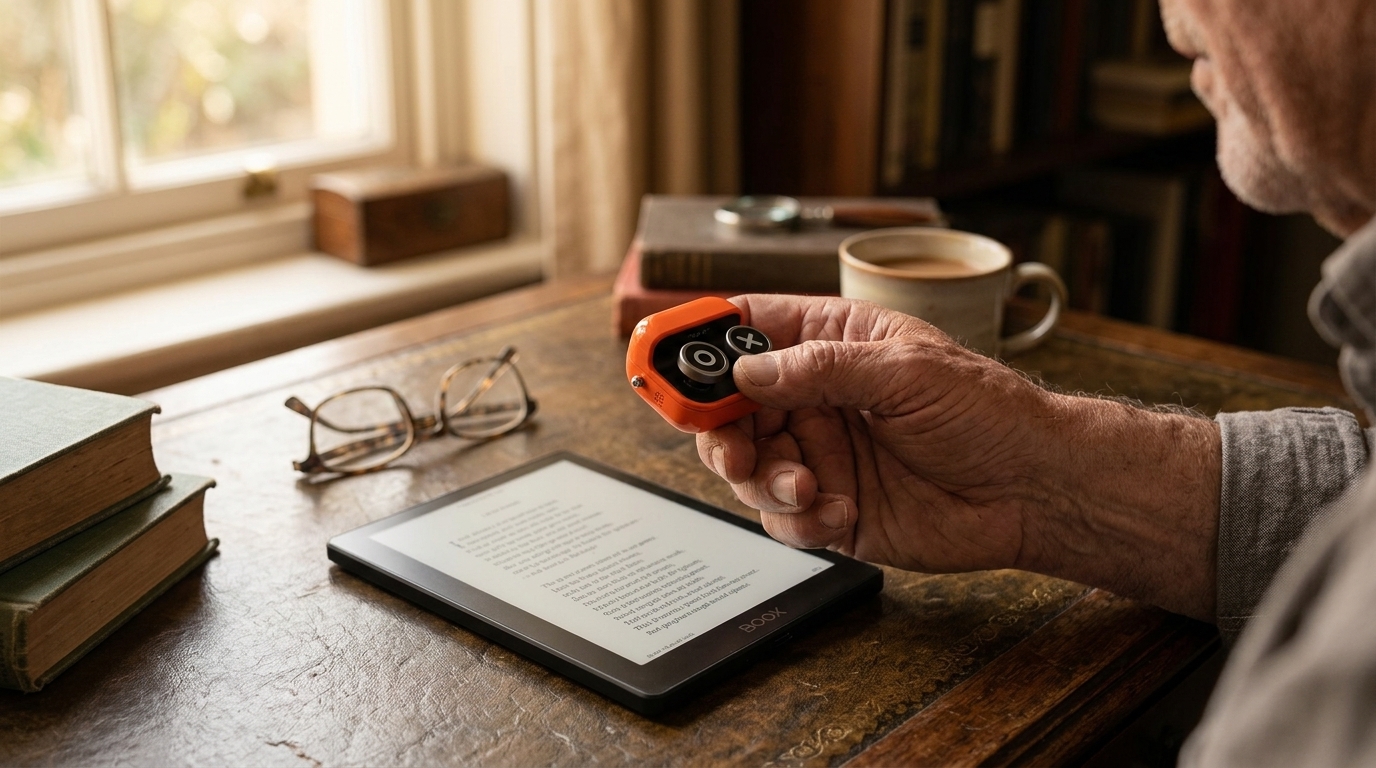
In the rapidly evolving landscape of consumer electronics, we often encounter gadgets that solve problems we didn't realize existed. The Boox Tappy is a prime example of this phenomenon. A wireless Bluetooth remote designed specifically for turning pages on e-readers, it might initially seem like a redundant luxury. After all, how difficult is it to tap a screen that is already in your hand? However, hands-on experience reveals that the Tappy addresses deeper issues of ergonomics, accessibility, and the evolving psychology of digital consumption.
The Tactile Renaissance in a Touchscreen World
The Tappy is not Onyx Boox’s first foray into the world of remotes, but it represents a significant shift in design philosophy. Previous iterations were sleek, clinical, and resembled office presentation clickers. The Tappy, by contrast, embraces a chunky, retro-mechanical aesthetic. It features large, clicky mechanical switches that provide a tactile feedback reminiscent of high-end keyboards. This isn't just a stylistic choice; it's a functional one. In an era where flat glass surfaces dominate our interactions, the physical resistance of a mechanical button offers a sense of intentionality and satisfaction that a capacitive touch cannot replicate.
The device caters to the growing "cozy reading" subculture. These are readers who use floor stands or bedside mounts for their e-ink tablets, allowing them to read while tucked under blankets or in ergonomic positions that don't require holding a device. For individuals dealing with repetitive strain injuries (RSI) or mobility issues, the Tappy isn't just a convenience; it's an essential tool that makes long-form reading accessible again without physical discomfort.
Software Synergy and the Android Advantage
What sets Boox devices apart from the walled gardens of Amazon’s Kindle or Rakuten’s Kobo is the underlying Android operating system. This openness is what makes the Tappy truly versatile. While a Kobo remote might be limited to its native environment, the Tappy can be mapped to work across a variety of applications. Whether you are using the native NeoReader, the Kindle app, Libby for library loans, or even a news aggregator like Pocket, the Tappy integrates seamlessly.
Bluetooth 5.0 ensures a stable connection with minimal power consumption. However, the use of a remote highlights the inherent limitations of E-Ink technology. The refresh rate of electronic paper is significantly slower than that of LCD or OLED screens. When you press a physical button that clicks instantly, the slight lag of the E-Ink screen as it transitions to the next page becomes more apparent. Boox manages this through sophisticated software modes (like Regal or A2), which allow users to balance image quality against refresh speed, ensuring the remote feels like an extension of the reading process rather than a disconnected trigger.
The Psychology of Remote Immersion
There is a subtle but profound psychological shift that occurs when you separate the act of navigation from the act of consumption. By moving the page-turning mechanism to a handheld remote, the reader creates a physical distance from the screen. This mimics the experience of watching a film, where the viewer is absorbed in the narrative without being tethered to the display hardware. In the context of literature, this promotes a state of "deep work" or "deep reading," where the mechanics of the medium fade into the background.
- Enhanced ergonomic comfort for stationary reading setups.
- Distinctive mechanical switches for superior tactile feedback.
- Broad compatibility with Android-based reading applications.
- Exceptional battery life suitable for long-term travel.
Ultimately, the Boox Tappy is a testament to the niche-ification of technology. It doesn't try to appeal to the casual smartphone user. Instead, it speaks to the enthusiast—the person for whom reading is not just a hobby, but a core part of their lifestyle. In doing so, Boox has created a peripheral that feels both unnecessary and, once used, entirely indispensable.