As we navigate the landscape of 2026, our relationship with data has reached a critical tipping point. After a decade of near-total reliance on cloud services like Google Photos, iCloud, and Dropbox, consumers are beginning to experience "subscription fatigue" and, more importantly, a growing concern regarding data privacy. The solution to this digital dilemma isn't new, but it is more sophisticated than ever: Network-Attached Storage (NAS). A NAS is not merely an external hard drive; it is a personal server, a digital fortress housing your memories, work, and entertainment, offering access from anywhere in the world without handing over the keys of your private life to tech giants.
The Dominance of Synology: The 'Apple' of NAS
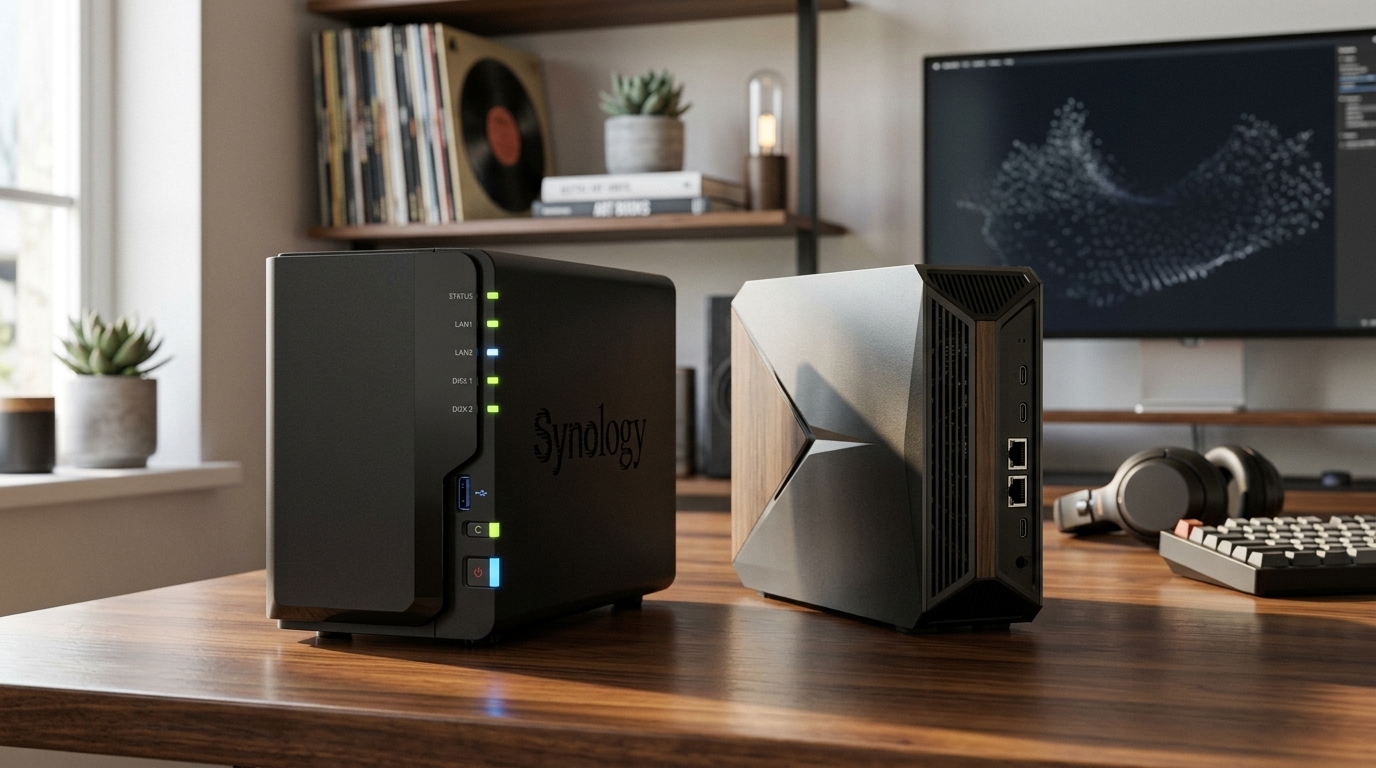
After exhaustive testing, Synology remains the undisputed leader for the average user. The DS224+ and its successor, the DS923+, represent the gold standard. The reason isn't just the hardware, but the DiskStation Manager (DSM) operating system. DSM transforms the management of a complex server into an experience akin to using a smartphone. With apps like Synology Photos, users can have an experience identical to Google Photos, featuring automatic mobile backups, AI face recognition, and album organization—all stored locally in their home.
The DS923+ stands out for its scalability. With four drive bays and the ability to add NVMe SSDs for caching, it is a device that can grow alongside your needs. For those working from home handling large video files or architectural blueprints, the option to upgrade to 10GbE networking is vital, eliminating the bottlenecks traditionally associated with network storage.
QNAP and Asustor: For the Power Seekers
If Synology is the Apple of the industry, QNAP and Asustor are the champions of the enthusiast ecosystem. QNAP devices, such as the TS-x64 series, often offer superior hardware specs at the same price point: faster Intel Celeron processors, built-in HDMI ports for direct TV connection, and more high-speed USB ports. The QTS operating system is incredibly powerful, though slightly more complex for the novice, offering unparalleled customization for virtualization and Docker containers.
Asustor, on the other hand, has gained ground with the Lockerstor series, focusing on networking speed. In an era where 2.5GbE routers are becoming the norm, Asustor provides these speeds even on their entry-level models. This is crucial for gamers looking to store their game libraries on a central server or content creators requiring fast transfers of 4K and 8K files.
The Importance of RAID and Digital Security
Buying a NAS isn't just about capacity; it's about data survival. RAID (Redundant Array of Independent Disks) technology allows data to be spread across multiple drives, so that if one drive fails—which is mathematically certain to happen eventually—your data remains safe. For a home NAS, RAID 1 (mirroring) or RAID 5 (striping with parity) are the ideal choices.
However, 2026 also brings new threats. Ransomware attacks on NAS devices have increased. Our testing showed that using "snapshots" is the best defense. Snapshots allow a user to "turn back time" to a system state before an attack. Synology and QNAP have integrated sophisticated security tools that alert the user to suspicious activity, making the NAS not just a storage space, but an active guardian of digital assets.
Conclusion: An Investment in Digital Sovereignty
Choosing the best NAS ultimately depends on the balance between ease of use and technical capabilities. For most, Synology remains the safe bet due to its polished software. For power users, QNAP offers the raw power required for advanced projects. In any case, moving from the public cloud to a private NAS solution is not just a technical upgrade; it is an act of reclaiming control over our digital existence—an investment that pays off not only financially but in terms of peace of mind.