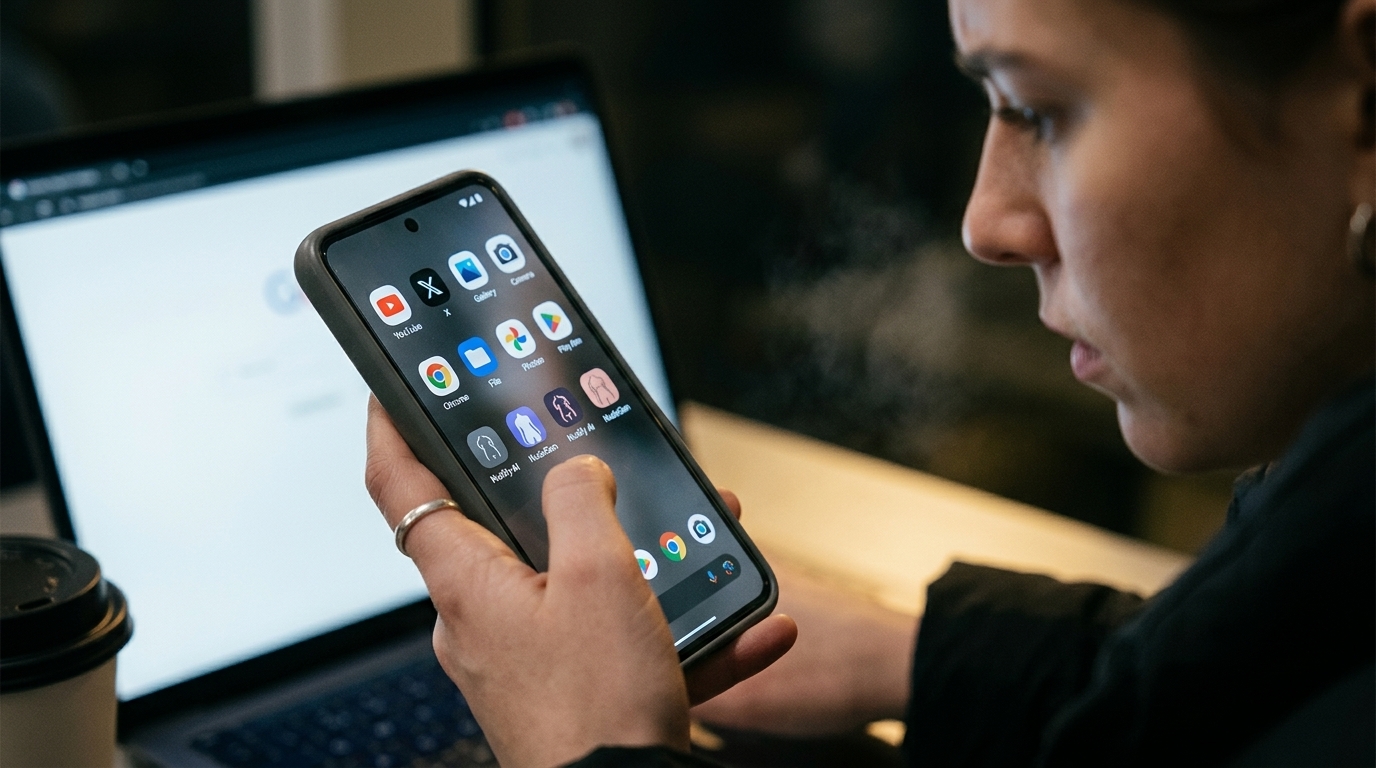
Despite strict guidelines against nonconsensual intimate imagery (NCII), mainstream social media platforms are serving as primary gateways to "nudify" applications. A new report from the Institute for Strategic Dialogue (ISD) indicates that YouTube and X are driving millions of users to websites that allow the digital undressing of individuals without their consent.
YouTube as a Traffic Driver
The study, analyzing the ecosystem between December 2025 and March 2026, found that social networks directed over 5.7 million visits to nudify sites. YouTube was the leading source, accounting for 1.82 million visits, or more than 30 percent of the total referral traffic. These referrals often stem from videos reviewing specific apps or providing promo codes, making violating content easily discoverable through simple keyword searches.
The Business of Deepfakes
The accessibility of these tools is matched by their low cost, with some images generated for as little as $1. However, the scale of the industry is significant, with collective revenues estimated at $36 million annually. Research highlights a disturbing trend in targeting: victims often include ex-partners or relatives. Melanie Smith, senior director at ISD, noted that motivations frequently involve professional sabotage and malicious intent rather than being purely sexual.
Legal Landscape and Platform Response
While the U.S. federal Take It Down Act mandates the removal of NCII within 48 hours, and Minnesota became the first state to specifically ban nudification apps in May 2026, the tools continue to proliferate. X faced significant backlash in January 2026 when its Grok AI was used to generate nonconsensual explicit images, leading the platform to restrict the chatbot to paid users. Despite these measures, the ISD report emphasizes that current enforcement remains inconsistent across major platforms.