At the dawn of the second half of 2026, the AI market bears little resemblance to the era of simple chatbots. Anthropic’s recent announcement regarding the release of Claude 5 Sonnet marks a critical turning point in the evolution of artificial intelligence agents. This is not merely an upgrade in processing speed; it is a radical restructuring of the economic scale of intelligence. With the new model, Anthropic promises to slash the operating costs of autonomous systems by 40% compared to the previous generation, making the widespread adoption of agents not just technically feasible, but economically mandatory.
The Economy of Autonomous Agents
The concept of an AI Agent—a system that doesn't just answer questions but executes complex tasks across multiple software platforms—was until recently an expensive experiment. Running thousands of API calls to manage supply chains or handle real-time customer service required immense resources. Claude 5 Sonnet arrives to disrupt this balance. Its optimized architecture allows the model to maintain high reasoning capabilities at a fraction of the computational power required just two years ago.
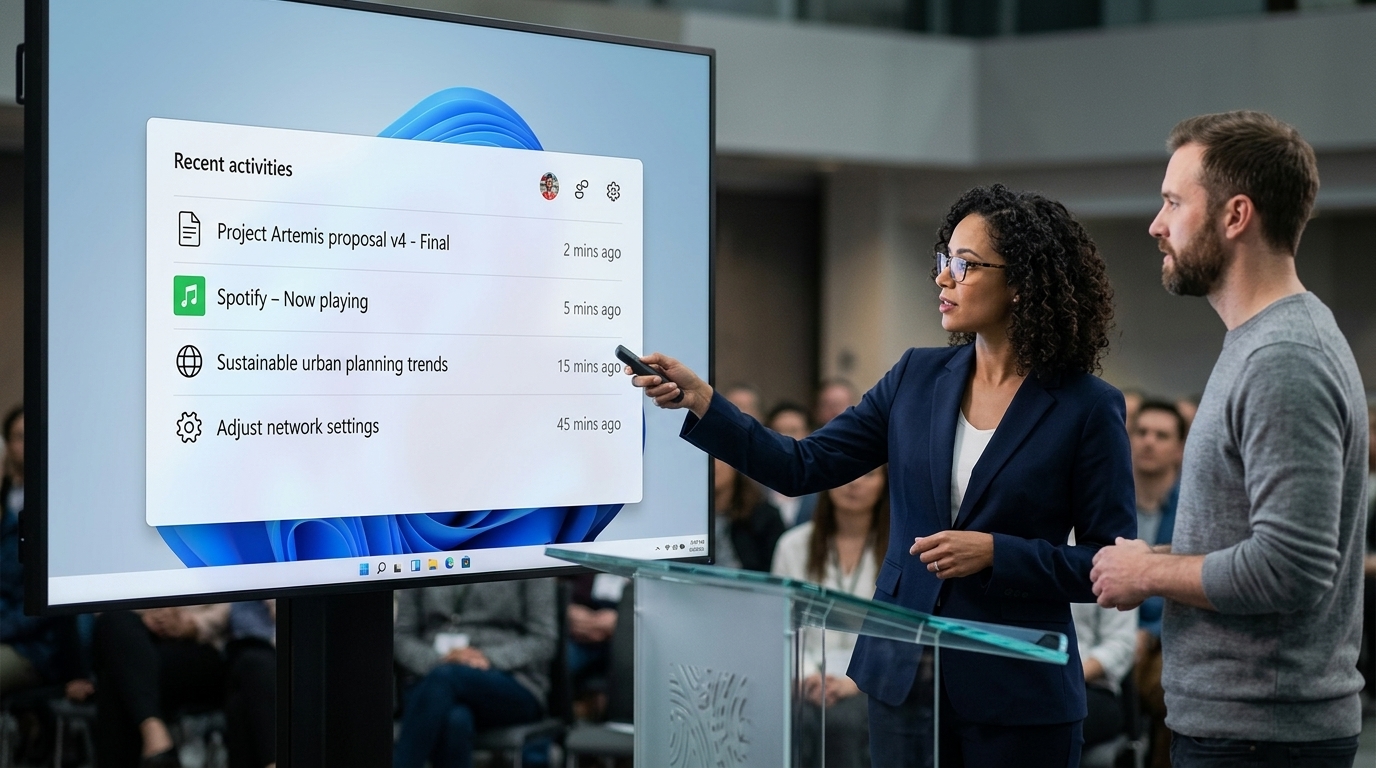
According to the announcement, Sonnet 5 integrates the new version of "Computer Use," the technology that enables AI to see a screen and manipulate a mouse and keyboard like a human. The difference now lies in precision and reliability. Where its predecessors often got "stuck" on unpredictable dialog boxes, the new model demonstrates near-human adaptability, reducing errors that previously led to wasted resources and time.
Competition and Anthropic’s Strategy
Anthropic’s move is a direct challenge to OpenAI and Google. While OpenAI has focused on models with deep reasoning (the 'o' series models), Anthropic appears to be betting on "practical intelligence." Claude 5 Sonnet is positioned as the ideal tool for the enterprise looking to automate entire back-office departments without being financially decimated by API fees.
- Enhanced Context Window: The new model can process vast amounts of data, allowing agents to have a complete picture of a company's history.
- Reduced Latency: Response speed has increased by 30%, critical for applications requiring immediate action.
- Safety and Constitution: Anthropic remains committed to "Constitutional AI," ensuring autonomous agents won't violate corporate policies during task execution.
"We aren't just building better models. We are building the infrastructure for a new economy, where routine intellectual labor will be performed at minimal cost, allowing humans to focus on strategy and creativity," an Anthropic executive stated during the launch.
Labor Market Implications
The falling cost of AI Agents brings the burning issue of job displacement to the forefront. When an agent costing a few dollars a day can perform the work of a data analyst or a data entry clerk, businesses will be forced to redefine their roles. However, Anthropic argues that its technology acts as a "power multiplier." In software development, for instance, Claude 5 Sonnet can handle test writing and bug fixing, leaving developers to focus on architectural design.
The Future of Human-Machine Interface
With the arrival of Claude 5 Sonnet, we are transitioning from the "AI-as-a-Service" era to the "Agent-as-a-Colleague" era. The model's ability to understand context and act autonomously within a digital environment means that soon every worker will have a team of digital assistants. The cost reduction is the "key" that unlocks this door for small and medium-sized enterprises, which until now remained outside the race due to high investment costs.
In conclusion, Anthropic has not just introduced a new tool, but a new economic reality. As the cost of AI continues to drop, value will shift from owning the technology to the ability to orchestrate it. Claude 5 Sonnet is the conductor of this new digital orchestra.