For millennia, the cry of a newborn has been one of the most enigmatic and stressful sounds in human civilization. For new parents, the inability to discern whether a child is hungry, in pain, or simply needs a diaper change often leads to exhaustion and anxiety. However, at the dawn of 2026, Artificial Intelligence (AI) appears to be offering a "bridge" of communication where there was once only guesswork. New applications and devices, based on sophisticated machine learning algorithms, now promise to "translate" the acoustic frequencies of infant crying into clear needs.
The Science Behind the Sound
A baby's cry is not random noise. It consists of specific acoustic patterns related to the infant's physiology. Researchers have found that when a baby is hungry, their cry tends to have a repetitive rhythm, often accompanied by a "neh" sound (due to the sucking reflex). In contrast, a cry of pain is usually sudden, intense, and followed by periods of breath-holding.
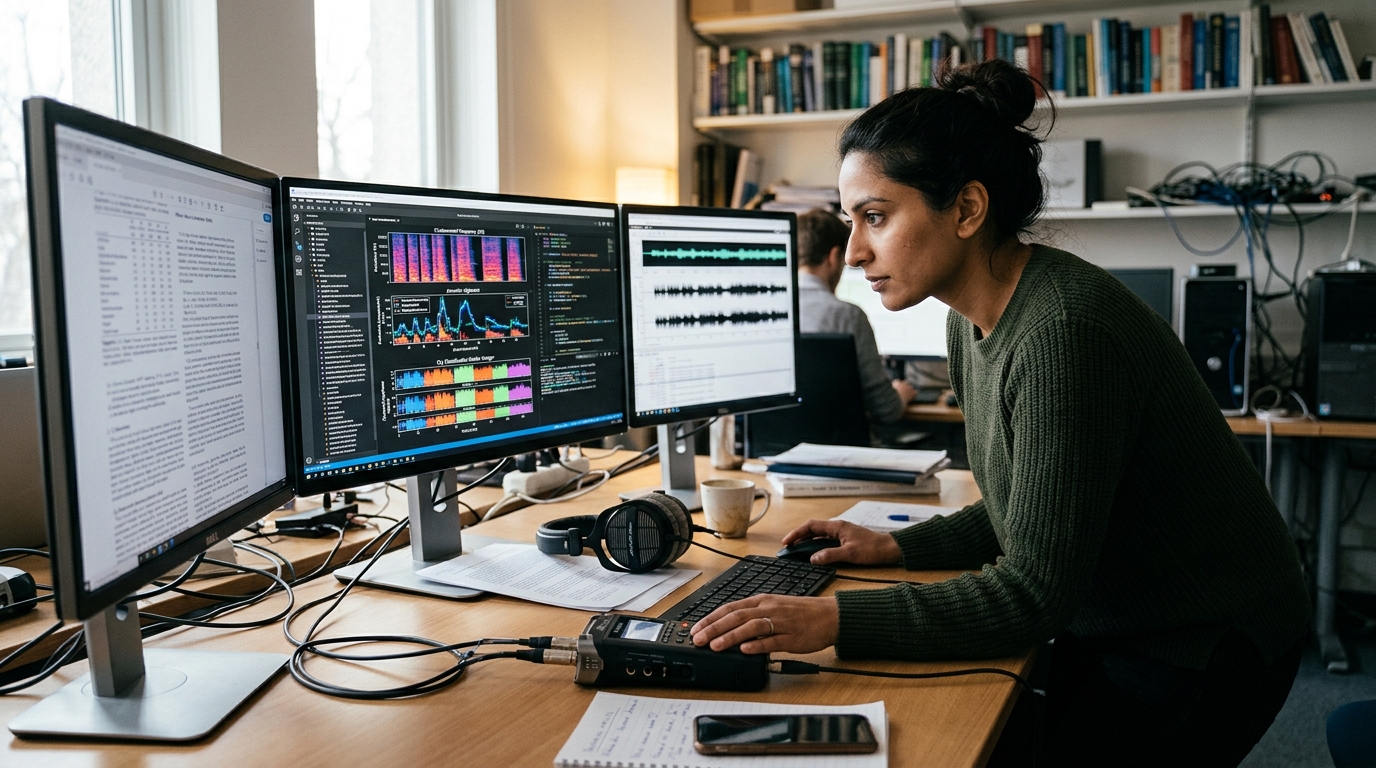
AI uses Convolutional Neural Networks (CNNs) to analyze spectrograms of these sounds. Trained on thousands of hours of recordings from infants worldwide—from Vietnam to Greece—these systems can detect micro-differences in pitch, tone, and duration that the human ear, especially that of an exhausted parent, might overlook. Companies like Zoundream and Ubenwa are leading this effort, claiming accuracy rates exceeding 80-90% in controlled environments.
Beyond Daily Care: Medical Implications
The significance of this technology is not limited to parental relief. There is a deeper, clinical dimension. An infant's cry can function as a biomarker for the health of their nervous system. Studies have shown that certain abnormalities in acoustic patterns may be early indicators of neurological issues or developmental disorders, such as autism.
In regions with limited access to pediatric care, a mobile app that analyzes crying could function as an initial triage system. If the algorithm detects an "abnormal" pattern of pain or discomfort unrelated to basic needs, it could alert parents to seek immediate medical attention. This transforms the smartphone from a simple communication tool into a potentially life-saving diagnostic instrument.
The Ethics of "Digital Intuition"
Despite the impressive promises, introducing AI into the most personal part of human life—the parent-child relationship—provokes skepticism. Psychologists warn of the risk of "alienation." The process of trial and error through which a parent learns to understand their child is fundamental to bonding. If an algorithm always provides the answer, will parents stop trusting their instincts?
"Technology should function as a supplement, not a substitute, for human contact. The risk is that we end up with a generation of parents who look at a screen instead of their child's eyes," say experts in developmental psychology.
Furthermore, the issue of data privacy arises. Infant recordings are extremely sensitive data. Where are they stored? Who has access to them? Using this data to train commercial algorithms without explicit and informed parental consent is a gray area that regulators in the EU and globally must address immediately.
The Future of Infant Care
As we move deeper into 2026, the integration of AI into infant care seems inevitable. We are already seeing "smart" cribs that adjust their movement based on the baby's sound and cameras that monitor oxygen levels and heart rates. Translating the cry is simply the next logical step.
However, the true success of this technology will not be judged by the complexity of its algorithms, but by how well it manages to boost parental confidence without making them dependent. At the end of the day, AI can tell us a baby is hungry, but only a human can provide the warmth and the hug that accompanies the food. Technology is the tool, but love remains the only thing that cannot—and should not—be translated into code.