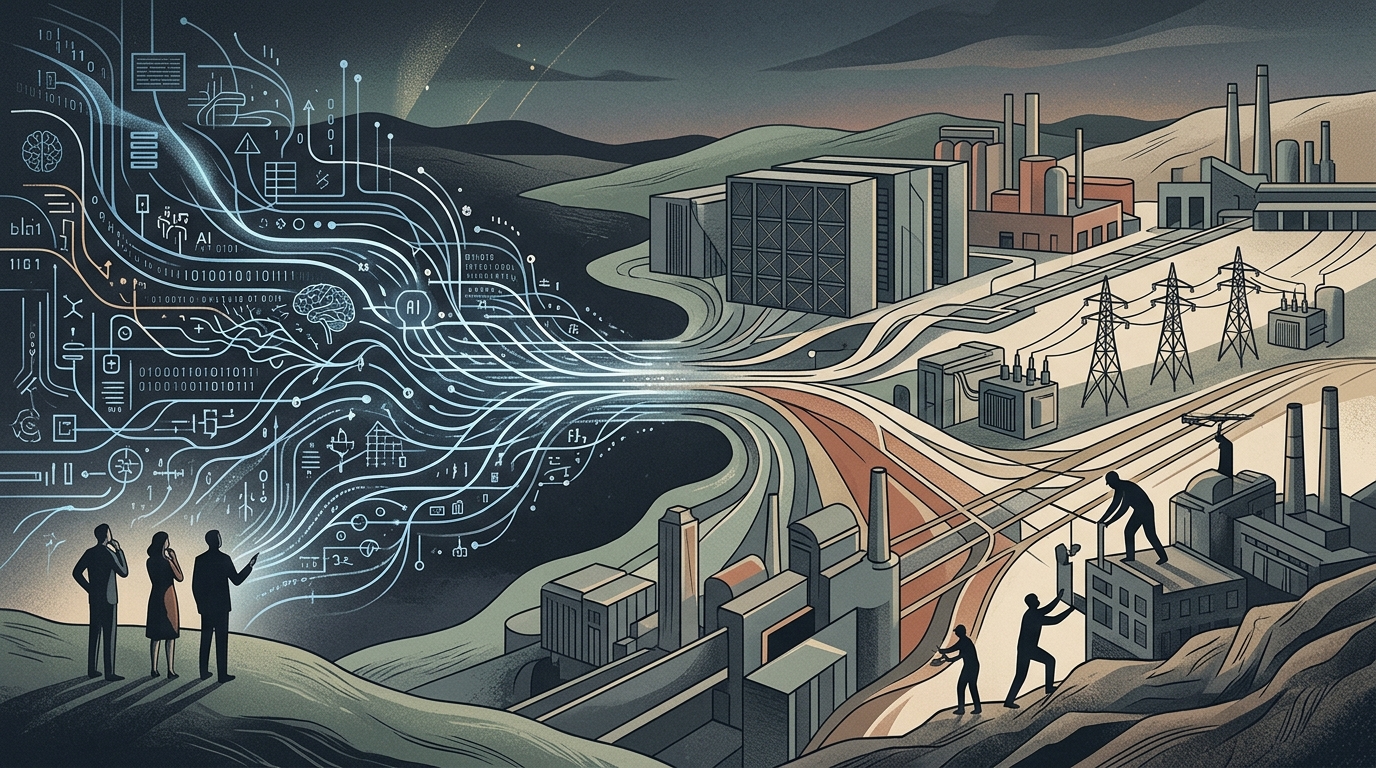
June 2026. Across the stadiums of Canada, Mexico, and the United States, the ball is rolling, but fans are no longer just looking at the stars or superstitions for a sign of luck. The era when 'Paul the Octopus' dominated headlines with its intuitive choices is a distant memory. Today, the new 'Delphic Oracle' of football is digital, powered by neural networks and analyzing millions of data points in fractions of a second. Artificial Intelligence (AI) is no longer a mere statistical assistant; it is the central protagonist in the analysis and prediction of the World Cup.
From Statistics to Predictive Intelligence
The use of technology in football began with simple metrics like xG (expected goals), but in 2026, we are witnessing something far more complex. The models currently in use, such as those highlighted by the Egyptian Gazette and developed by tech giants, do not merely examine team history. They integrate real-time data: player fatigue via biometric sensors, weather conditions affecting ball trajectory, and even the psychological profiles of athletes based on their social media activity and recent interviews.
These systems run thousands of Monte Carlo simulations for every single match. Instead of simply stating 'Brazil will win,' they provide a spectrum of probabilities for every minute of the game. The AI's ability to identify patterns that the human eye fails to perceive—such as a split-second delay in a defender's reaction after the 70th minute—gives analysts and bettors a tool of unprecedented precision. However, this precision raises a fundamental question: is the magic of the unpredictable being lost?
Impact on the Betting Market and Global Economy
The rise of the 'AI Oracle' has radically transformed the world of sports betting. Bookmakers now utilize their own proprietary algorithms to adjust odds in real-time, often before a play on the pitch has even concluded. This has led to an arms race between bookmakers and professional bettors, who deploy their own AI models to find inefficiencies in the system. The economic dimension is staggering, with betting revenues for the 2026 World Cup expected to shatter all previous records, fueled by the public's growing trust in 'algorithmic advice'.
- Increased turnover in live betting due to more accurate stream-data integration.
- Growth of new subscription-based apps offering AI 'prophecies' to fans.
- A shift in coaching strategies, with managers consulting AI assistants for mid-game substitutions.
Furthermore, sponsors are leveraging these predictions to target their advertising. If an AI predicts a high probability of a win for Egypt or Greece in a crucial match, ad campaigns in those specific regions are automatically triggered to capitalize on the fans' euphoria. The synergy between predictive analytics and digital marketing has created a new, highly efficient ecosystem for sports commerce.
The Ethics of Prediction: Is It Still a Game?
Many observers, including traditionalists of the sport, are raising concerns. If a computer can predict a result with 85% accuracy, what is the point of watching the match? The essence of football has always been the moment of the upset, the 'miracle' that cannot be explained by logic. AI, however, tends to rationalize the chaos.
'Football is not mathematics; it is emotion. When AI tries to reduce it to pixels and probabilities, something precious is lost from the soul of the game,'notes a veteran sports analyst.
Despite the pushback, the integration of AI seems irreversible. In the 2026 World Cup, technology is no longer an external element but a web connecting players, coaches, fans, and the global market. The challenge for the future is whether we can maintain human spontaneity in a world that is becoming increasingly predictable through data. Perhaps the greatest victory in this World Cup will not be the trophy itself, but that one moment where the algorithm fails spectacularly, reminding us that the human element remains the ultimate unpredictable factor.