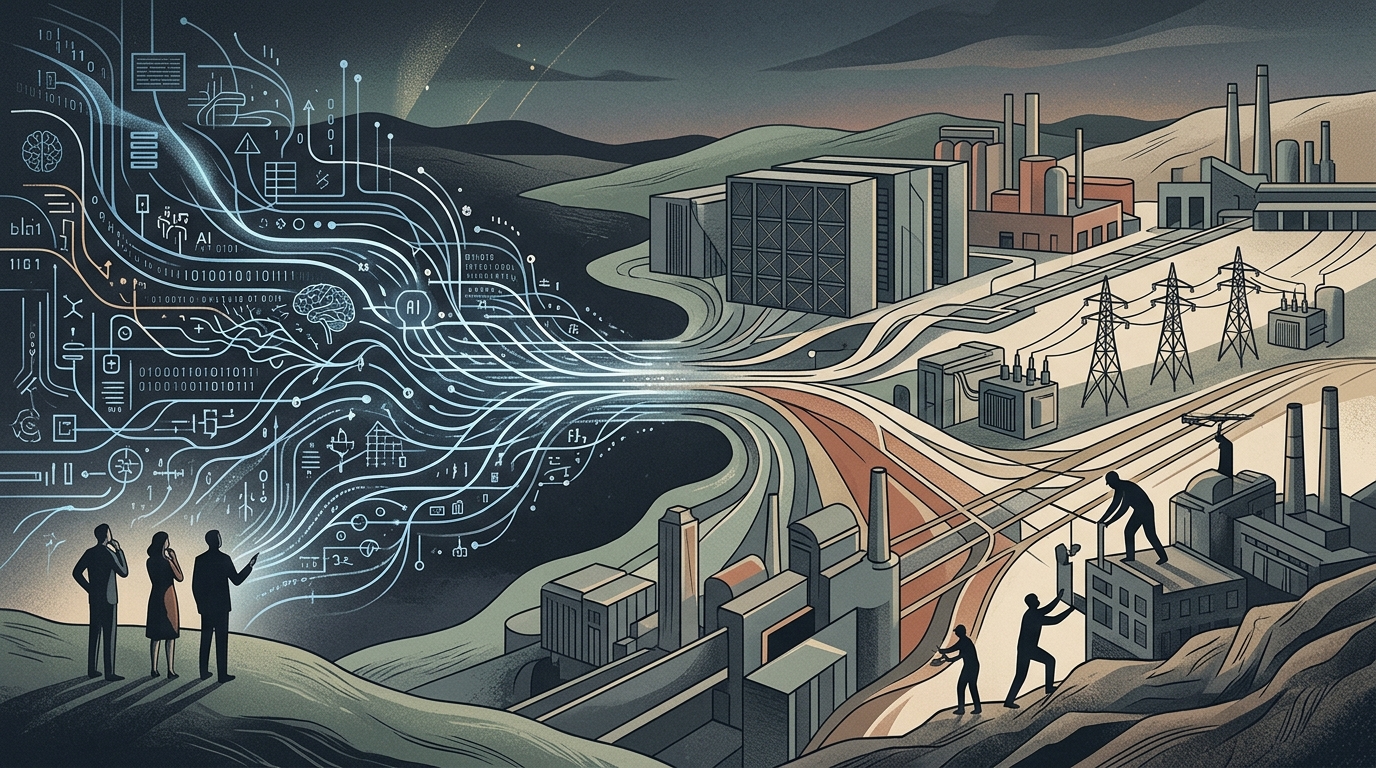
When generative artificial intelligence (AI) first surged into the corporate landscape, the promise was unequivocal: the liberation of the human spirit from the shackles of mundane tasks. Visions of four-day work weeks and a new renaissance of creativity dominated the headlines. However, as we pass the midpoint of 2026, the office reality has taken a sharp, unexpected turn. According to recent data highlighted by Vietnam.vn and various global labor analysts, the average office worker now spends approximately six hours per week—nearly a full workday—acting as a "babysitter" for AI systems.
This burgeoning role, increasingly known as "AI babysitting," involves correcting factual inaccuracies, verifying "hallucinations," re-engineering vague prompts, and ensuring that automated outputs align with strict corporate compliance and ethical standards. Instead of the AI serving as a seamless assistant, humans have been relegated to highly-paid proofreaders and logic-checkers for a digital "intern" that never quite masters the curriculum.
The Illusion of Automation and the Verification Tax
This phenomenon underscores a critical friction point between theoretical efficiency and practical productivity. Corporations are racing to embed AI into every workflow, from drafting internal memos to synthesizing complex financial forecasts. Yet, the "cognitive load" required to oversee these tools is staggering. A worker using AI to generate a report might produce the initial draft in seconds, but then must spend three times that duration ensuring the data points are accurate and the tone isn't inadvertently biased or robotic.
In the global market, this has led to what economists call the "Verification Tax." Every minute saved in production is often paid back with interest during the audit phase. In sectors like legal services or healthcare, where the margin for error is zero, the time spent babysitting AI often exceeds the time it would have taken to perform the task manually from scratch. The result is a workforce that feels increasingly fragmented, jumping between their actual responsibilities and the constant need to double-check their digital counterparts.
From Creators to Auditors: The Shift in Professional Identity
This shift is fundamentally altering the nature of professional identity. Historically, a professional’s value was derived from their ability to synthesize information, create original content, and solve nuanced problems. Today, that value is migrating toward the ability to "police" AI output. This creates a subtle but profound identity crisis. "I didn't spend years honing my expertise to become a quality assurance tester for an algorithm," says a senior analyst at a major tech firm. Work is becoming less about "flow" and more about interruption and verification.
- The erosion of "Deep Work" due to the constant feedback loops required by AI agents.
- Heightened anxiety regarding "silent errors"—subtle AI mistakes that might bypass human oversight.
- The risk of deskilling, as junior employees rely on AI for foundational tasks, failing to develop their own critical thinking muscles.
"AI promised to give us back our time, but for now, it has simply given us a new category of work: managing the time it supposedly saved us."
The Economic Reality: A Diluted Return on Investment?
From a financial perspective, six hours a week of manual oversight represents a massive drain on corporate resources. When aggregated across the global workforce, the cost in lost human capital is measured in the billions. Management is now facing a strategic crossroads: do they double down on AI investments, hoping the next iteration of Large Language Models (LLMs) will be more reliable, or do they scale back to protect employee well-being and genuine output quality?
The path forward requires a shift from "universal AI integration" to "strategic automation." Companies must realize that AI is not a plug-and-play replacement for human judgment but a tool that requires its own specific management framework. Training must evolve beyond simple "prompt engineering" to include advanced verification techniques and time-management strategies designed for the hybrid human-AI era. Only then can we move beyond the babysitting phase and into a true partnership.