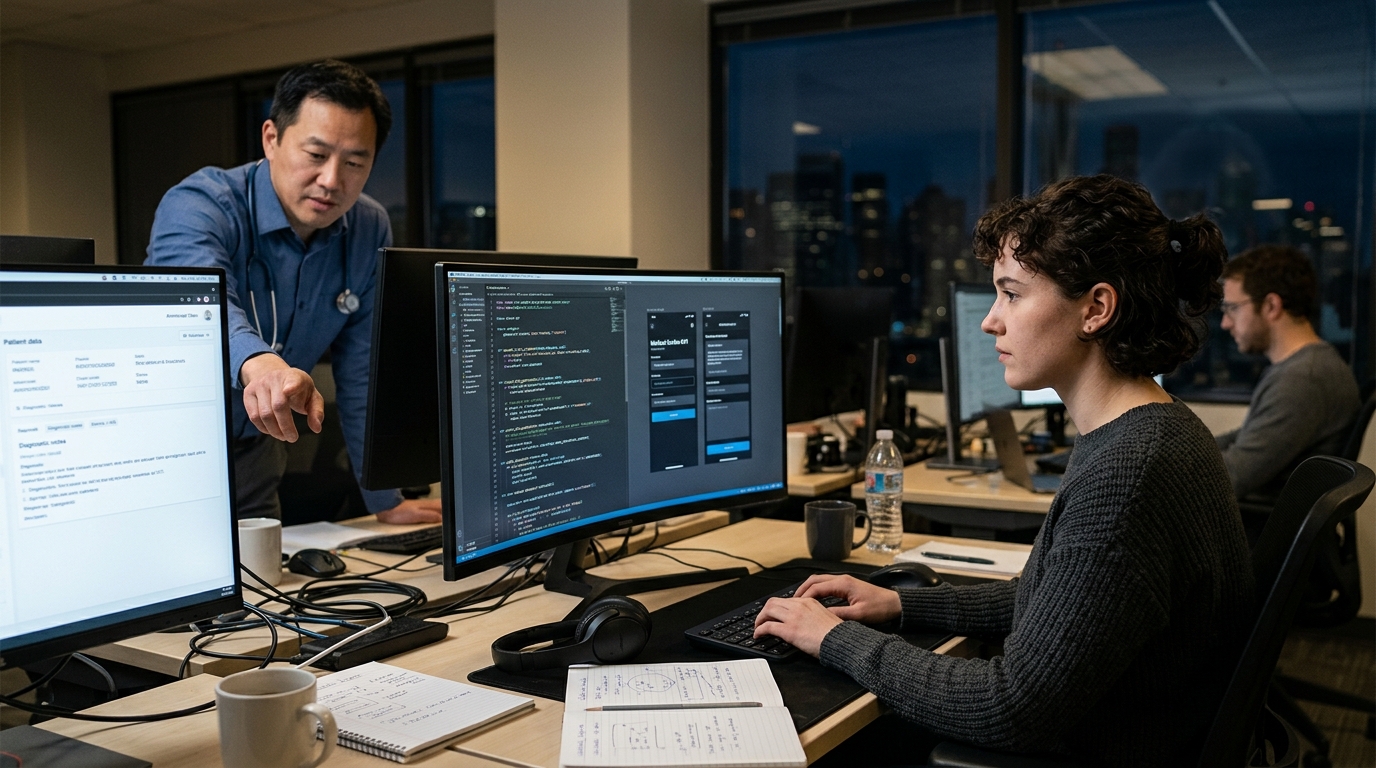
Modern medicine has long been grappling with a silent crisis: bureaucracy. Doctors worldwide now spend more time typing into Electronic Health Records (EHRs) than looking their patients in the eye. However, a new generation of Artificial Intelligence tools, known as AI medical scribes, is promising to reverse this reality. According to recent reports and studies analyzed by HealthExec, the use of AI for drafting course-of-care notes during examinations not only helps doctors reclaim their time but also poses a remarkably low risk of causing harm to patients.
The Digital Solution to the Burnout Crisis
The term "pajama time" has unfortunately become synonymous with a doctor's daily life, referring to the hours spent late at night at home finishing patient notes from the day's visits. This administrative burden is the primary driver of physician burnout. AI tools based on Large Language Models (LLMs) function as digital scribes, listening to the doctor-patient conversation and automatically converting it into a structured clinical note.
The efficiency of these systems is striking. Studies indicate that using AI scribes can save between one to three hours daily per clinician. This time directly translates into higher-quality patient interaction, as the doctor no longer needs to be tethered to a computer screen. The AI handles the heavy lifting of recording symptoms, history, and the proposed treatment plan, allowing the human scientist to focus on diagnosis and empathy.
Assessing the Risks: Hallucinations vs. Reality
One of the biggest questions surrounding AI in healthcare is accuracy. The fear of "hallucinations"—where the model generates incorrect or fabricated information—is real. However, current research is reassuring the medical community. Systems specifically designed for clinical use are trained on medical terminology and operate under a "human-in-the-loop" model.
According to findings, the risk of clinical harm is minimal because the final note is never finalized without the physician's approval. Doctors are required to review, edit, and sign off on the text produced by the AI. In the rare instances where an AI tool misses a detail or misinterprets a word, human oversight serves as the ultimate safety net. Furthermore, the structured nature of AI notes often makes them more readable and comprehensive than the hurried notes a burnout doctor might produce manually.
Transforming the Doctor-Patient Relationship
Beyond productivity, the true value of this technology lies in restoring the sanctity of the medical visit. When a doctor isn't holding a pen or typing frantically, the dynamics in the exam room change. The patient feels truly heard. Non-verbal communication—eye contact, body language—returns to the forefront of the encounter.
In healthcare systems worldwide, where patient volumes in outpatient clinics are often overwhelming, such tools could provide a profound sigh of relief. Automating bureaucracy could reduce wait times and improve the quality of care, provided that patient data protection is ensured according to regulations like HIPAA and GDPR. The challenge is no longer technological but organizational: how to integrate these tools in a way that enhances, rather than replaces, human judgment.
Conclusion
Artificial Intelligence is not coming to take the doctor's place but to return them to their role as a healer. The data shows that using AI scribes is a safe and highly efficient intervention. As the technology evolves, the ability of models to understand complex medical concepts will improve, further reducing the need for extensive edits. The challenge for the future is universal access to these tools, ensuring that the digital revolution in healthcare benefits the entire medical community and all patients, not just a select few.