As summer months in the Mediterranean region become increasingly intense due to climate change, the need for efficient cooling systems is no longer a luxury but an imperative for survival and productivity. However, the traditional approach to air conditioning—a simple thermostat switching a unit on and off—is now considered obsolete. The entry of Artificial Intelligence (AI) into the HVAC (Heating, Ventilation, and Air Conditioning) sector marks a new era where appliances do not merely follow commands but anticipate needs. Toyotomi's new Erai and Gosai air conditioning series are prime examples of this transition, incorporating algorithms that promise to radically change how we interact with our home environment.
The Intelligence Behind the Cooling: What Does AI Mean in HVAC?
The use of the term "Artificial Intelligence" in air conditioning is often misunderstood as simple Wi-Fi connectivity. In reality, in the Erai and Gosai series, AI functions as an invisible manager of energy and comfort. Through AI Inverter technology, the air conditioner does not operate at fixed power levels. Instead, it collects real-time data from temperature, humidity, and motion sensors. The algorithm processes these parameters every second, adjusting the compressor's speed with a precision that was impossible in older models.
The Erai series, for instance, utilizes the Smart Sensing system. It is not limited to measuring the air temperature around the unit but also accounts for the thermal radiation of the walls and the presence of people in the room. This means that if the room is empty, the AI automatically reduces power to save energy, while if it detects activity, it adjusts the airflow so that it does not hit the occupants directly, avoiding unpleasant drafts.
Energy Savings: From A+++ to Practical Economy
The energy crisis of recent years has shifted consumer focus toward consumption. Toyotomi, with the Erai and Gosai series, aims for the top A+++ energy class, but the real innovation lies in dynamic management. Artificial Intelligence allows for a reduction in consumption by up to an additional 15% compared to a conventional Inverter air conditioner. This is achieved by "learning" the user's habits and the thermal losses of the specific space.
- Adaptive Operation: The system learns how long it takes to cool the space and starts its operation at the ideal moment.
- Humidity Management: The AI understands that the sensation of heat is inextricably linked to humidity. By adjusting dehumidification independently of cooling, it achieves comfort at higher temperatures, reducing the load on the compressor.
- Eco-friendly R32 Refrigerant: The use of R32 refrigerant reduces the carbon footprint, aligning technology with the strict environmental requirements of the European Union.
The User Experience: Gosai and Digital Convergence
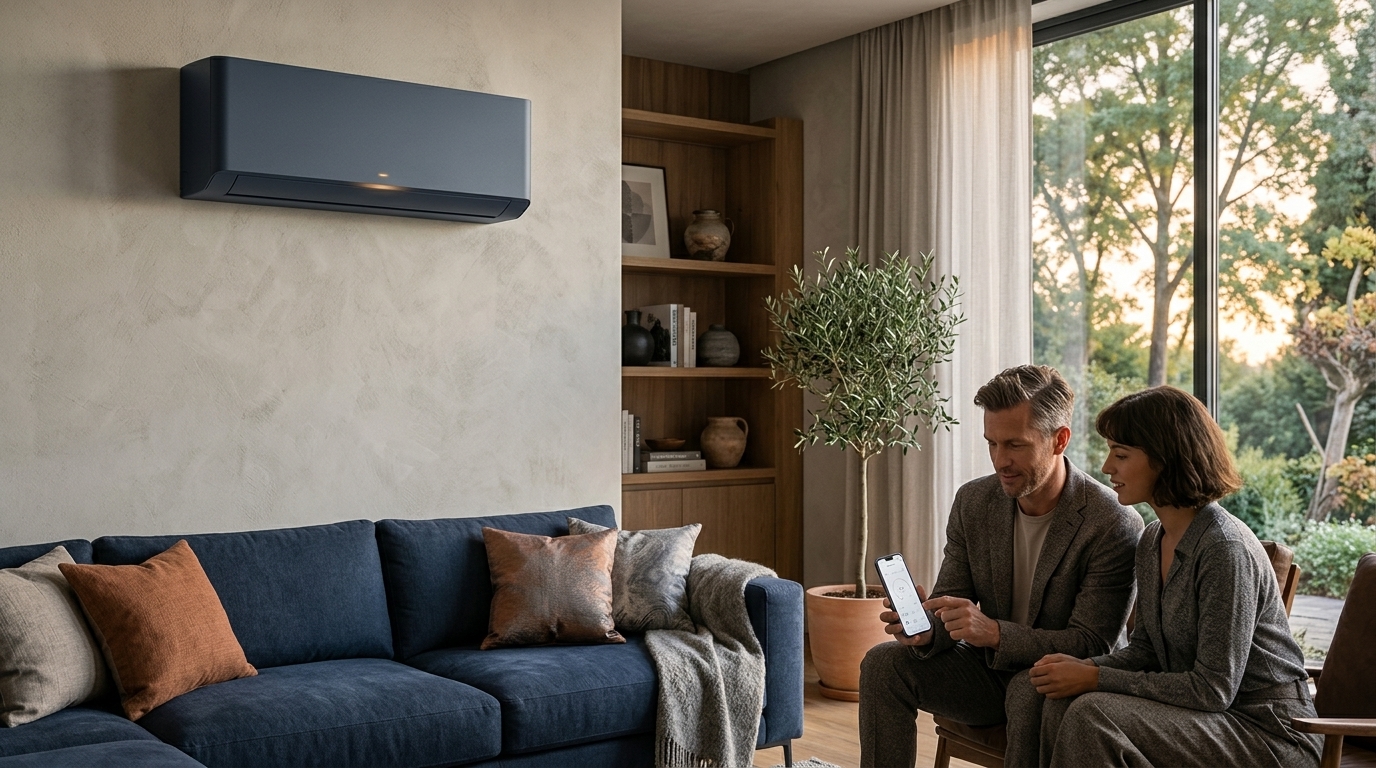
The Gosai series focuses on ultimate connectivity and ease of use through the Toyotomi All-in-One platform. The integration of voice commands via Google Assistant or Amazon Alexa allows for climate control without even touching the remote. However, the real "magic" happens in the background. The AI can recognize if a window has been left open (via sudden changes in temperature and pressure) and alert the user or shut down the unit.
Furthermore, Indoor Air Quality (IAQ) is upgraded through advanced ionization systems and HEPA filters controlled by the system. The AI monitors operating hours and air quality, informing the user of the exact time required for cleaning or filter replacement, ensuring that the device always operates at peak performance and with maximum hygiene.
Conclusion: The Future of Home Climate
The integration of Artificial Intelligence into Toyotomi Erai and Gosai air conditioners is not just a marketing gimmick. It is a response to the challenges of the modern era: the need for comfort without environmental guilt and the rising cost of energy. As we move toward 2030, air conditioning will cease to be a "blind" appliance and will transform into a central wellness hub in the smart home. The ability of these systems to evolve through software updates means that the air conditioner one buys today will be "smarter" in two years than it was on the day of its installation.