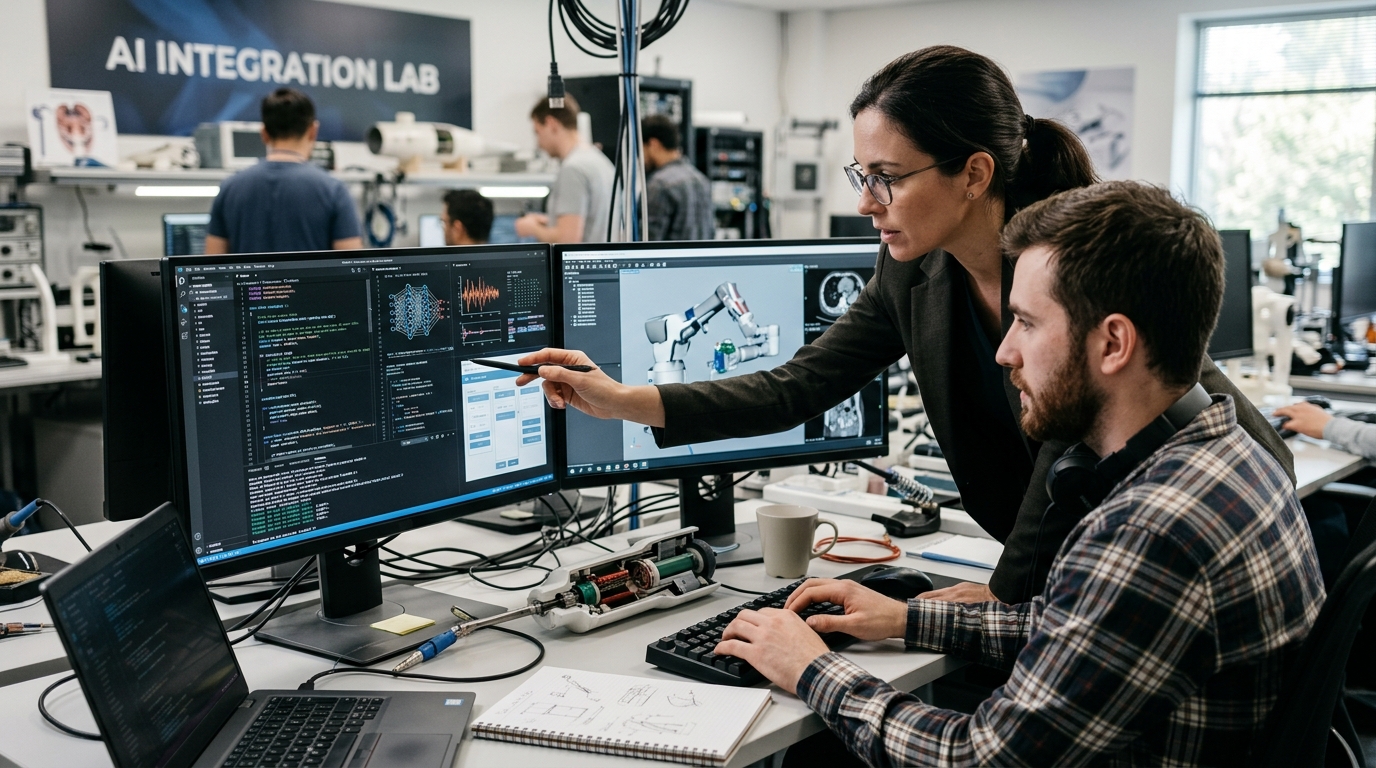
The integration of Artificial Intelligence (AI) into the Medical Technology (MedTech) sector is no longer a futuristic promise but a present reality reshaping the entire product lifecycle. From initial design to manufacturing, regulatory compliance, and post-market surveillance, AI acts as the catalyst bridging the gap between theoretical innovation and clinical efficacy. Interestingly, many of these advancements draw inspiration from the aerospace industry, where precision and safety are non-negotiable standards.
Design and Digital Twins: The Aerospace Legacy
In aerospace manufacturing, the use of 'digital twins' is a long-established practice. Today, MedTech is adopting this approach with impressive results. AI allows engineers to create virtual replicas of the human body or specific organs, upon which medical devices are tested before a single physical prototype is even built. This process dramatically reduces development time and costs while simultaneously increasing safety.
Generative AI takes design a step further. Instead of engineers manually drafting every component, they input performance parameters and material constraints into algorithms. The AI then suggests thousands of optimized geometries that often surpass human imagination in terms of efficiency and weight, mimicking internal bone structures or aircraft wings.
Smart Manufacturing and Supply Chain Resilience
Once the design is finalized, AI takes the reins on the factory floor. 'Smart Manufacturing' utilizes sensors and machine learning for predictive maintenance, identifying equipment failures before they occur. In an industry where the slightest deviation can jeopardize human lives, AI's ability to detect microscopic defects through computer vision is invaluable.
- Automated quality control with micrometer precision.
- Supply chain optimization to prevent shortages of critical medical components.
- Waste reduction through more precise use of raw materials.
The convergence of AI with additive manufacturing (3D printing) also enables the production of personalized implants at scale, something previously considered economically unfeasible.
Regulatory Frameworks and Clinical Approval
One of the biggest hurdles in MedTech is the bureaucracy and stringent requirements of regulatory bodies like the FDA and EMA. AI accelerates this process by automating data collection and analysis from clinical trials. Algorithmic models can identify patterns across thousands of pages of clinical data, ensuring devices meet all safety criteria much faster than traditional methods.
"Artificial intelligence does not replace human judgment in clinical trials; it enhances it, allowing us to see details that the human eye would otherwise overlook," industry experts note.
The Future: The 'Living' Device
The lifecycle does not end with the sale of the device. AI enables continuous monitoring of product performance in real-time while it is being used by the patient. This 'Software as a Medical Device' (SaMD) can receive software updates that improve functionality, transforming a static device into a dynamic health tool. However, this raises questions regarding cybersecurity and data privacy—challenges the industry must address with the same rigor it applies to mechanical failure.