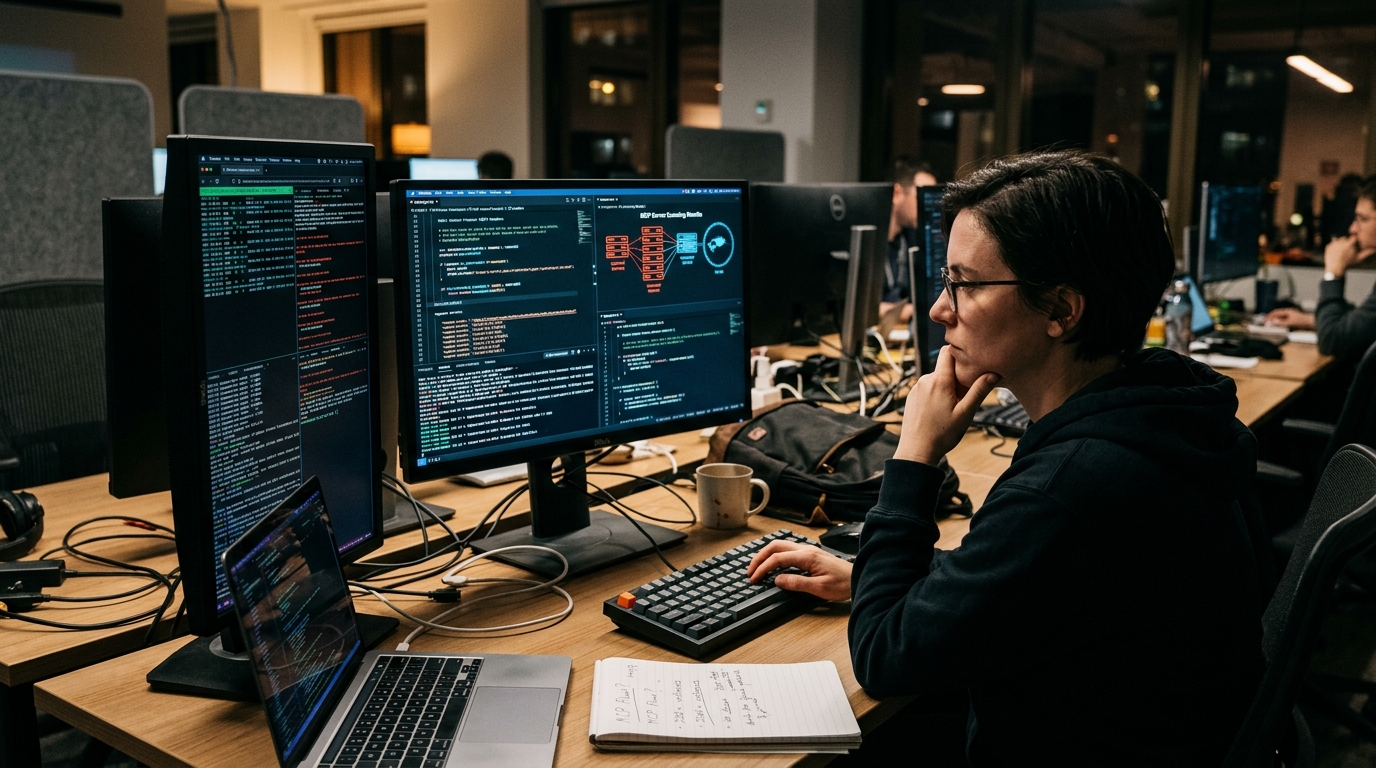
The evolution of artificial intelligence from simple large language models to autonomous "agents" was hailed as the defining milestone of 2025. However, the infrastructure enabling these agents to interact with the physical world—the Model Context Protocol (MCP)—is now at the center of a fierce cybersecurity debate. A recent audit by OX Security revealed that over 200,000 MCP servers are exposed to a remote code execution (RCE) vulnerability, which the protocol's creator, Anthropic, refuses to classify as a bug, instead calling it "intended functionality."
The Rise of MCP and Industry-Wide Adoption
Anthropic launched the Model Context Protocol with an ambitious vision: to become the "USB of the AI era." Before its inception, developers had to write bespoke code to allow an AI (like Claude or ChatGPT) to read a file, query a database, or send an email. MCP standardized this connection, allowing AI agents to seamlessly plug into tools and data sources without constant reconfiguration.
The industry response was unprecedented. In March 2025, OpenAI integrated MCP into its ecosystem, followed shortly by Google DeepMind. By December 2025, Anthropic had donated the protocol to the Linux Foundation, cementing its status as an open global standard. With over 150 million downloads, MCP became the backbone of the burgeoning "agent economy." Yet, this rapid expansion appears to have come at the cost of security oversight.
The OX Security Audit: Uncovering the stdio Flaw
Researchers at OX Security, during a comprehensive audit of the protocol's implementation, identified a fundamental weakness in how MCP handles "stdio transport"—the mechanism through which the AI sends commands to the host system. According to the report, the current implementation allows a malicious actor to inject system commands that execute with the privileges of the user running the AI agent.
The issue stems from the fact that many MCP servers, designed to facilitate access to local files or terminals, lack adequate sandboxing. Researchers demonstrated that they could gain full control over test systems simply by sending specially crafted prompts through the AI, which were then translated into operating system commands without any explicit user confirmation. The scale of the exposure—200,000 servers—suggests that many developers are deploying MCP in its default, insecure state.
Anthropic's Defense: "Feature, Not a Bug"
Anthropic's response to the OX Security findings has sent shockwaves through the cybersecurity community. The company maintains that the ability to execute commands is inherent to the purpose of MCP. "MCP was designed to give agents the capability to use tools. If a user chooses to give their agent access to a terminal or a file system, the responsibility for securing that environment lies with the host," an Anthropic spokesperson stated.
This "Security by User Responsibility" philosophy stands in stark contrast to the modern "Security by Design" movement. Critics argue that Anthropic is shifting the burden of security onto end-users and developers, many of whom may lack the expertise to properly harden an MCP server. OX Security maintains that the lack of default constraints within the protocol makes abuse not just possible, but inevitable in a production environment.
Systemic Risks in the AI Ecosystem
With 200,000 servers already vulnerable, the risk is systemic. AI agents are now being deployed in HR departments, financial services, and infrastructure management. An exposed MCP server could allow an attacker to exfiltrate sensitive data, install ransomware, or hijack corporate compute resources, all while appearing to be the legitimate activity of an authorized AI agent.
The Linux Foundation, which now oversees the protocol, finds itself in a difficult position. It must balance the flexibility that made MCP popular with the growing demand for rigorous security standards. While OpenAI and Google have not officially commented on the OX Security audit, reports suggest they are exploring additional security wrappers to protect their users from potential MCP-based exploits.
Conclusion: The Fine Line Between Autonomy and Safety
The MCP controversy highlights the central dilemma of the AI age: how much power are we willing to grant machines, and who is liable when that power is turned against us? While Anthropic is technically correct that a tool is by definition powerful, the history of computing has shown that power without built-in safeguards is a recipe for disaster. The developer community must now decide whether to accept MCP as it is or demand a fundamental redesign that prioritizes security over ease of integration.