The global AI chessboard is vibrating once again due to developments in the East. Following the seismic impact of DeepSeek, another Chinese powerhouse, Zhipu AI, has arrived to confirm that the strategy of 'efficiency over brute force' was not a fluke, but a conscious paradigm shift. The unveiling of Zhipu AI's new coding model is not merely a technical upgrade; it is a geopolitical statement reshaping the cost of innovation.
The Strategy of 'Elegant Efficiency'
For years, the narrative in Silicon Valley centered on scale: more data, more GPUs, more energy. Zhipu AI, following in the footsteps of DeepSeek, is proving that clever architecture can overcome resource constraints. Their new coding model achieves performance levels directly comparable to OpenAI's GPT-4o and Anthropic's Claude 3.5 Sonnet, but at a fraction of the training and operational costs.
This evolution is particularly critical considering the stringent restrictions the U.S. has placed on exporting advanced Nvidia chips to China. Instead of buckling under pressure, Chinese firms like Zhipu AI—backed by giants such as Alibaba, Tencent, and Meituan—were forced to innovate at the algorithmic level. The result is models that are 'lighter,' faster, and exceptionally accessible to developers worldwide.
The Democratization of Code and Economic Disruption
The true 'DeepSeek moment' for Zhipu AI lies in its pricing. The drastic reduction in cost-per-token for code generation is a game-changer for startups and independent developers. When the cost of using a top-tier model drops by 90%, the barriers to entry in the software market crumble.
- Operational Cost Reduction: Companies can now automate large portions of code without burdening their budgets with exorbitant subscriptions to American platforms.
- Open Access: Zhipu's commitment to open-weights models empowers the developer community, allowing for local fine-tuning without dependence on Silicon Valley's cloud infrastructure.
- Coding Specialization: The new model is not just a general assistant but a precision tool that understands complex software structures, reducing errors and production time.
- Market Pressure: This forces Western incumbents to rethink their monetization strategies, potentially leading to a price war that benefits the end-user.
Geopolitics and the Western Response
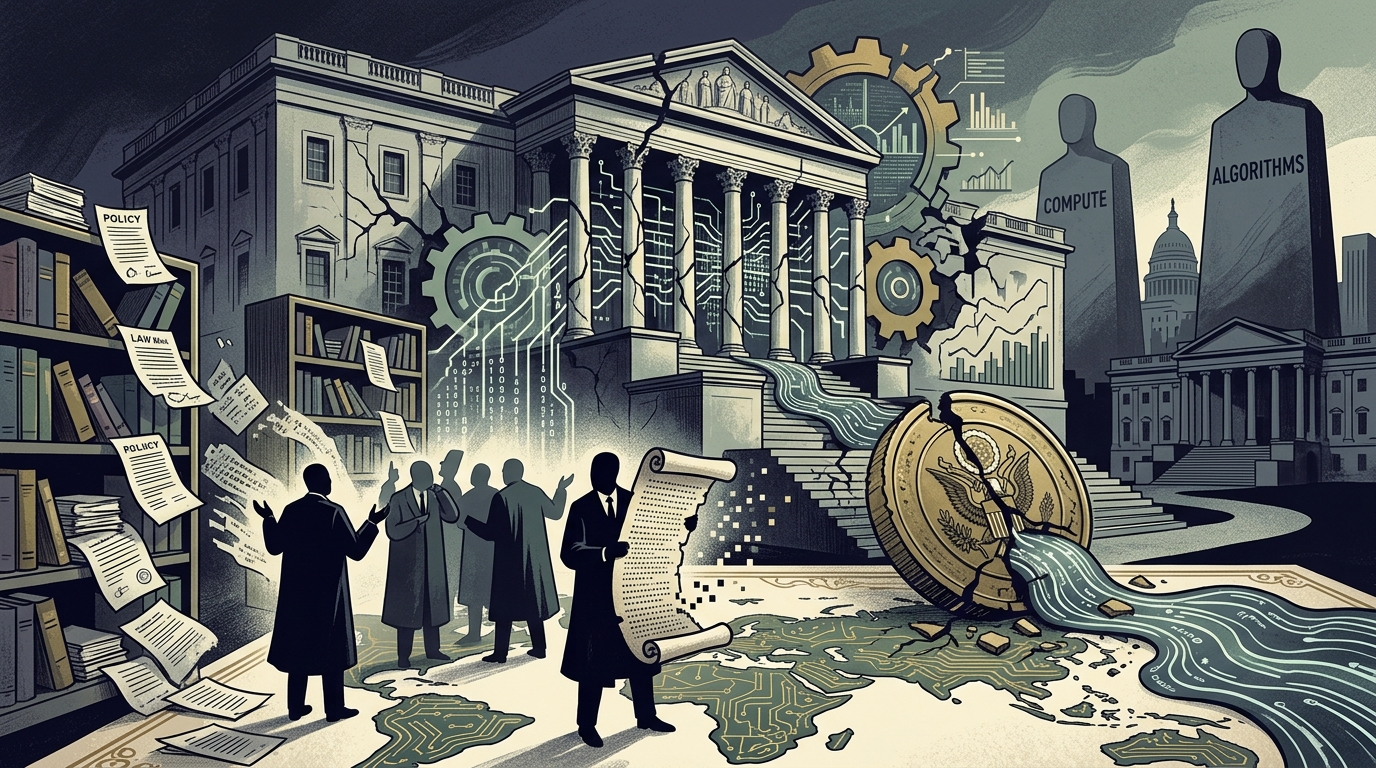
Zhipu AI's success challenges U.S. hegemony. If China can produce superior technology with fewer resources, then the chip sanction strategy might prove to be a boomerang, pushing the East toward technological autonomy faster than anticipated. Already, Western analysts warn that the obsession with 'brute computational power' may have blinded American companies to the necessity of algorithmic optimization.
"It is no longer about who has the most chips, but about who knows how to use them best," remarked a tech executive from Beijing.
In conclusion, Zhipu AI's move marks the beginning of a new era where China is no longer the 'imitator' but the trendsetter in artificial intelligence. For developers, this means better tools at lower prices. For the tech industry at large, it means that Silicon Valley's era of complacency has come to an end.