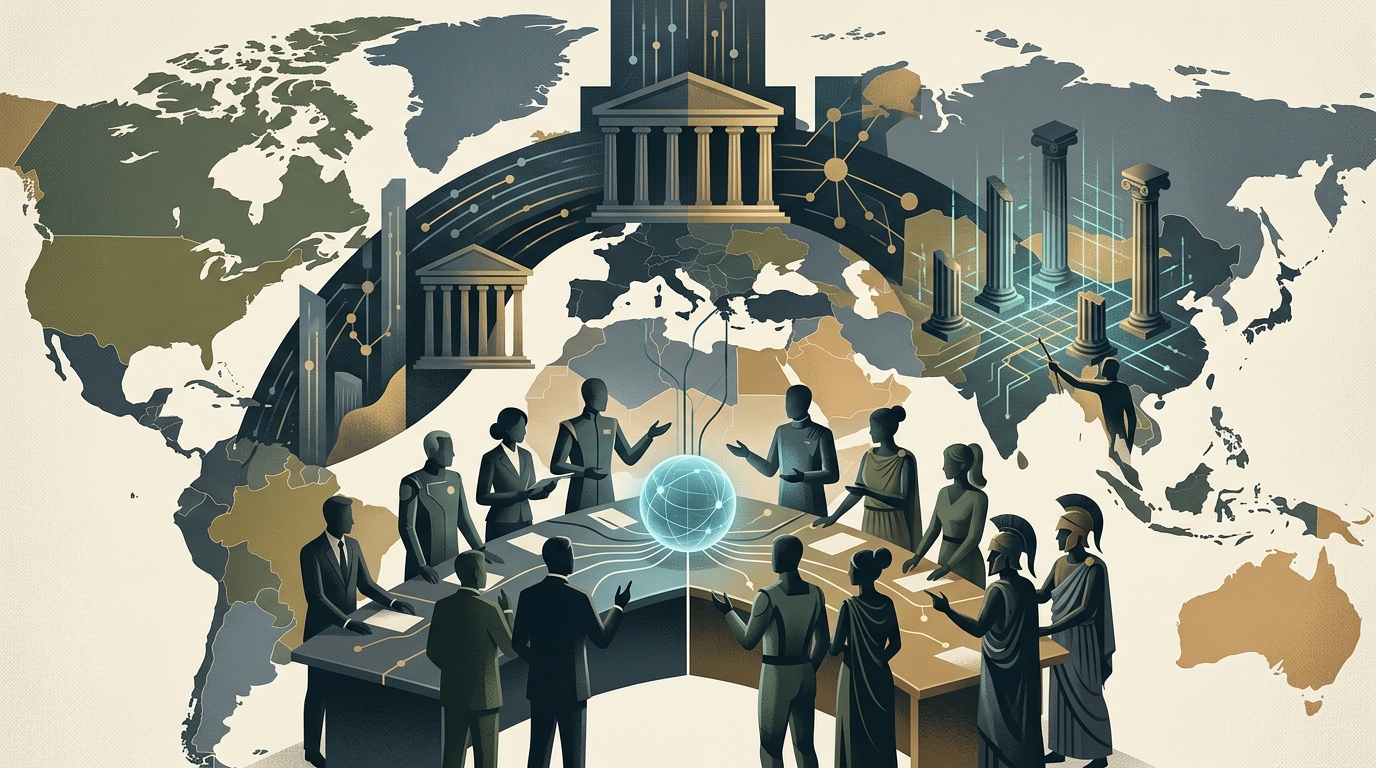
In the high-stakes corridors of Silicon Valley, the term 'modeling' is usually synonymous with progress. However, for Anthropic—the AI safety and ethics-focused startup founded by former OpenAI executives—the word has taken on a much darker connotation. Anthropic’s recent accusation against Chinese tech giant Alibaba for 'brazenly' and 'illicitly' stealing its AI model capabilities is not merely a corporate spat; it is a harbinger of a global digital cold war where data is the new territory and algorithms are the new frontiers.
The Anatomy of an Allegation: From San Francisco to Hangzhou
Anthropic alleges that Alibaba utilized the outputs of its Claude models to train its own AI systems—a practice known as 'model distillation' or 'output-based learning'—without authorization. According to Anthropic, Alibaba’s actions violate terms of service and constitute a form of intellectual property theft that undermines billions of dollars in research and development investment. The charge is severe: Alibaba is accused of bypassing the arduous work of primary training by using Claude’s 'intelligence' as a shortcut to boost its own Qwen models.
Alibaba, for its part, maintains a stance balanced between denial and an appeal to open-source principles. The Chinese firm argues that its methods align with international practices and that refining models through publicly available data (or data derived from interactions) is a natural part of the industry’s evolution. However, for Anthropic, this represents a flagrant breach of trust and proprietary rights.
The Geopolitical Chessboard and the Ownership Paradox
This conflict does not occur in a vacuum. It arrives as the United States tightens export controls on chips and technology to China, fearing the Asian superpower will leverage AI for military and strategic advantages. Anthropic’s accusation provides 'ammunition' to Washington lawmakers who argue that Chinese firms cannot compete on a level playing field and instead resort to poaching Western technology.
- Anthropic is viewed as the 'ethical' alternative to OpenAI, giving its complaints significant moral weight in the industry.
- Alibaba Cloud is the dominant player in the Chinese market; any shadow cast on its technology's origins affects its global credibility.
- The issue of 'synthetic training'—training a model on another model's data—remains a legal gray area globally.
The irony, as suggested by the title 'Rules for Thee But Not for Me,' is that Western AI companies themselves have been repeatedly accused of 'stealing' data from artists, writers, and publishers to train their initial models. Anthropic now finds itself in the role of the victim, experiencing a tactic that many believe is the very cornerstone of the Generative AI industry.
Ethical Implications and the Future of Innovation
If Alibaba did indeed succeed in 'cloning' Claude’s capabilities, it raises fundamental questions about whether intellectual property in AI can ever truly be protected. If a model can learn from the responses of another, the first-mover advantage evaporates rapidly. This could lead to a more closed ecosystem, where companies drastically restrict access to their models for fear of reverse engineering.
"Artificial intelligence is a universal heritage, but its commercialization requires rules that haven't been written yet," notes a market analyst.
In conclusion, the Anthropic-Alibaba dispute is just the tip of the iceberg. As China pursues total AI self-sufficiency by 2030, friction with American firms will only intensify. The question remains: is model distillation a legitimate optimization technique or digital pillaging? The answer will likely depend more on geopolitical might than on legal precedent.