As we navigate through June 2026, the initial hysteria surrounding Artificial Intelligence (AI) has matured into a starker, more demanding reality. Organizations that once believed simply integrating ChatGPT or Gemini into their daily operations would yield an immediate competitive edge are now facing the harsh reality of commoditization. When everyone has access to the same powerful frontier models, the advantage evaporates. At this critical juncture, Bain & Company has introduced the concept of "Proprietary Intelligence," arguing that winning in the AI era is no longer about who has the best algorithm, but who possesses the best unique data.
From Adoption to Differentiation
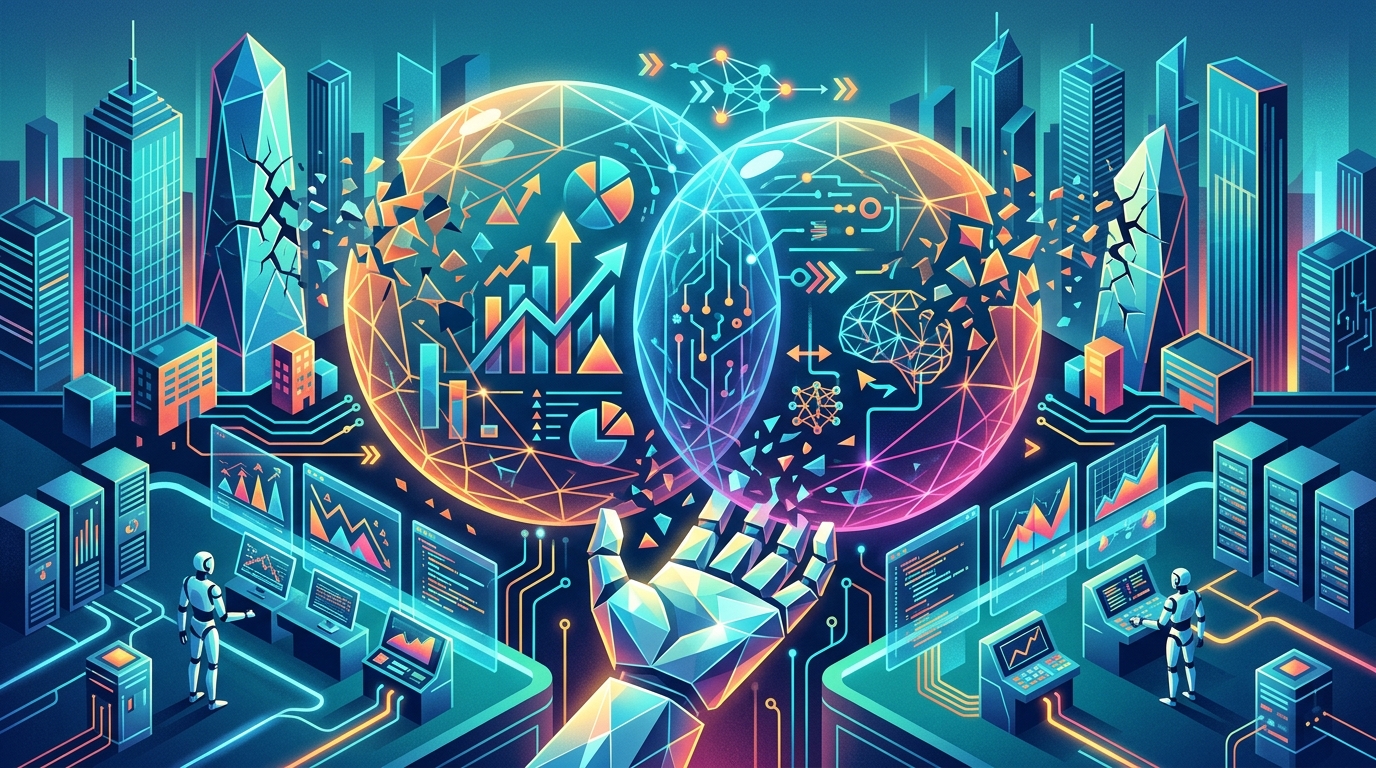
The Bain report highlights a crucial shift. In the early years of the Generative AI explosion, the battle was fought on the grounds of adoption speed. Today, in 2026, the battle is about differentiation. Proprietary Intelligence is defined as the synthesis of general-purpose AI models with a company's internal, often confidential, data, the deep domain expertise of its people, and its unique operational workflows. This combination creates a "digital moat" that is virtually impossible for competitors to replicate.
According to the analysis, the companies currently "winning" are those that have stopped treating AI as a mere software tool and have begun viewing it as a living organism that feeds on the company’s own history and experience. This requires a radical overhaul of data architecture. Many enterprises are discovering that their data is siloed, inconsistent, and "dirty," making it useless for training specialized models. Investing in data cleanliness and structure is now more vital than purchasing AI tokens or compute power.
The "Last Mile" and Organizational Transformation
One of the most compelling aspects of Bain's approach is the focus on the so-called "last mile" of implementation. While the technology may be ready, human infrastructure often lags behind. Proprietary Intelligence isn't just about bits and bytes; it’s about how employees interact with them. The winners are those who redesign jobs around AI, rather than trying to force AI into existing, legacy structures.
- Domain-Specific Models: Utilizing models trained exclusively on a company's specific legal, medical, or industrial datasets.
- Workflow Integration: AI is not an external assistant but the central nervous system of decision-making.
- Data Governance: Ensuring that privacy and security are not sacrificed for the sake of speed.
Bain warns that the gap between "pioneers" and "laggards" is widening dangerously. Companies that invested early in building their proprietary knowledge base are now seeing exponential productivity gains, while others struggle with subscription costs that offer no meaningful return on investment (ROI).
Economic Implications and the Future of Competition
On a macroeconomic level, the rise of Proprietary Intelligence is changing the rules of Mergers and Acquisitions (M&A). Today, a company's value is not appraised solely on revenue or customer base, but on the "depth" and "quality" of the data it holds for AI training. Data is the new working capital. Furthermore, we are witnessing the emergence of a new form of corporate protectionism, where companies refuse to share data even with close partners, fearing the loss of their intelligence advantage.
"AI is the engine, but proprietary intelligence is the fuel. Without the right fuel, the fastest engine in the world won’t take you anywhere," the report notes.
In conclusion, Bain & Company’s strategy serves as a wake-up call. The era of "free" or "easy" AI is over. The next phase requires rigorous work on data infrastructure, strategic selection of specialization areas, and, above all, the understanding that AI is only as smart as the history you allow it to learn from you.