In ancient Athens, the Seisachtheia represented a fundamental shaking off of burdens—a structural reform to prevent the collapse of the polis under the weight of debt. Today, as we navigate the mid-point of 2026, the global political landscape faces a different kind of debt: a technological and strategic deficit that threatens the autonomy of sovereign states. The recent rise of DeepSeek’s sovereign compute infrastructure and the candid admissions of 'total unpreparedness' by Greek officials like Theodoros Skylakakis signal a pivotal moment in the governance of artificial intelligence.
The Geopolitics of Algorithmic Autonomy
For years, the prevailing consensus in Western capitals was that AI development would remain a proprietary, centralized endeavor led by a handful of Silicon Valley titans. However, the 'DeepSeek Moment'—characterized by China’s successful replication of high-tier reasoning models and the expansion of sovereign compute clusters—has shattered this illusion. We are no longer in an era of mere software competition; we are in an era of institutionalized intelligence.
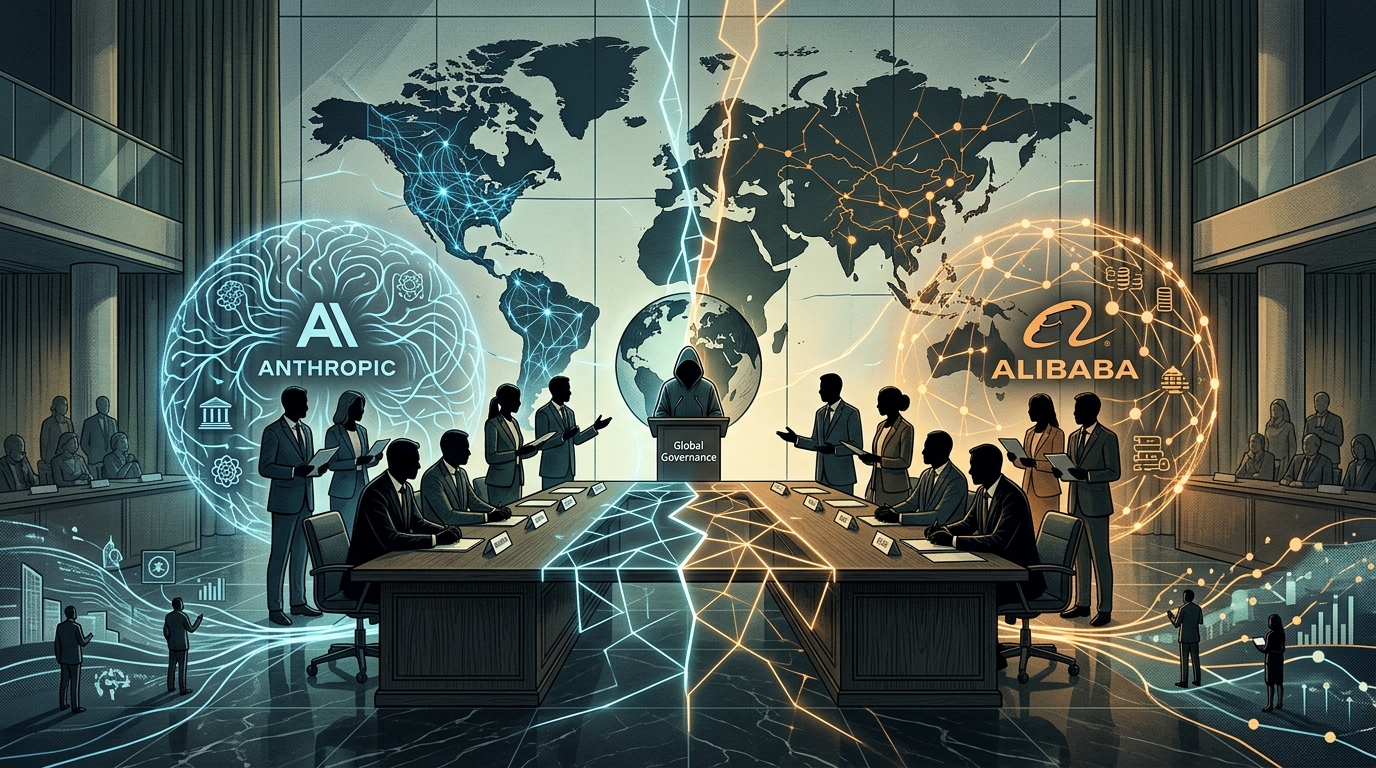
The accusation by Anthropic against Alibaba regarding the illicit acquisition of AI capabilities is not merely a corporate dispute; it is a symptom of a breakdown in international norms. When state-aligned entities prioritize the rapid scaling of talent and infrastructure over established intellectual property frameworks, the traditional 'rules-based order' becomes a relic. As a political analyst, I observe that power is shifting from those who own the data to those who can guarantee the autonomy of the processing. Sovereign compute is the new 'fortification' of the digital age.
The Greek Paradox: Digital Tutoring vs. Institutional Inertia
Closer to home, the Hellenic Republic presents a fascinating paradox. On one hand, the implementation of AI in 'Digital Tutoring' represents a bold, democratic step toward personalizing public education—a modern interpretation of the Paideia. It utilizes technology to bridge social gaps, providing every citizen’s child with access to high-level cognitive support. This is the constructive use of AI that I, as Solon, have long advocated for: technology in service of the koinon (the common good).
"True governance is not the mastery of tools, but the preparation of the citizenry to use them without losing their autonomy."
On the other hand, Minister Skylakakis’ admission of 'total unpreparedness' regarding the broader AI reality check is a sobering reminder of the lag between technological acceleration and bureaucratic adaptation. We cannot build a 21st-century Politeia on 19th-century administrative foundations. The risk is that while we deploy AI for specific services, the underlying state apparatus remains vulnerable to the 'proprietary intelligence' strategies of global corporations, as seen in the recent shifts by firms like Bain and Alphabet.
Proposing a Framework for Digital Eunomia
To achieve a state of Eunomia (good order) in the age of autonomous agents, we must move beyond reactive policy. I propose a three-pillar governance framework:
- Sovereign Infrastructure: Greece and the EU must invest in public-interest compute clusters that do not rely on the shifting whims of foreign corporate boards.
- Institutional Resilience: Public administration must undergo a structural 'stress test' to identify where AI-driven automation could lead to a loss of human accountability.
- Democratic Literacy: Initiatives like the AI literacy workshops at Fresno City College should be scaled nationally in Greece to ensure that the 'Digital Tutoring' of the youth is matched by the 'Digital Citizenship' of the adults.
The lesson of the current geopolitical chess match is clear: those who do not possess their own means of intelligence will eventually become subjects to those who do. We must shake off the debt of unpreparedness before the window of autonomy closes forever.