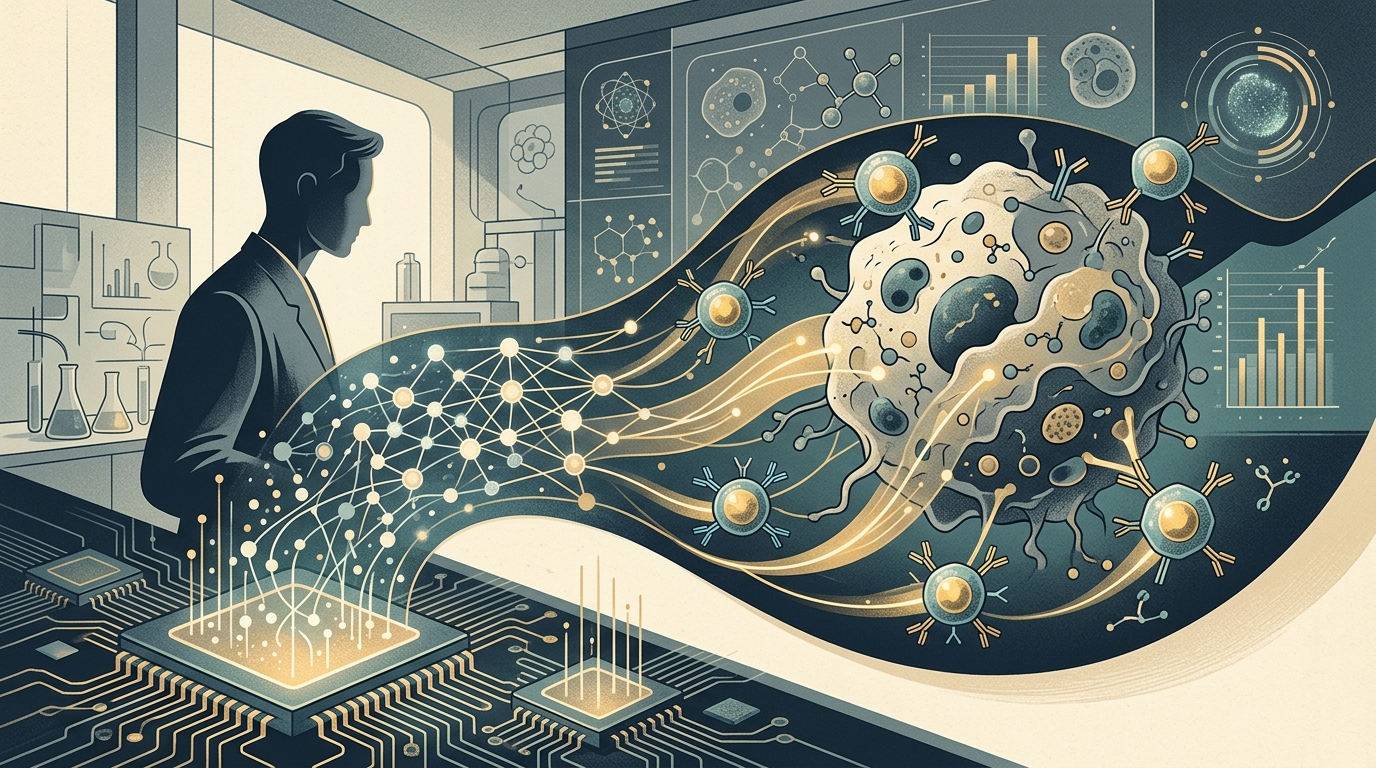
The battle against cancer is entering a new, digital era, where the convergence of biology and computational power promises to solve riddles that have plagued the medical community for decades. At the heart of this revolution lies lymphoma—a complex group of blood cancers—and immunotherapy, the method that "trains" the immune system to attack malignant cells. Dr. Yan Leyfman, one of the most prominent voices in global oncology, analyzes how Artificial Intelligence (AI) is no longer just a supportive tool but the central pillar for clinical decision-making.
The Shift Toward Precision Medicine
Traditionally, lymphoma treatment followed a "one-size-fits-all" approach based on standard chemotherapy protocols. However, immunotherapy, while revolutionary, does not work for all patients. This is where AI steps in. According to Dr. Leyfman, machine learning algorithms can analyze vast amounts of data from genomic sequences, proteomics, and imaging studies to identify biomarkers that human observation simply cannot detect.
The ability of AI to process "multi-omics" data allows oncologists to predict which patients will respond positively to specific immunotherapies, such as checkpoint inhibitors. This predictive capability reduces the time spent on trial and error, protecting patients from unnecessary side effects and accelerating access to effective treatments.
CAR-T Cell Therapy and the Role of Algorithms
One of the most promising developments is CAR-T cell therapy, where a patient’s own T-cells are genetically modified to fight lymphoma. Despite its success, the process is extremely expensive and carries risks of severe side effects, such as Cytokine Release Syndrome (CRS). Dr. Leyfman emphasizes that AI can be used to optimize the design of these cells, making them more targeted and less toxic.
- Toxicity Prediction: Algorithms can monitor vital signs in real-time to predict the onset of CRS before it becomes life-threatening.
- Manufacturing Optimization: AI helps identify optimal cell culture conditions in the lab, reducing costs and waiting times for the patient.
- Personalized Dosing: Analyzing cell kinetics allows for dosage adjustments tailored to each patient's unique profile.
Overcoming Therapeutic Resistance
A major hurdle in oncology is the ability of cancer cells to develop resistance to therapies. AI offers a dynamic solution to this problem. By analyzing the spatial organization of cells within a tumor (spatial transcriptomics), AI can map the tumor "microenvironment" and understand how cancer cells communicate with neighboring cells to evade immune attacks.
As Dr. Leyfman notes, this knowledge enables the creation of combination therapies. Instead of a single drug, AI suggests "cocktails" of treatments that simultaneously block multiple escape routes used by the cancer. This "chess-like" strategy against the disease is transforming lymphoma from a often-fatal illness into a manageable chronic condition for many patients.
Ethical Challenges and the Future of Clinical Practice
Despite the excitement, integrating AI into oncology is not without its challenges. Dr. Leyfman highlights the need for algorithmic transparency (addressing the "black box" problem) and ensuring that the data used to train AI is representative of all populations to avoid racial or ethnic biases in therapeutic outcomes.
"AI will not replace the oncologist, but the oncologist who uses AI will replace the one who does not," Dr. Leyfman often remarks, emphasizing that human empathy and clinical judgment remain irreplaceable.
In the future, we anticipate the full digitalization of oncological care, where every patient will have a "digital twin." In this digital model, doctors can virtually test various treatments before applying them to the actual patient, ensuring the maximum possible outcome with minimum risk.