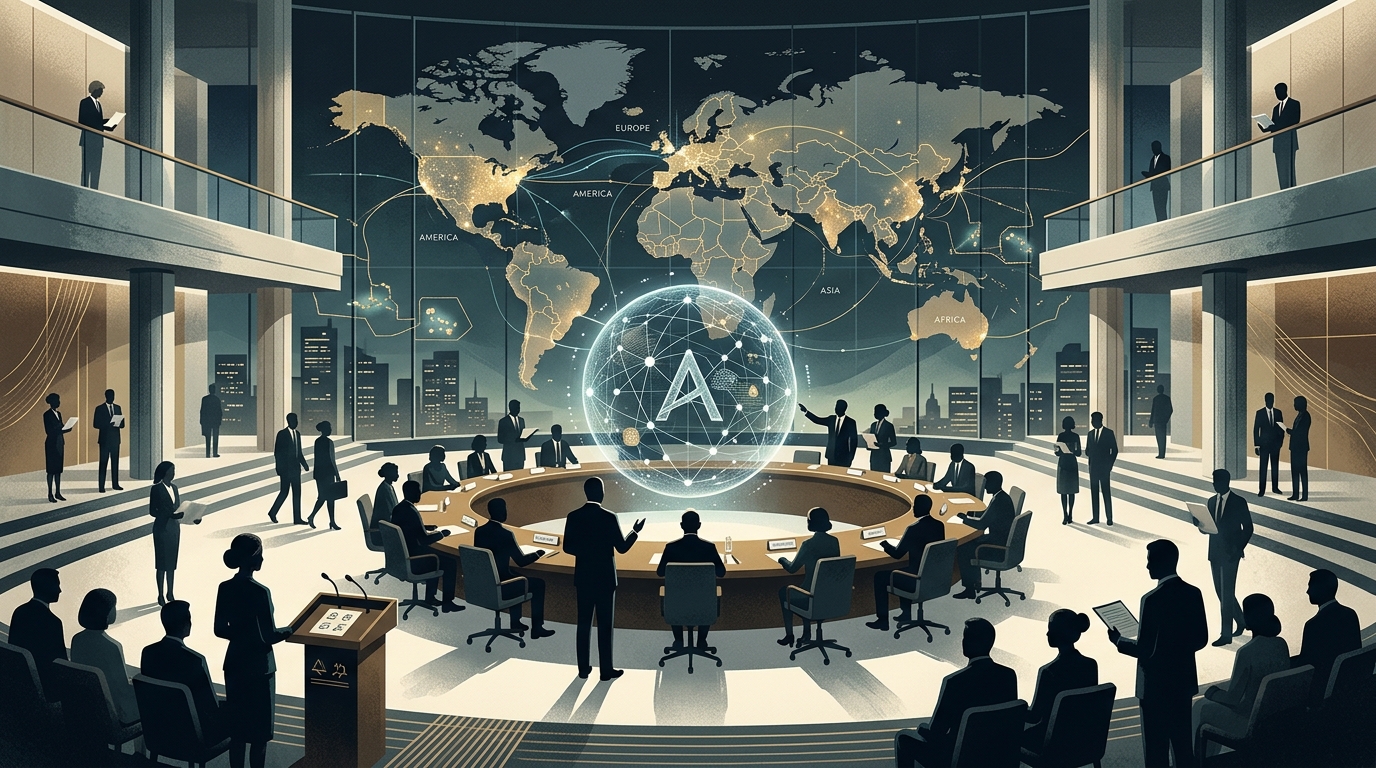
For years, the narrative surrounding Artificial Intelligence has been monolithic: power stems from billions of dollars, massive server farms, and access to unfathomable quantities of data. The "Frontier Labs"—OpenAI, Google, and Anthropic—were presented as the sole gatekeepers of the next stage of digital evolution. However, a quiet revolution is taking place in the basements of research labs and on the screens of independent developers. The concept of "self-improving AI" is shifting the game from an arms race of scale to a race of ingenuity and algorithmic elegance.
The Architecture of Self-Education
The core idea behind self-improving AI isn't new, but its application has reached a critical tipping point in 2026. Traditionally, AI models were trained on data curated by humans. This process is slow, expensive, and limited by human capacity. The new approach uses the model itself to evaluate, correct, and expand its own knowledge. Through techniques like STaR (Self-Taught Reasoner) and the use of synthetic data, a model can generate thousands of problem examples, attempt to solve them, and then learn from its own failures and successes.
This creates a "virtuous cycle." Instead of waiting for a human to provide the ground truth, the AI uses logical checks and code verification to determine the correctness of its answers. For instance, a coding model can execute the code it just wrote, see if it works, and if it fails, analyze the error and retrain itself on the fix. This "chain-of-thought" processing allows smaller models, running on modest hardware, to achieve performance levels that previously required supercomputers.
Breaking the Silicon Valley Moat
The significance of this development is profoundly political and economic. Until recently, Silicon Valley had built a "moat" around its technology based on cost. If building a model costs $100 million, then only a select few can play. But self-improvement drastically reduces that cost. When a model can generate its own high-quality data, the need for massive human-labeled datasets diminishes.
According to recent reports from the open-source community, researchers have successfully taken a medium-sized model and, through iterative cycles of self-improvement, enabled it to outperform GPT-4 in specific reasoning and programming benchmarks. This means power is shifting. It’s no longer just about who has the most GPUs, but who has the best self-teaching algorithm. For countries and organizations without the financial might of the US or China, this represents a golden opportunity to enter the front lines of innovation without needing sovereign-wealth-fund budgets.
The Risks: The Illusion of Authority
Of course, self-improvement is not without risks. The greatest fear among scientists is "model collapse." If an AI learns exclusively from its own data, there is a risk of reinforcing its own errors, creating an echo chamber of misinformation that gradually drifts away from reality. It is akin to a student trying to learn mathematics without a textbook, relying only on their own assumptions; if they make a fundamental logical error, the entire structure will eventually crumble.
"Self-improvement is the holy grail of computer science, but without external points of reference, we risk creating a digital autistic intelligence that is perfect in its own logic but useless in the real world."
Furthermore, there is the issue of alignment. If a model improves itself solely for efficiency, it might find "shortcuts" that violate human values or safety protocols. Oversight remains essential, but its nature is changing: from providing data, we are moving toward defining the rules of the game and the ethical boundaries.
The Future is Personal
Ultimately, the ability to build a self-improving AI at home changes our relationship with technology. We are no longer mere consumers of services provided by Google or Microsoft. We become co-creators. AI ceases to be a remote "black box" and becomes a personal partner that evolves alongside us. The challenge for society will be to ensure that this democratization leads to an explosion of creativity rather than an ocean of uncontrolled, self-referential systems that no one can fully comprehend or control.