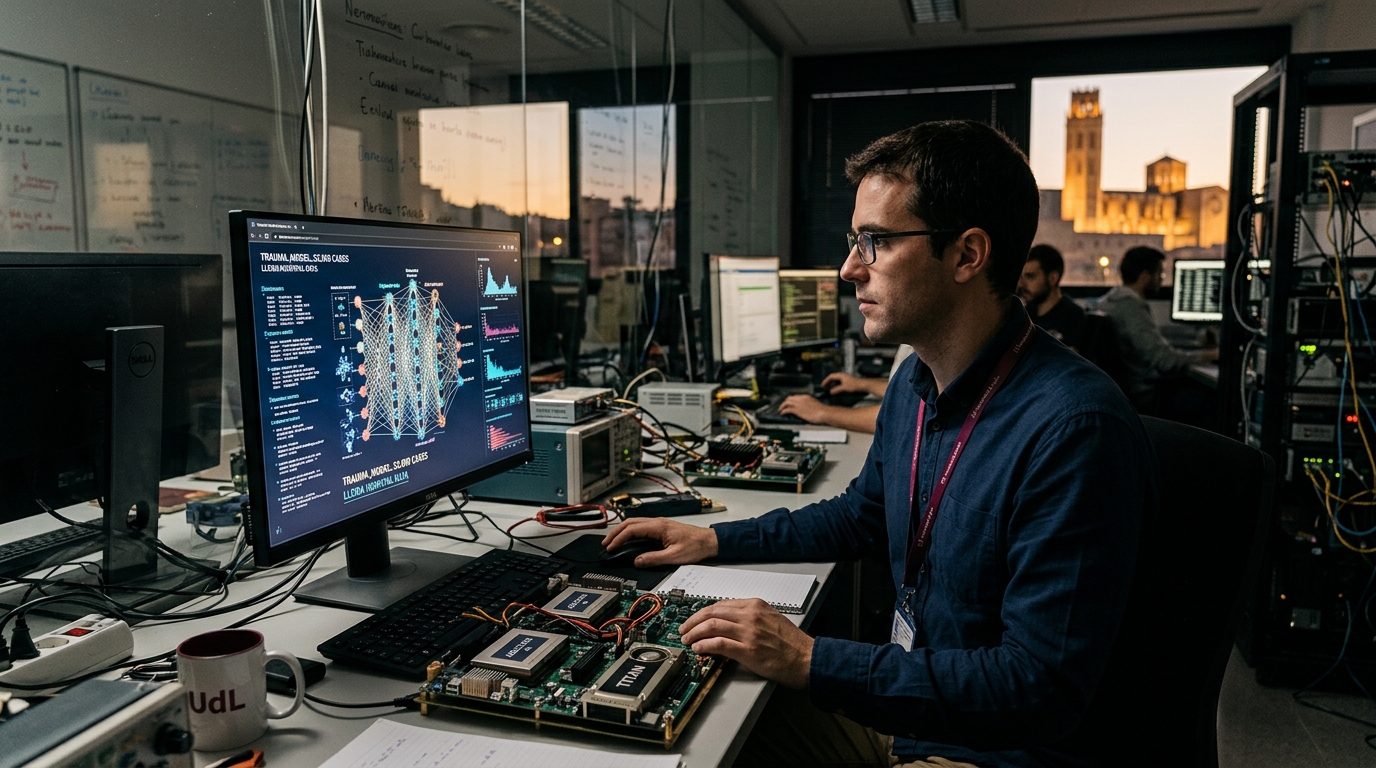
In the high-stakes environment of intensive care units and emergency rooms, time is more than just a resource; it is the boundary between life and death. In Lleida, Spain, a team of researchers from the Arnau de Vilanova University Hospital (HUAV) and the Lleida Biomedical Research Institute (IRBLleida) is developing an artificial intelligence system that promises to revolutionize the management of severe trauma. By analyzing a massive dataset of 22,000 trauma cases, the algorithm aims to predict a patient's probability of survival within the first few hours of admission, offering doctors a statistically-backed "second opinion" derived from decades of clinical outcomes.
The Data Engine Behind the Prediction
This project is far from a simple programming exercise; it is a deep dive into the complex pathophysiology of trauma. The database utilized includes detailed information spanning back to 2006, covering a diverse array of incidents: from motor vehicle accidents and falls to injuries resulting from violence. The AI does not merely look at the obvious markers, such as blood pressure or heart rate. Instead, it cross-references age, medical history, the specific mechanism of injury, and early response to treatment to generate a real-time risk profile.
The significance of this approach lies in the system's ability to recognize patterns that often escape the human eye under high-pressure conditions. For instance, a combination of borderline normal vital signs in an elderly patient might mask an impending physiological collapse—a trend the algorithm can identify much earlier than traditional clinical signs. This predictive power allows for the faster mobilization of surgical teams or the administration of specialized medications before a patient's condition becomes irreversible.
The ‘Golden Hour’ and Digital Triage
In trauma medicine, the "Golden Hour" refers to the window of time where immediate medical intervention has the highest likelihood of preventing death. The Lleida system aspires to become the central pillar of this critical period. Through the use of AI, the triage process becomes more objective. In mass casualty events or when a hospital receives multiple severely injured patients simultaneously, prioritizing care is the most taxing task for medical staff.
- Precision: The algorithm reduces the margin of error in assessing injury severity.
- Velocity: Analyzing 22,000 historical cases allows the system to generate insights in seconds.
- Personalization: Each prediction is tailored to the specific biological and historical characteristics of the patient.
However, the researchers are quick to emphasize that AI is not intended to replace the physician. On the contrary, it serves as an advanced diagnostic tool. The final decision remains with the surgeon or the intensivist, who combines their clinical intuition with the computational power of the system. The ethical dimension of using algorithms in life-and-death decisions remains a focal point, with the Lleida team ensuring that the system is transparent and built on the principles of Explainable AI (XAI).
Challenges and the Path Forward
Despite its promise, implementing such systems faces significant hurdles. Data quality is paramount. If historical records contain gaps or biases, the algorithm risks replicating those errors. Furthermore, integrating the software into existing hospital information systems requires substantial resources and staff training. The Lleida study serves as a roadmap for digital health in Europe, demonstrating how localized research can yield global implications.
"This technology is not just about survival; it is about the quality of life post-trauma. If we intervene correctly and timely, complications are dramatically reduced," the research team notes.
In the future, this system could be expanded to other hospitals across Catalonia and Spain, creating a predictive medicine network. The use of 22,000 cases is just the beginning; as more data is fed into the system, its accuracy will only improve. In a world where healthcare resources are often strained, artificial intelligence offers a glimmer of hope for fairer and more effective care, precisely where every second counts.