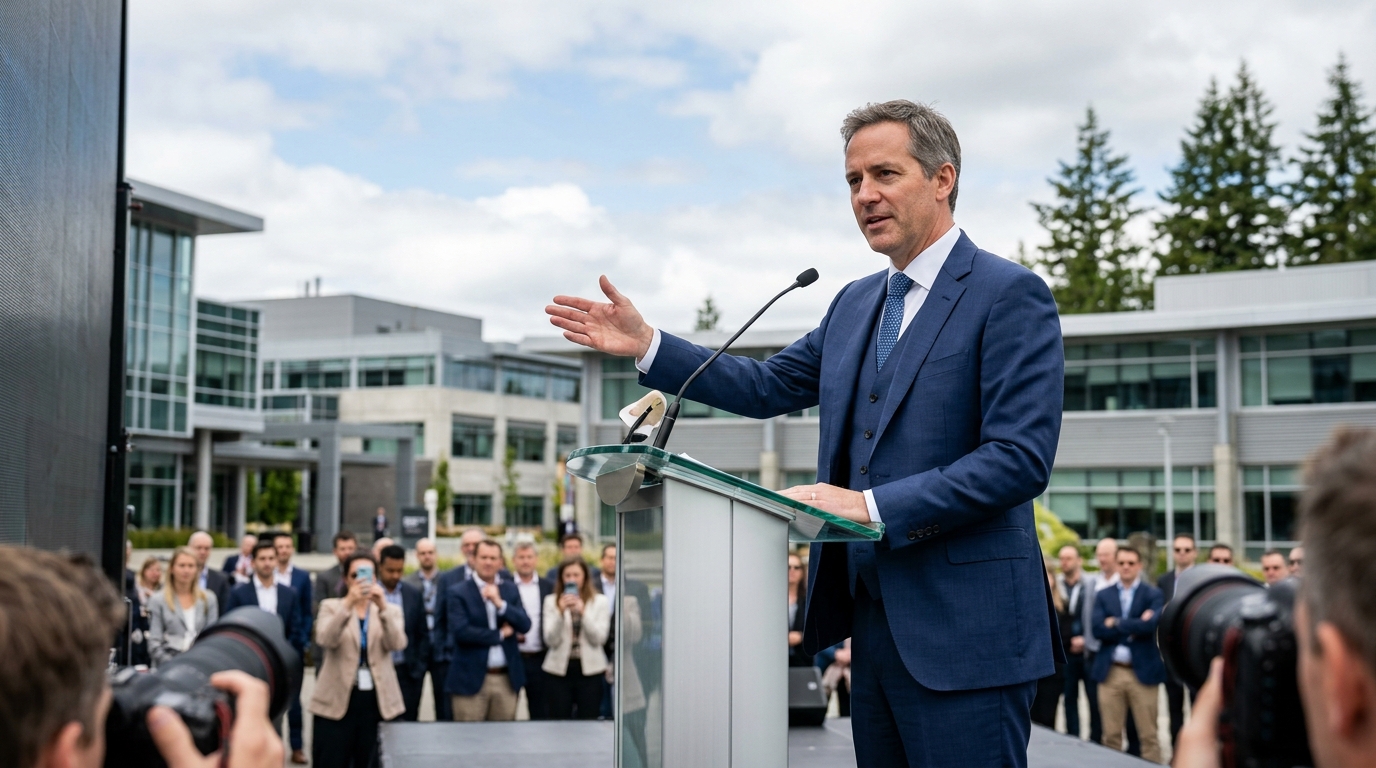
In a move that underscores the titanic scale of competition in the global Artificial Intelligence arena, Meta Platforms Inc. has unveiled plans to construct a state-of-the-art AI data center in Canada. This marks the company's first such facility on Canadian soil and, more significantly, the largest infrastructure of its kind ever built by the social media giant outside the United States. The investment, valued at several billion dollars, signals a new phase in Mark Zuckerberg’s expansionist strategy as the need for computational power to train Llama models and support generative AI tools across Facebook, Instagram, and WhatsApp reaches unprecedented levels.
The Strategic Choice of Canada: Climate and Energy
Meta’s decision to choose Canada is far from arbitrary. As AI models become increasingly complex, their demands for energy and cooling grow exponentially. Canada offers a unique combination of advantages: a cooler climate, which drastically reduces the cost of cooling thousands of power-hungry GPUs, and access to abundant, relatively inexpensive, and renewable energy, primarily through hydroelectric projects. In an era where tech giants face intense scrutiny over their carbon footprint, the ability to operate a data center with low carbon emissions is vital for public image and compliance with international ESG regulations.
The location, while not yet pinpointed with absolute precision, is expected to leverage infrastructure already developed in provinces like Quebec or Ontario, which have emerged as significant tech hubs. Meta aims to create a facility that is not just a data storage site but an "intelligence factory," equipped with the latest generations of NVIDIA chips, as well as Meta’s own custom-designed MTIA (Meta Training and Inference Accelerator) processors.
The Race for Computational Sovereignty
This move is part of a broader "arms race" in hardware infrastructure. Microsoft, Google, and Amazon have already launched similar gargantuan projects, with Microsoft notably partnering with OpenAI for the $100 billion "Stargate" project. Meta, however, is following a slightly different path, focusing on global infrastructure distribution to minimize latency and ensure dominance across various geographic zones.
- Investment in advanced liquid cooling systems to handle the heat of H100 and B200 chips.
- Creation of thousands of jobs during construction and hundreds of permanent high-skill positions.
- Close cooperation with local authorities to upgrade the energy grid.
- Strengthening Canada's AI ecosystem, which already boasts world-class research centers in Toronto and Montreal.
Political and Social Challenges
Despite the economic benefits, Meta's investment is not without its hurdles. The massive electricity consumption of AI data centers has begun to raise concerns among residents and policymakers in Canada. There is a fear that prioritizing such facilities could lead to rising electricity prices for residential consumers or strain the grid during peak periods. Furthermore, the issue of "digital sovereignty" remains at the forefront: although the infrastructure is on Canadian soil, the control of data and technology remains with an American multinational.
"This investment is a vote of confidence in Canada's talent and infrastructure, but it also places a responsibility on us to manage our resources wisely," stated a leading technology market analyst.
In conclusion, Meta's first AI data center in Canada is more than just a building filled with servers. It is a symbol of an era where energy geopolitics meets the AI revolution. For Meta, it is the necessary foundation to remain relevant in a world governed by algorithms. For Canada, it is an opportunity to establish itself as the "northern pillar" of the global digital economy, provided it can balance growth with environmental sustainability.