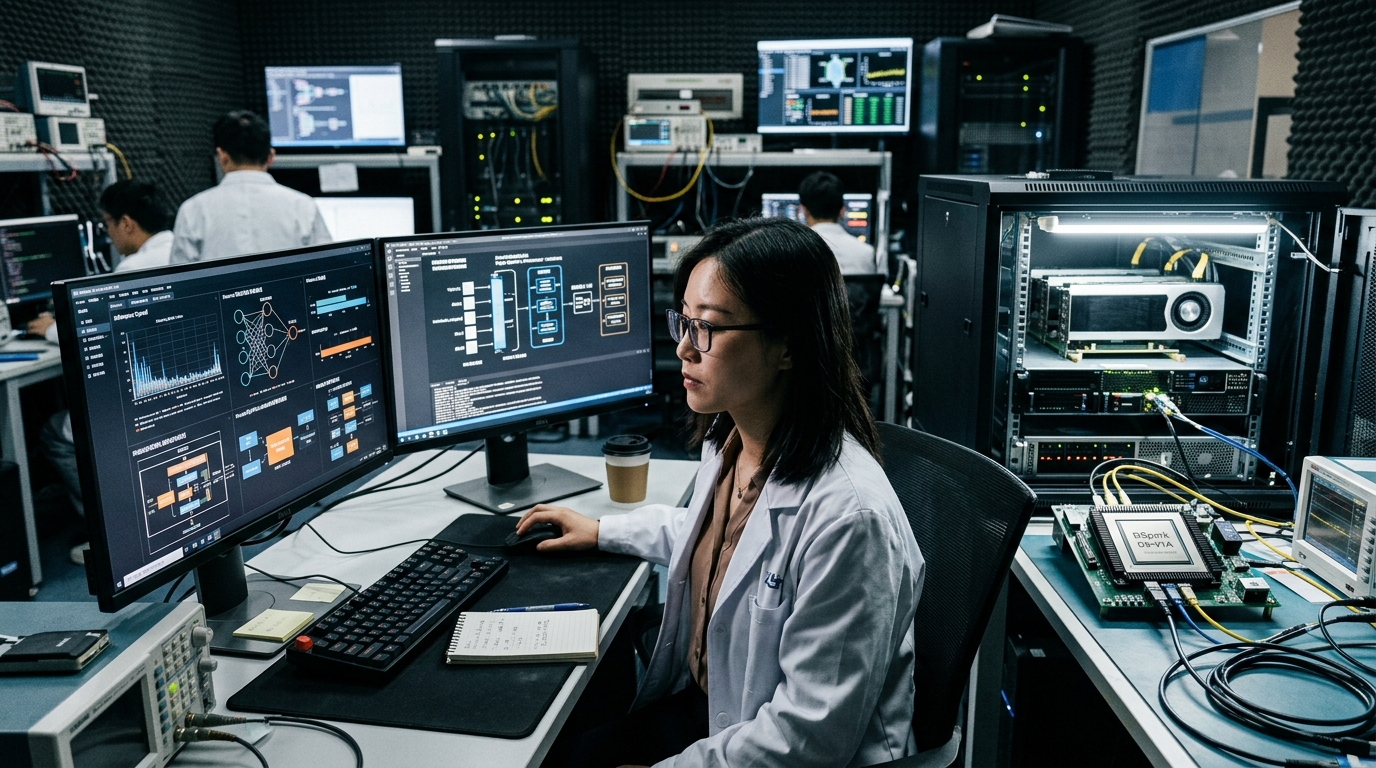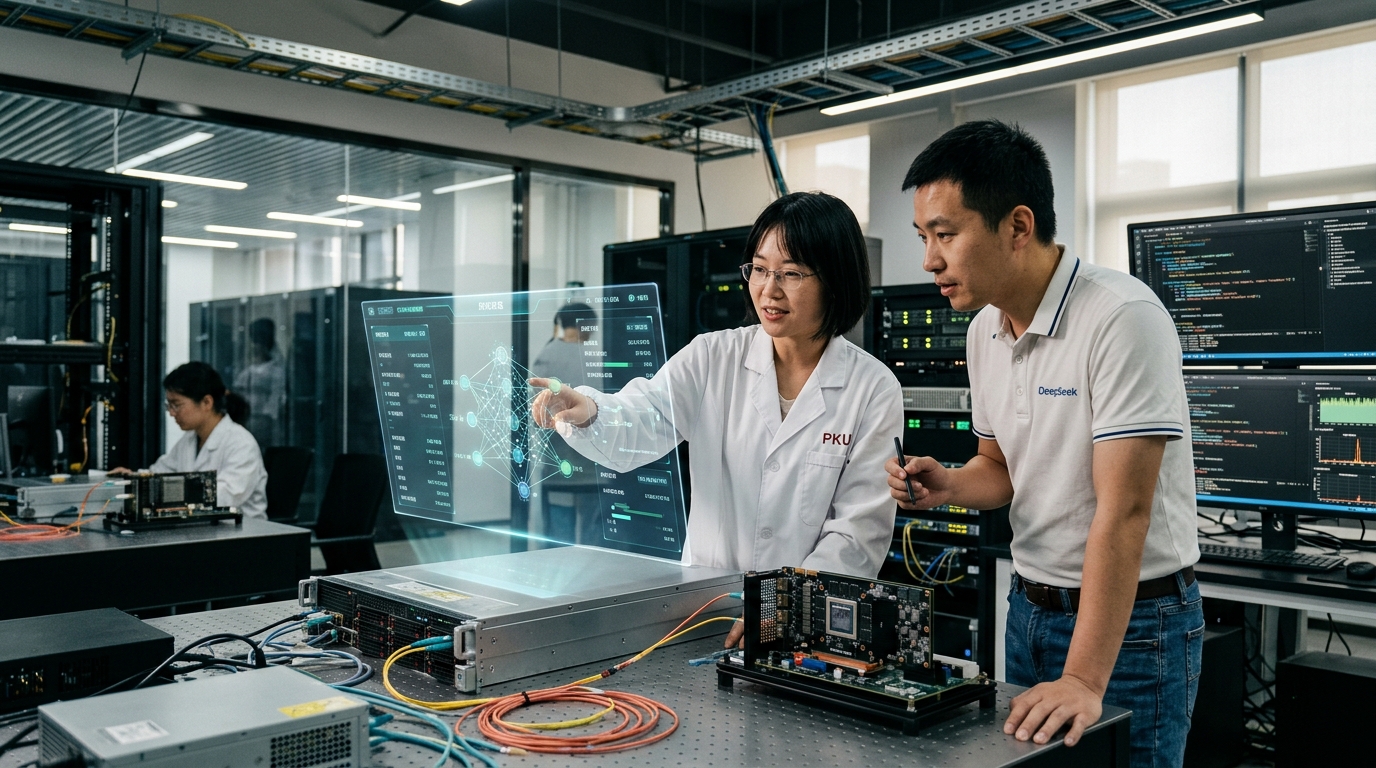
In the rapidly evolving landscape of Artificial Intelligence (AI), public attention is often fixated on model parameters and the sheer raw power of GPUs. However, the true battle for supremacy in the next generation of Large Language Models (LLMs) is being fought behind the scenes: in the quality and speed of data processing. The recent announcement of a collaboration between Peking University and DeepSeek to release DSpark as open-source software marks a critical turning point in AI infrastructure.
Tackling the 'Data Wall' Challenge
As AI models become increasingly sophisticated, the need for vast quantities of high-quality data has emerged as the primary bottleneck. The process of cleaning, filtering, and deduplicating trillions of tokens is not only time-consuming but also prohibitively expensive. Traditional data processing tools like Apache Spark, while powerful, were not specifically designed for the specialized needs of LLM training, often leading to inefficiencies and wasted resources.
DSpark enters the fray to bridge this exact gap. Designed from the ground up to handle petabyte-scale datasets, this framework focuses on maximizing throughput through a distributed architecture that optimizes memory and CPU utilization. DeepSeek, which has already disrupted the industry with its highly efficient DeepSeek-V3 model, proves once again that its strategy is rooted in 'efficiency-first' engineering.
Technical Superiority and Architecture
DSpark introduces several innovations that distinguish it from existing solutions. One of its primary features is the 'Stage-wise Execution Model,' which allows researchers to define complex data processing workflows with minimal overhead. Unlike other systems that require constant data shuffling between memory and disk, DSpark minimizes data movement, drastically reducing the time required to filter noise from the open web.
- Scalable Deduplication: The ability to identify and remove identical or near-identical text across scales of trillions of tokens.
- Integrated Quality Assessment: Tools that utilize lightweight machine learning models to score the suitability of each text snippet in real-time.
- Cost Optimization: Significant reduction in power consumption and compute hours, making model training accessible to a broader range of research institutions.
The Geopolitics of Open Innovation
The decision to make DSpark open-source is not just a technical move; it is a strategic statement. While many Western AI firms are trending toward closed-source software and the protection of their internal tooling, the Chinese ecosystem appears to be adopting a different approach. By sharing such tools, Peking University and DeepSeek aim to establish their own standards within the global AI development community.
"Data processing is the invisible foundation upon which intelligence is built. With DSpark, we are democratizing access to tools that were previously the exclusive domain of tech giants," the research team noted.
This move strengthens China's position as a leader in AI infrastructure, challenging the dominance of American-led frameworks. The ability for researchers worldwide to use and improve DSpark could accelerate the development of specialized models in fields such as medicine, law, and the sciences, where data quality is paramount.
Conclusion and Future Outlook
The release of DSpark serves as a reminder that progress in Artificial Intelligence is not just about algorithms, but also about the systems engineering that supports them. As we move toward the era of Artificial General Intelligence (AGI), the ability to process the world's information with speed, accuracy, and low cost will be the defining factor for success. DSpark is not just a tool; it is the infrastructure for the AI of tomorrow.