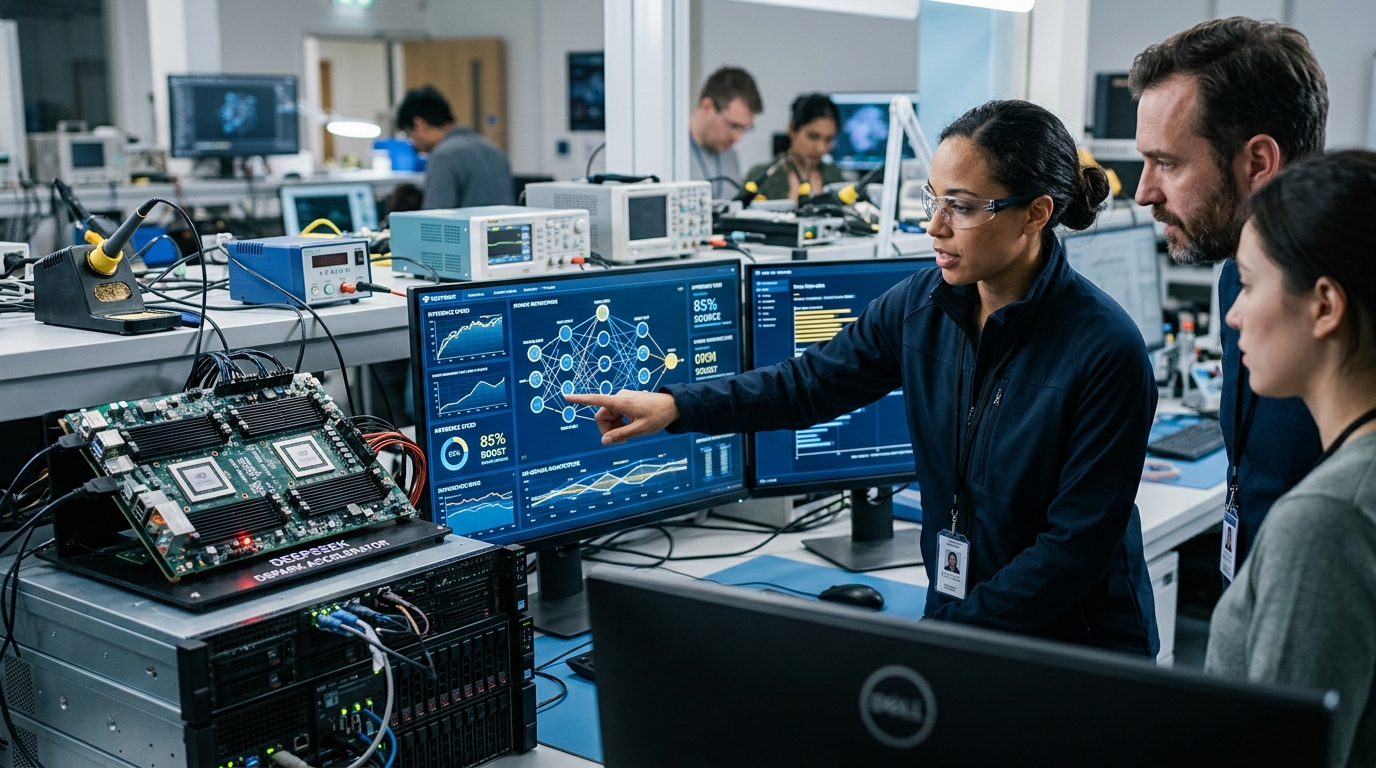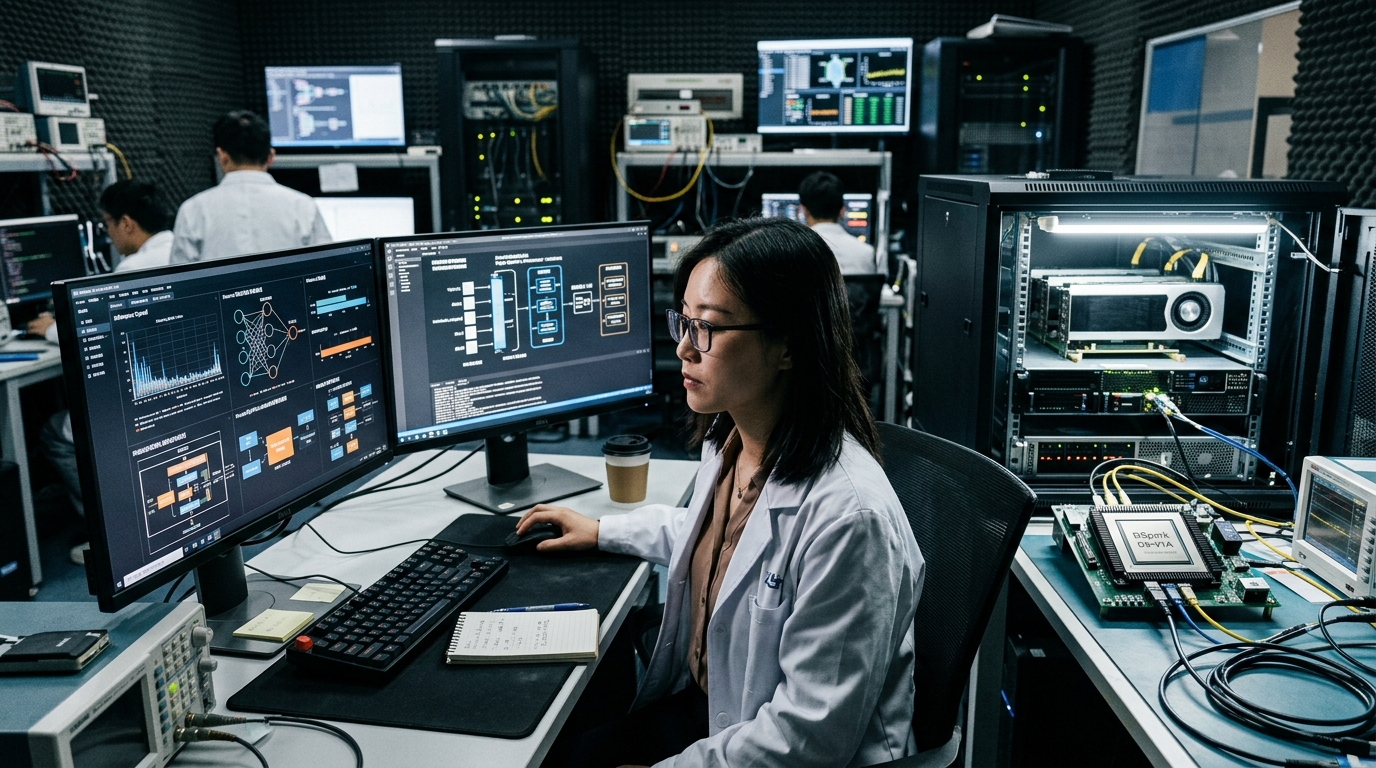
At a time when geopolitical friction surrounding artificial intelligence has reached its peak, Chinese firm DeepSeek has launched a move that could fundamentally reshape how Large Language Models (LLMs) are developed and deployed. The release of DSpark, a new open-source framework for inference optimization, promises speed increases of up to 85%, raising serious questions about the long-term efficacy of U.S. export controls on hardware and software.
The Architecture of Efficiency
DSpark is not merely an incremental update; it represents a structural rethinking of how AI models interact with hardware. The primary bottleneck it addresses is the memory and bandwidth constraints that plague modern LLMs. As models grow in size, the data transfer between memory and the processor creates significant latency. DSpark introduces a "dual-stream" architecture that enables parallel computation and data transfer, effectively eliminating the wait times that have traditionally hampered real-time AI interactions.
Furthermore, the framework optimizes the management of the KV Cache (Key-Value Cache), a technique that stores previous segments of a conversation to accelerate future responses. Through an intelligent compression algorithm and dynamic resource allocation, DSpark maintains high accuracy while drastically reducing VRAM requirements. This means that powerful models can now run on less sophisticated hardware—a detail of immense significance for Chinese firms facing sanctions on high-end Nvidia chips.
Geopolitics and the Open Source Gambit
DeepSeek’s decision to release DSpark as open source is a strategic choice with deep political implications. While Washington tightens controls on Anthropic and OpenAI for fear of technology leakage, China is choosing a path of radical transparency and global collaboration. This is a "soft power" play: by offering the tools for the world's fastest AI inference for free, DeepSeek is positioning Chinese technology as the de facto standard for developers worldwide.
"Innovation cannot be contained by borders or sanctions. When you restrict access to hardware, you force the software to become more intelligent," market analysts in Beijing suggest.
The success of DSpark arrives just as Europe and the U.S. are debating "closed" and "safe" model structures. DeepSeek is proving that the open-source community can outpace even Silicon Valley giants in speed and efficiency, as the latter are often bogged down by bureaucratic safety protocols and proprietary secrecy.
The Future of AI Development
For developers and enterprises, DSpark offers an escape from the spiraling costs of cloud services. Reducing inference time by 85% translates directly into an 85% reduction in operational costs in production environments. This could trigger a new explosion of AI applications previously deemed economically unviable, such as zero-latency real-time assistants or the analysis of massive datasets in seconds.
- Democratization of Compute: Smaller startups can now compete with tech giants by leveraging cheaper, more accessible hardware.
- Pressure on Cloud Providers: Giants like Microsoft and Google may be forced to rethink their pricing strategies as the performance-per-dollar ratio sky-rockets.
- Paradigm Shift: The industry focus is shifting from "how big is the model" to "how fast and cheaply can it run."
In conclusion, DSpark is more than just a technical milestone. It is a declaration of independence and a challenge to the AI establishment. As 2026 proves to be a landmark year for artificial intelligence, DeepSeek is demonstrating that the road to dominance lies in efficiency and open collaboration, leaving behind the outdated logic of closed ecosystems.