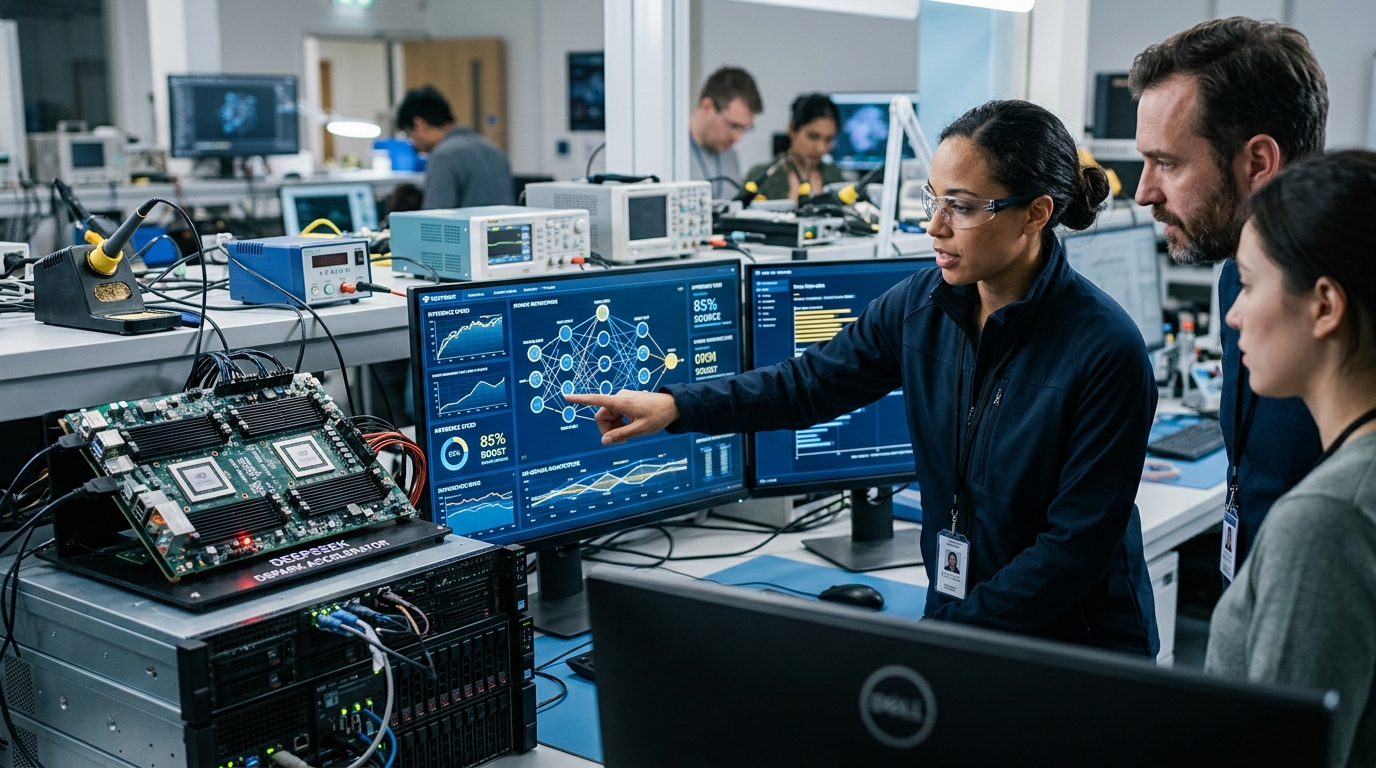
In an era where computational power has become the new "digital oil," Chinese AI powerhouse DeepSeek has sent shockwaves through the global tech community with the unveiling of DSpark. This open-source library promises to accelerate Large Language Model (LLM) inference by up to 85 percent. This development is far more than a mere technical iteration; it is a strategic maneuver that fundamentally alters the economics of AI scaling, making high-performance intelligence more accessible than ever before.
The Architecture of Velocity: Understanding DSpark
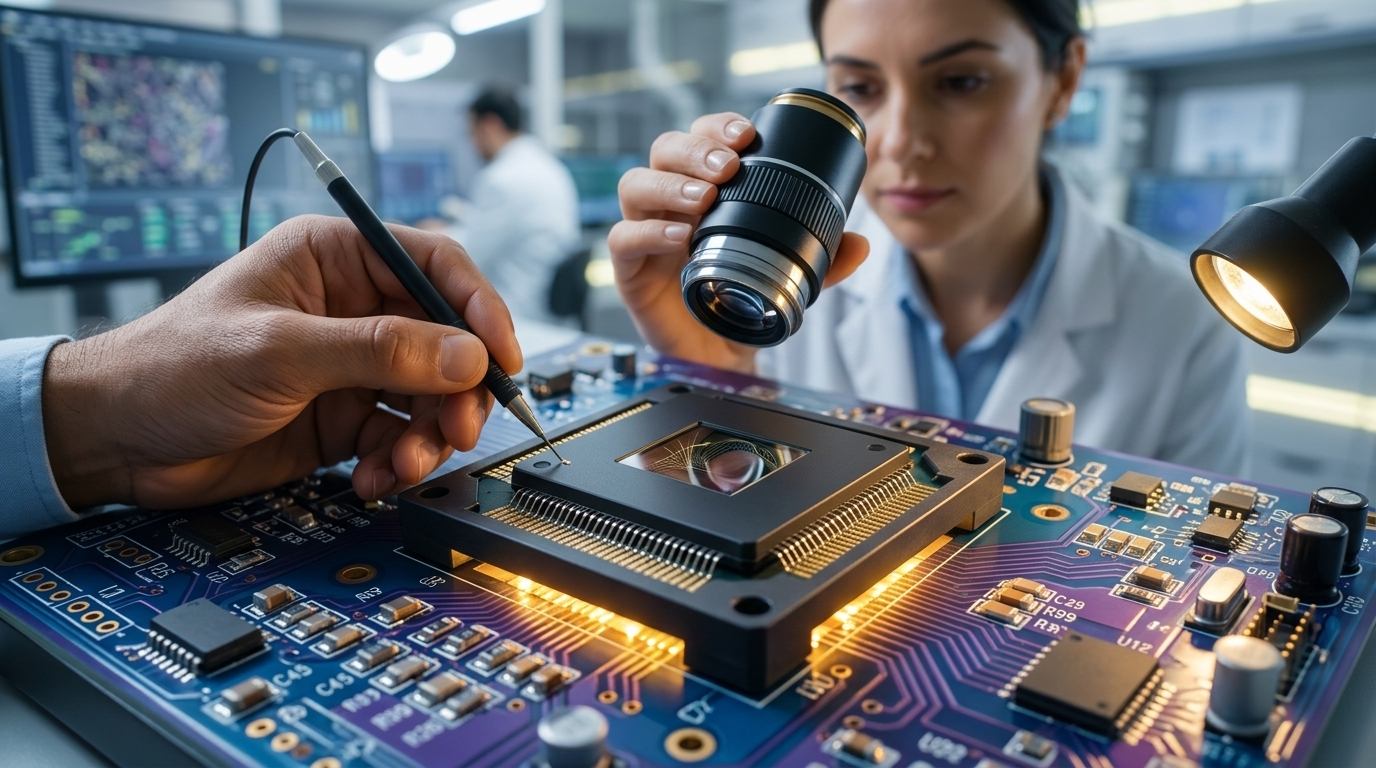
DSpark is not a new AI model in itself, but rather the high-performance engine that allows existing models to run faster. DeepSeek, which has already garnered industry respect with its V3 and R1 model series, focused its research on one of modern computing's most persistent bottlenecks: the data transfer gap between memory and the processor. The DSpark technology optimizes how data flows within Graphics Processing Units (GPUs), drastically reducing latency and idle cycles.
A significant portion of this breakthrough targets Mixture-of-Experts (MoE) architectures. In these systems, only a fraction of the neural network is activated for any given query, which saves resources but complicates memory management. DSpark introduces advanced routing algorithms and custom-tuned kernels that allow for the parallel execution of tasks that were previously sequential. The result is a dramatic reduction in the cost-per-token, which remains the "holy grail" for enterprises deploying AI applications at a massive scale.
The Open-Source Strategy and Geopolitical Implications
DeepSeek’s decision to release DSpark as open-source is a bold challenge to Western giants like OpenAI and Google. While Silicon Valley firms tend to guard their optimization stacks behind proprietary walls, DeepSeek has opted for the democratization of efficiency. This enables developers worldwide to run state-of-the-art models on less powerful hardware, effectively lowering the barrier to entry and reducing the total dependency on NVIDIA’s premium enterprise ecosystem.
Within the context of the US-China technological rivalry, DSpark takes on a distinct political character. As the United States continues to enforce strict export controls on high-end chips to China, the necessity for software that can "do more with less" has become a matter of national strategic importance. DeepSeek has demonstrated that software ingenuity can compensate for hardware constraints. If an 85% speed boost can be achieved through code alone, the urgent need for the latest generation of restricted GPUs is mitigated, shifting the balance of power in the global tech race.
Market Impact and the Future of AI Inference
For the corporate world, the arrival of DSpark translates directly into lower operational expenditures (OpEx). Inference accounts for approximately 90% of the total cost in an AI model's lifecycle; while training happens once, usage is continuous. By boosting speed by 85%, response times for real-time applications—such as live translation, customer service bots, and complex data synthesis—become near-instantaneous.
- Resource Optimization: Fewer GPUs are required to handle the same workload volume.
- Accessibility: Smaller startups can now compete with tech titans by utilizing optimized open-source stacks.
- Environmental Footprint: Higher efficiency leads to lower energy consumption in massive data centers.
In conclusion, DeepSeek’s DSpark is not just a tool; it is a manifesto for a more sustainable and transparent AI future. This move is likely to force other major players to reconsider their closed-source models, fearing they might be sidelined in an ecosystem that is now moving at an accelerated, open-source pace. The era of "brute force" computing is giving way to the era of algorithmic elegance.