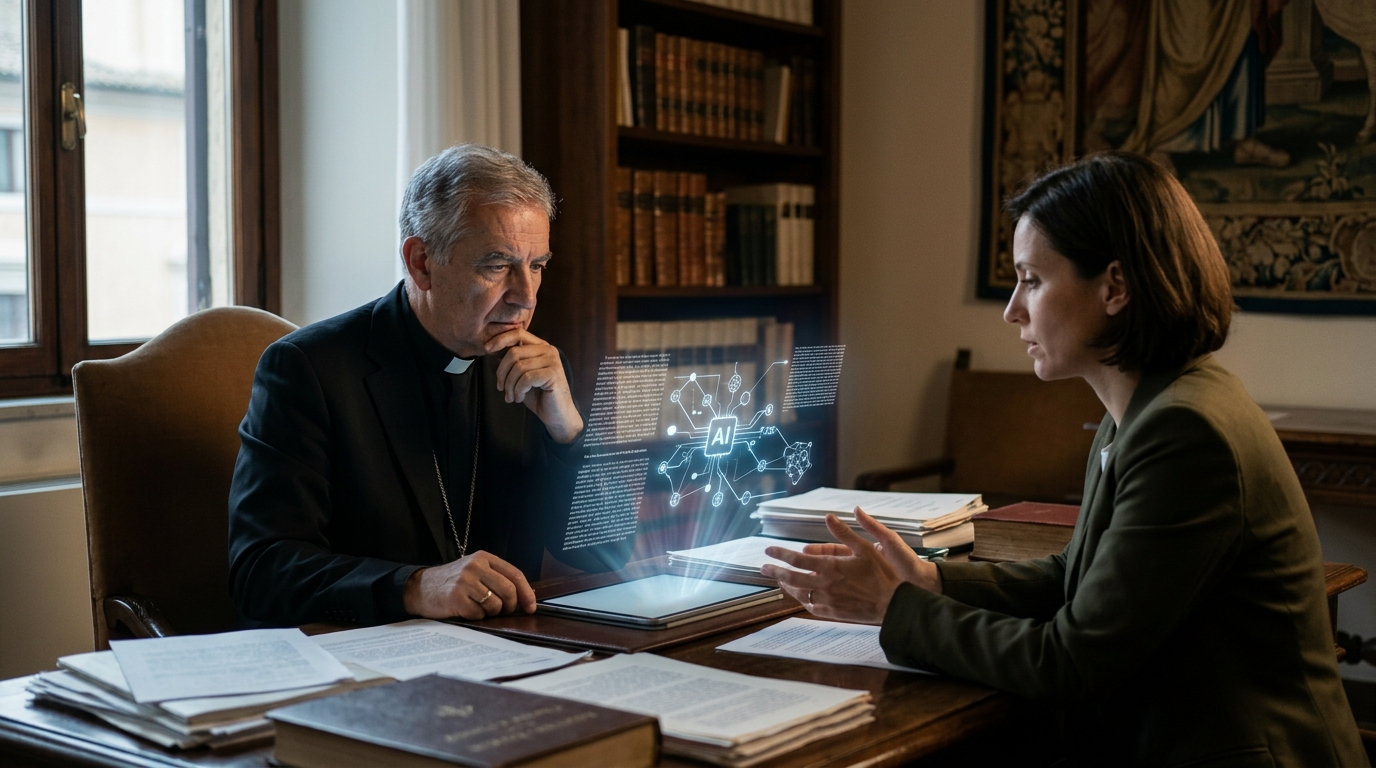
In the Vatican, words carry a specific weight, often measured in centuries. When Pope Leo XV issued his latest encyclical, titled "Technologia et Humanitas," the tech world expected a simple moral condemnation or a standard blessing. Instead, it was met with a document reminiscent of the historic 1891 "Rerum Novarum." This encyclical is not merely about algorithms; it concerns the very essence of human existence in an era where the machine claims the role of both creator and judge.
The Return to the Social Question
The choice of the name "Leo" is not accidental. Leo XIII was the Pope who addressed the consequences of the Industrial Revolution, defending workers' rights against unchecked capitalism. Today, his successor sees a similar upheaval in Artificial Intelligence. The encyclical argues that AI is not just a productivity tool, but a new mode of redistributing power. The Vatican warns that if technology is left exclusively in the hands of a few "digital lords," humanity risks sliding into a new form of feudalism, where access to data and computational power determines the value of a human life.
Particular emphasis is placed on the concept of "algoretics," a term the Vatican has been championing for years. The encyclical highlights that ethics cannot be a "patch" added at the end of software development; it must be embedded within the code itself. The Pope's critique is directed at the "technocratic paradigm," which tends to reduce every human problem to a mathematical equation, ignoring the mystery and complexity of consciousness.
Labor as a Sacred Act
One of the most dynamic chapters of the encyclical concerns the future of work. Pope Leo argues that labor is not just a means of survival, but a way for humans to participate in creation. The automation of thought, according to the text, threatens to alienate individuals from their own creativity. "When the machine decides, the human ceases to be an acting subject and is transformed into a passive consumer of outputs," the encyclical notes strikingly.
The Vatican calls on governments to establish a "Global Compact for Digital Labor," ensuring that profits from AI are used to support those displaced from the job market. This is not just about unemployment benefits; it is about investing in retraining and highlighting professions based on empathy and care—areas where the machine, no matter how advanced, remains "blind."
The Geopolitics of Faith and Silicon
The encyclical does not limit itself to spiritual exhortations; it enters the waters of international politics. It condemns the use of AI in lethal autonomous weapons systems and expresses deep concern over the "digital divide" between the Global North and South. The Pope fears that AI could become a new tool of colonialism, where wealthy nations export algorithms that fail to account for the cultural nuances of developing nations.
In its conclusion, the text calls for an "ecology of information." Just as climate change threatens our physical home, unchecked AI threatens our "mental environment." Pope Leo’s encyclical is a cry of both distress and hope, reminding us that technology must always serve the person and never the other way around. At the dawn of this new era, the Church does not ask for a return to the past, but for the construction of a future where the heart remains the final processor of every decision.