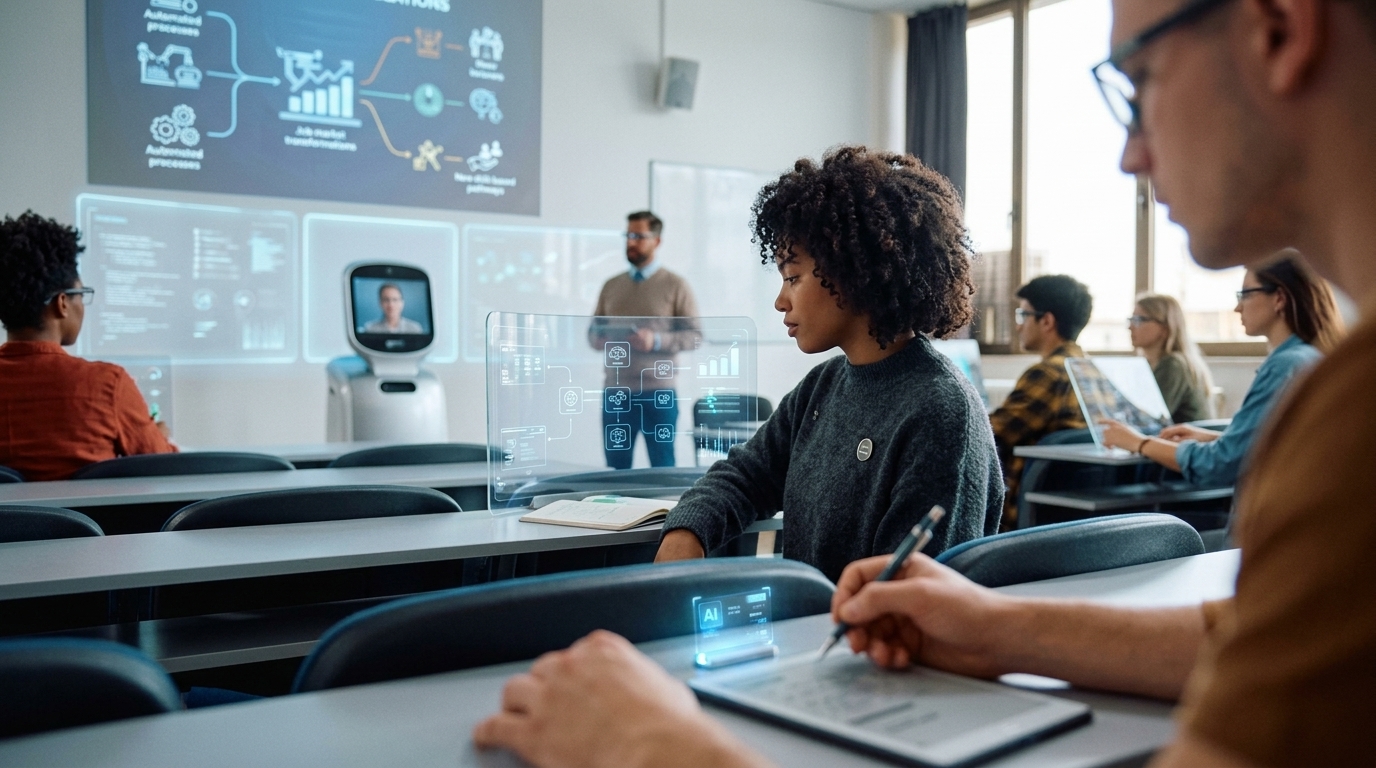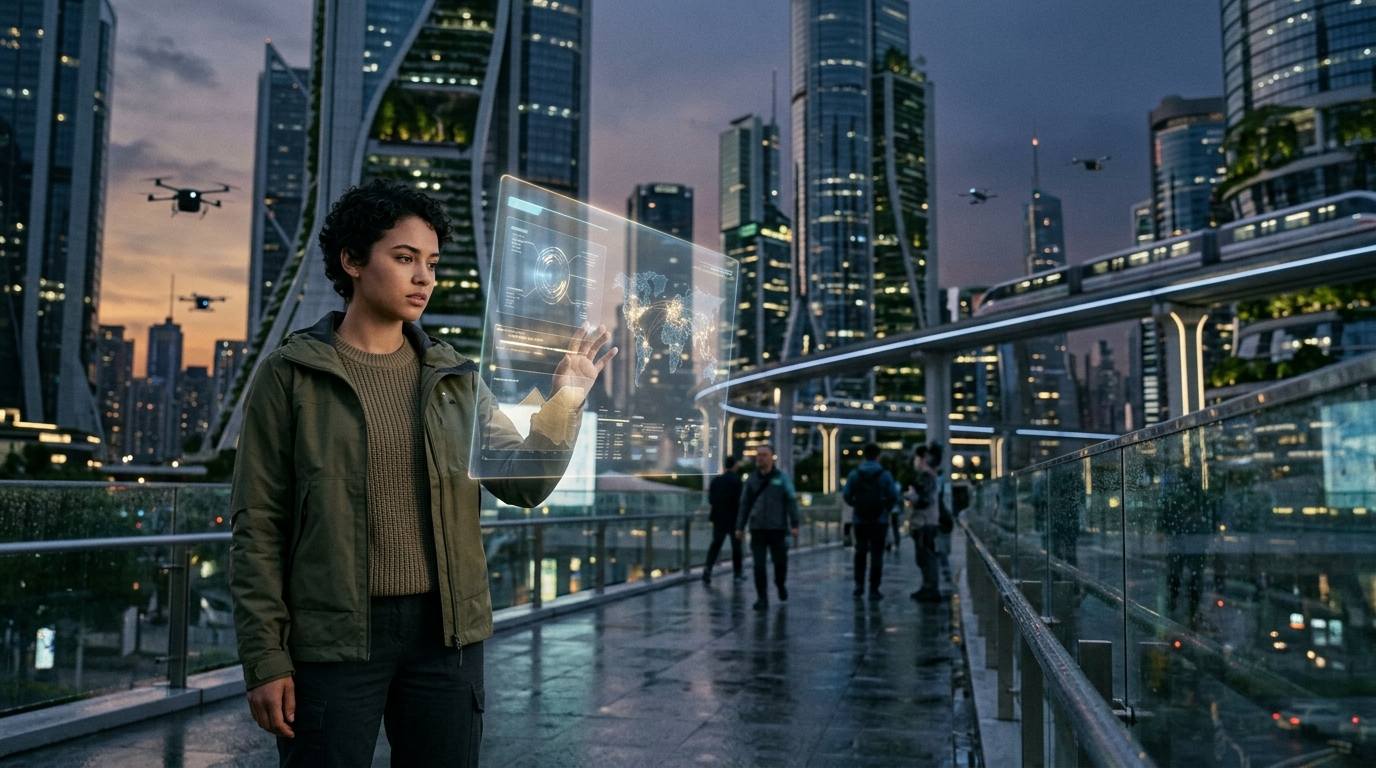
June 2026. The national exams in Greece have concluded, and thousands of young graduates face the most defining decision of their lives: filling out their university preference forms (the 'Michanografiko'). However, this year, the atmosphere is palpably different. It’s no longer just the entry scores causing anxiety, but the shadow of autonomous AI agents that have begun occupying roles once thought to be immune to automation.
The 2026 labor market analysis reveals a decisive shift. While 2023 and 2024 were dominated by theoretical discussions about Generative AI, 2026 marks the era of full integration. We now see systems that draft legal documents, code entire software ecosystems, and perform complex accounting audits with precision that eclipses human capability. In this landscape, choosing a degree is no longer just about passion; it is an exercise in strategic survival.
Moravec’s Paradox and the Revenge of the Trades
One of the most striking phenomena of 2026 is the validation of 'Moravec’s Paradox.' This principle states that high-level reasoning (logic, math, analysis) requires very little computation, whereas low-level sensorimotor skills (walking through a cluttered room, tactile sensing, manual repair) require enormous resources.
This means that professions requiring fine motor skills in non-routine, unstructured environments remain the safest harbors. Electricians, plumbers, specialized HVAC technicians, and renewable energy installers are seeing their market value soar. In the 2026 university applications, technical and applied engineering schools are gaining a new prestige. AI still struggles to inhabit robotic bodies with the same fluidity and adaptability that a human worker brings to a construction site or a repair job.
Human-Centric Care as a Fortress
In healthcare and education, human presence remains irreplaceable, though the nature of the work is evolving. Nursing, physical therapy, occupational therapy, and special education are fields where empathy, ethical judgment, and physical touch are the core of the service. While an AI can diagnose a disease from an MRI scan better than most radiologists, it cannot hold a patient’s hand through a terminal diagnosis or understand the emotional nuance of a child with developmental challenges.
Furthermore, psychology and social work are emerging as the 'professions of the future.' In a world saturated with digital isolation and the existential angst brought about by machine dominance, the need for human connection and psychological support is at an all-time high. Students aiming for these schools are investing in skills that no line of code can fully simulate.
Strategic Leadership and Creative Synthesis
What about the traditional 'white-collar' bastions? Law, Business Administration, and Architecture are under significant pressure. However, the solution is not abandonment but hyper-specialization. The 2026 job market does not need lawyers to perform case law research (AI handles that in seconds); it needs legal strategists who can navigate complex negotiations and unprecedented ethical dilemmas. It doesn’t need architects to draw floor plans, but visionaries who can synthesize sustainability, local culture, and human experience.
- Strategic Decision Making: AI provides the data, but humans must bear the ultimate responsibility, especially in high-stakes environments.
- Crisis Management: The ability to navigate the 'black swan' events remains a human prerogative.
- Ethical Governance: Overseeing AI systems themselves requires a deep philosophical background and critical thinking.
In conclusion, the 2026 career map requires a 'hybrid' mindset. Young people must choose degrees that allow them to become the 'orchestrators' of technology rather than its casualties. Investing in 'soft skills'—such as critical thinking, creativity, and emotional intelligence—is now the hardest guarantee for a resilient career in an automated world.