The global high-tech chessboard received a major jolt this week as the latest edition of the TOP500 list confirmed what many analysts had long feared or anticipated: China has returned to the pinnacle of supercomputing power. LineShine, a next-generation supercomputer developed entirely on Chinese architecture, has dethroned America’s El Capitan, marking a pivotal moment in the evolution of digital sovereignty.
The Architecture of Dominance
LineShine is not just another machine; it is the culmination of a decade-long effort by China to decouple from Western technologies. According to released data, the supercomputer achieves performance exceeding 2.5 Exaflops in sustained operation, leaving behind the Lawrence Livermore National Laboratory’s El Capitan, which previously led with 1.7 Exaflops. This success is even more significant considering that LineShine relies on indigenously designed processors, completely eschewing the use of American chips from NVIDIA or AMD.
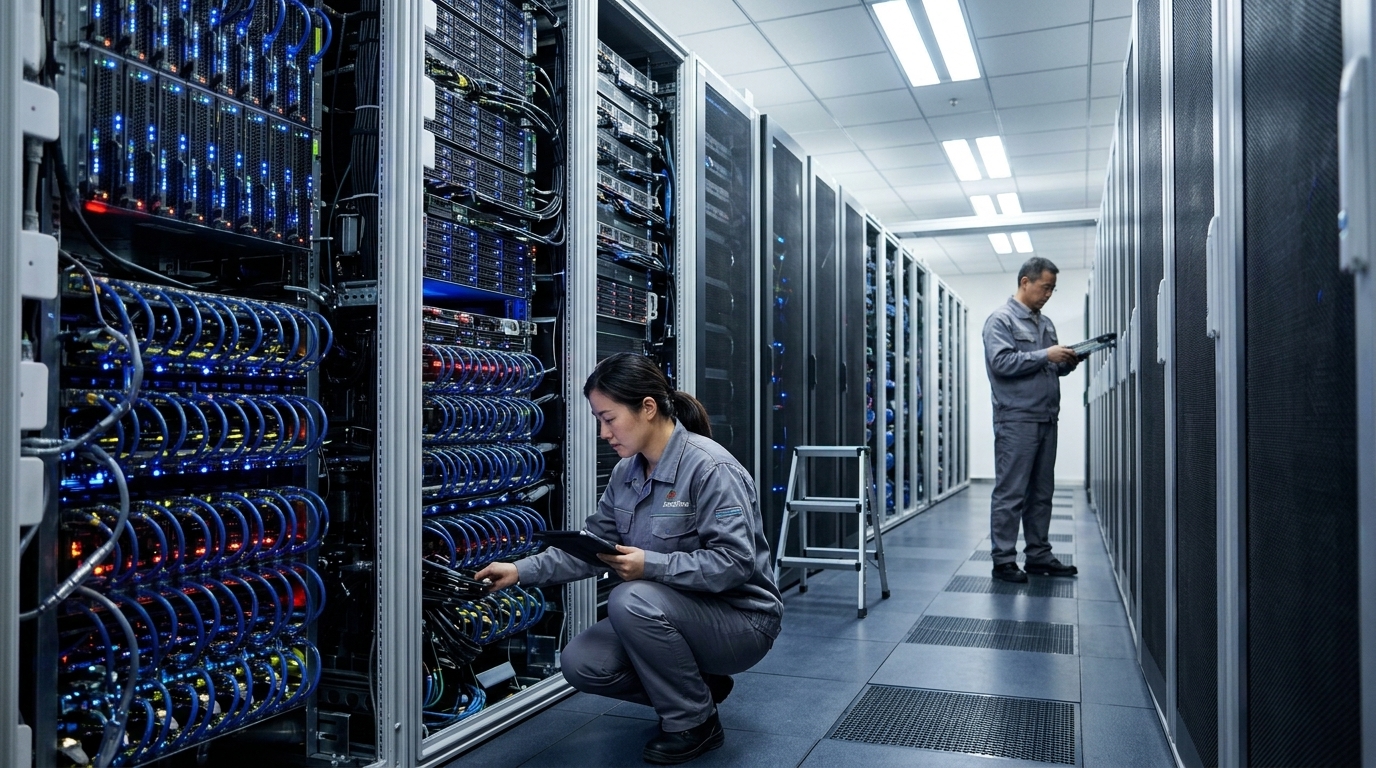
The system's architecture focuses on parallel processing of massive datasets, with a primary emphasis on training Large Language Models (LLMs) and simulating nuclear reactions. Chinese engineers managed to solve the intractable problem of energy efficiency by utilizing an advanced liquid cooling system that allows LineShine to maintain stable performance without overheating, despite the staggering power consumption required.
The End of American Hegemony?
The rise of LineShine to the top spot comes during a period of intense friction between Washington and Beijing. The United States has imposed strict export controls on advanced semiconductors to China, hoping to slow its technological progress. However, LineShine proves that sanctions have acted as a catalyst for domestic innovation. China, having been cut off from the global supply chain, invested billions into developing its own lithography and architectures.
"LineShine is not merely a technical achievement; it is a political statement. China is telling the world that Silicon Valley is no longer the sole pole of innovation," noted a market analyst.
The strategic importance of supercomputers cannot be overstated. They are used for code-breaking, weapon design, climate change forecasting, and drug discovery. With LineShine, Beijing gains an advantage that could accelerate scientific breakthroughs by years, leaving the West in a defensive position.
Challenges and the Road Ahead
Despite the triumph, the path is not without obstacles. Maintaining such a system requires immense resources, and software compatibility with international libraries remains a question mark. Western scientists have expressed concerns regarding whether LineShine will be used for peaceful purposes or if it will serve as the central tool for developing new cyber-weapons and surveillance systems.
In the future, the battle is expected to shift to the Zettascale computing range. The US and Japan have already announced programs to reclaim the lead, but China appears to have taken the pole position in the race for computational power. LineShine serves as a reminder that in the digital age, power is no longer measured solely in soldiers, but in floating-point operations per second.
- A performance of 2.5 Exaflops sets a new world record.
- The use of exclusively Chinese processors bypasses US sanctions.
- The system is housed at the National Supercomputing Center in Wuxi.
- Applications range from climate modeling to national security.