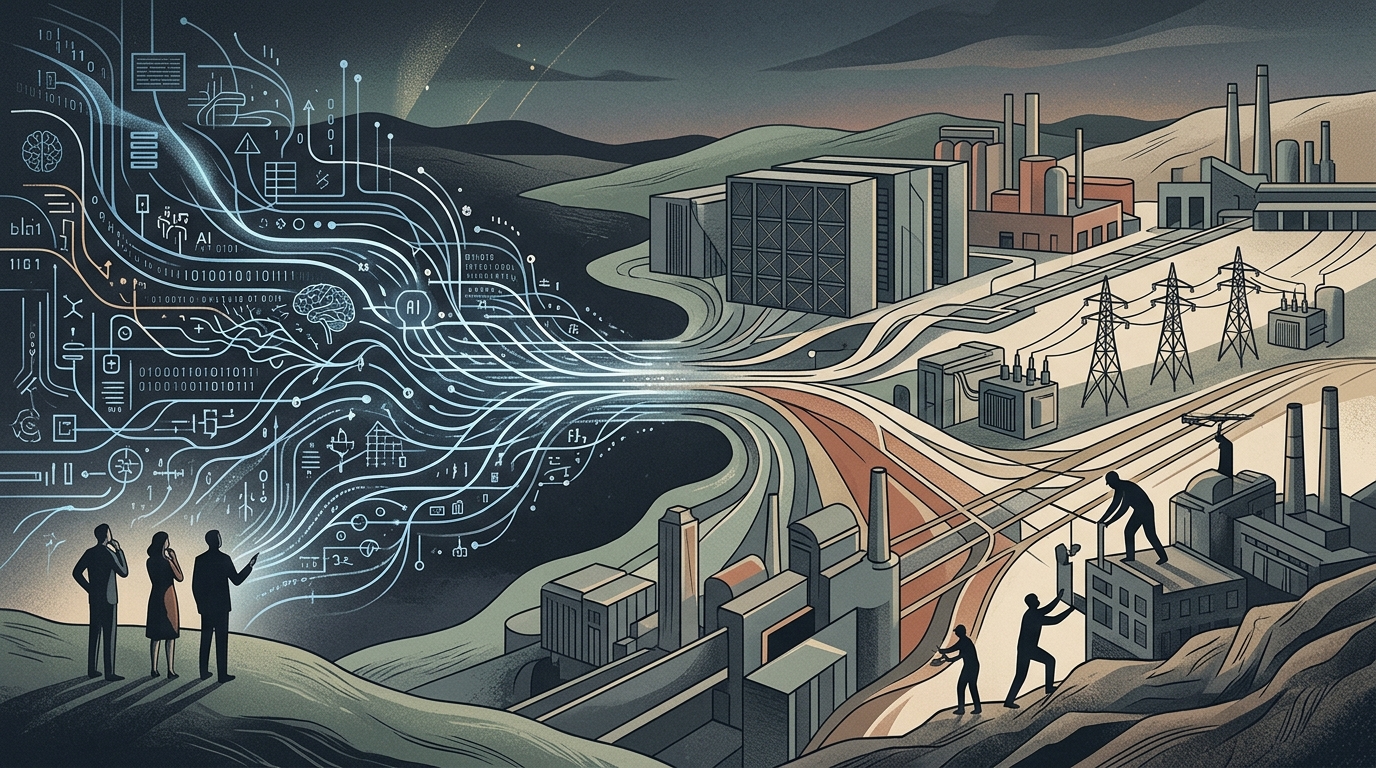
In a move that redraws the boundaries of digital geopolitics, OpenAI has announced restrictions on access to its most sophisticated artificial intelligence models, responding to formal requests from the United States government. This decision, which targets so-called "frontier models," is not merely a corporate policy shift but a clear indication that AI has transitioned from a tool of global innovation into a critical national security asset.
The Strategy of 'Controlled Diffusion'
This move comes as Washington intensifies pressure on tech companies to prevent cutting-edge American technology from falling into the hands of "adversarial states." According to sources close to the U.S. Department of Commerce, concerns center on the ability of OpenAI’s models to assist in designing cyberattacks, developing biological weapons, or enhancing foreign military capabilities. OpenAI, which began as a non-profit aimed at "open" access to AI, appears to be finalizing its transformation into a close partner of the American defense and diplomatic establishment.
The restrictions do not only affect the general public in specific geographic zones but also specialized APIs used by research institutions and businesses. The imposition of "digital borders" means that access to the power of future iterations, such as GPT-5 or specialized reasoning models, will now be filtered through the lens of American interests. This creates a de facto hierarchy in the digital world: those who are permitted to use top-tier intelligence and those restricted to inferior, older versions.
Geopolitical Implications and the Race with China
The backdrop of this decision is undoubtedly the technological cold war with Beijing. The U.S. government believes that supremacy in artificial intelligence will determine global hegemony for the next century. By restricting OpenAI, Washington is attempting to maintain a "generational gap" between its own capabilities and those of China, Russia, and other powers. However, this strategy carries risks. Many analysts argue that such exclusions could accelerate the development of alternative, domestic models in these countries, leading to a fragmentation of the internet and knowledge itself.
- Stricter Know Your Customer (KYC) protocols for AI developers.
- Geographic blocking of IP addresses from countries deemed "high risk."
- Monitoring of prompts to identify attempts at misuse regarding national security.
- Close collaboration with the National Cybersecurity Agency to evaluate models before release.
The Ethics of 'Closed' Knowledge
OpenAI's pivot is provoking strong reactions within the open-source community. If artificial intelligence is the next stage of human evolution, who is legitimized to decide which nations or researchers will have access to it? Criticism focuses on the fact that OpenAI used public data from around the world to train its models, but is now restricting the fruits of that training based on political criteria. The rhetoric of "safety" is often conflated with "state security," creating a dangerous precedent where technology becomes a weapon of exclusion.
"This is no longer about protecting humanity from a hypothetical AI, but about protecting the geopolitical advantages of a specific power," say critics of the decision.
In conclusion, OpenAI's move signals the end of the romantic era of technology, where Silicon Valley promised to unite the world. At the dawn of 2026, artificial intelligence is the new nuclear arsenal, and the companies developing it are the new defense contractors. The decision to restrict access to frontier models is the first act in a drama that will define not only the future of technology but the structure of global power for decades to come.