Spring, once a predictable rhythm of the natural world, is transforming into a chaotic phenomenon. As the planet warms, the internal biological code of plants appears to be malfunctioning, leading to flowering much earlier than expected. A groundbreaking study highlighted by The Independent, leveraging the power of Artificial Intelligence, confirms what scientists have feared for decades: the climate crisis is not just changing the weather; it is reshaping the timeline of life itself.
AI as the Digital Botanist
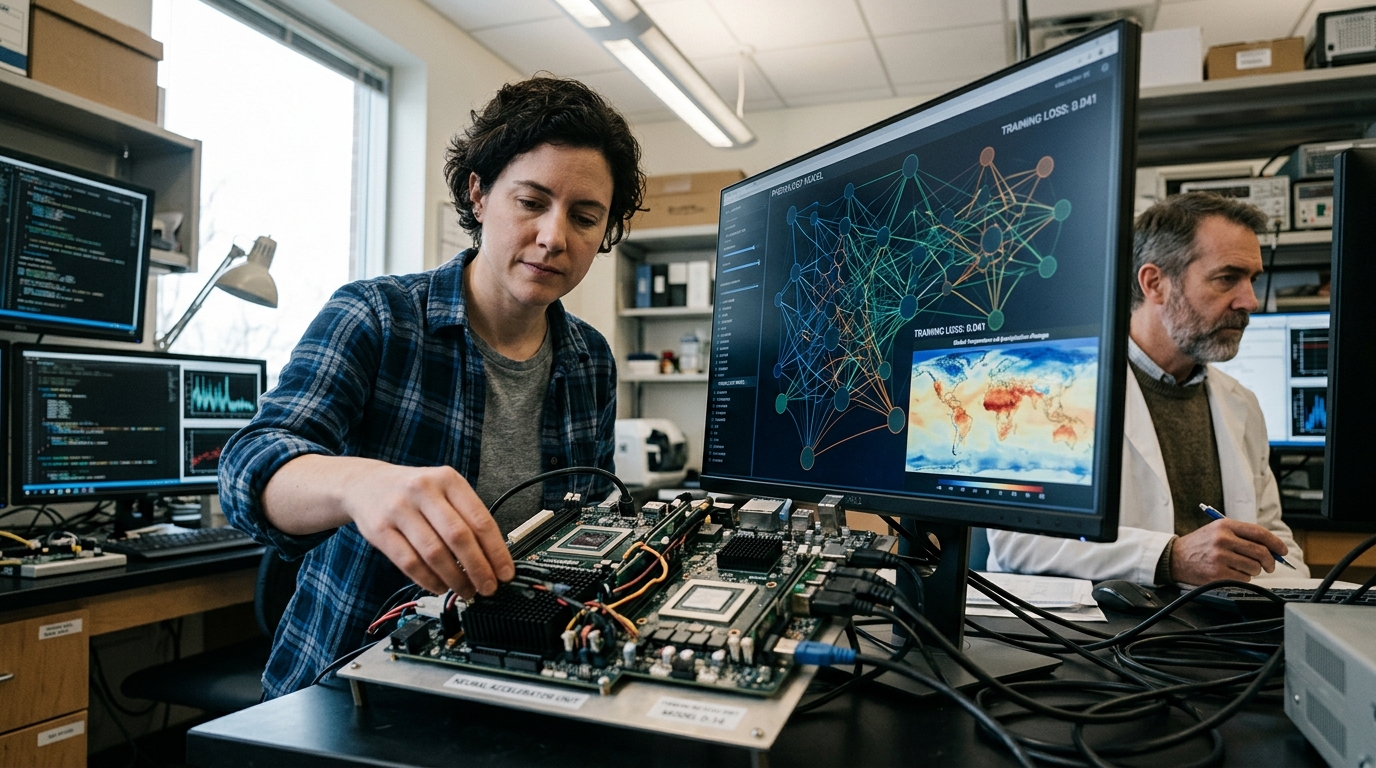
For centuries, botanists have collected plant specimens, dried them, and stored them in herbarium cabinets. These millions of specimens constitute a time capsule of the planet's flora. However, analyzing them by hand would require thousands of years of labor. This is where Artificial Intelligence steps in. Using advanced machine learning and computer vision algorithms, researchers have been able to "scan" hundreds of thousands of digitized specimens, accurately identifying the flowering stage of each plant.
The ability of AI to process vast amounts of data has allowed scientists to create a detailed map of flowering that spans decades, if not centuries. The results are alarming. In many regions of the Northern Hemisphere, plants are now blooming up to a month earlier than they did 50 years ago. This shift is not uniform, which creates additional complexities within ecosystems.
The Danger of Ecological Desynchronization
The biggest problem is not the flowering itself, but the "mismatch" or desynchronization. Nature operates through a complex network of interdependencies. Plants rely on pollinators, such as bees and butterflies, which in turn rely on pollen and nectar for survival. These relationships have evolved over thousands of years to coincide perfectly in time.
- Loss of Pollinators: If a plant flowers earlier due to an unusually warm spell, but the pollinator insects have not yet emerged from dormancy, the plant will not be fertilized, and the insect will find itself without food when it finally appears.
- Food Chain Impacts: This desynchronization trickles up the food chain, affecting birds that feed on caterpillars and larger predators.
- Agricultural Uncertainty: For humanity, this translates into reduced crop yields, as many of the fruits and vegetables we consume depend directly on successful pollination.
"We are not just seeing a change in the calendar; we are witnessing the dismantling of the biological relationships that keep our world in balance," the study notes.
Beyond Observation: AI in the Service of Adaptation
Although the findings are ominous, the use of Artificial Intelligence also offers a glimmer of hope. By understanding precisely how different species react to temperature changes, scientists can predict which ecosystems are most at risk. This allows for targeted conservation measures and the creation of "biodiversity refuges."
Furthermore, AI can help farmers adapt. By analyzing flowering data in conjunction with climate projections, algorithms can suggest changing the varieties grown in a region or modifying planting seasons. In Mediterranean climates, for instance, early flowering in almond trees makes them vulnerable to late spring frosts—a phenomenon that AI can now model with greater precision.
Conclusions and Future Challenges
The study published in The Independent highlights a fundamental truth: climate change is not a future scenario but a present reality rearranging the foundations of life. Artificial Intelligence is proving to be an invaluable ally in our quest to understand these changes, offering a level of analytical detail that was unthinkable a decade ago.
However, knowledge alone is not enough. Identifying the problem through sophisticated algorithms must be accompanied by drastic political action to limit greenhouse gas emissions. If we do not restore climate stability, no algorithm will be able to restore the synchronization that nature built so patiently over the eons.