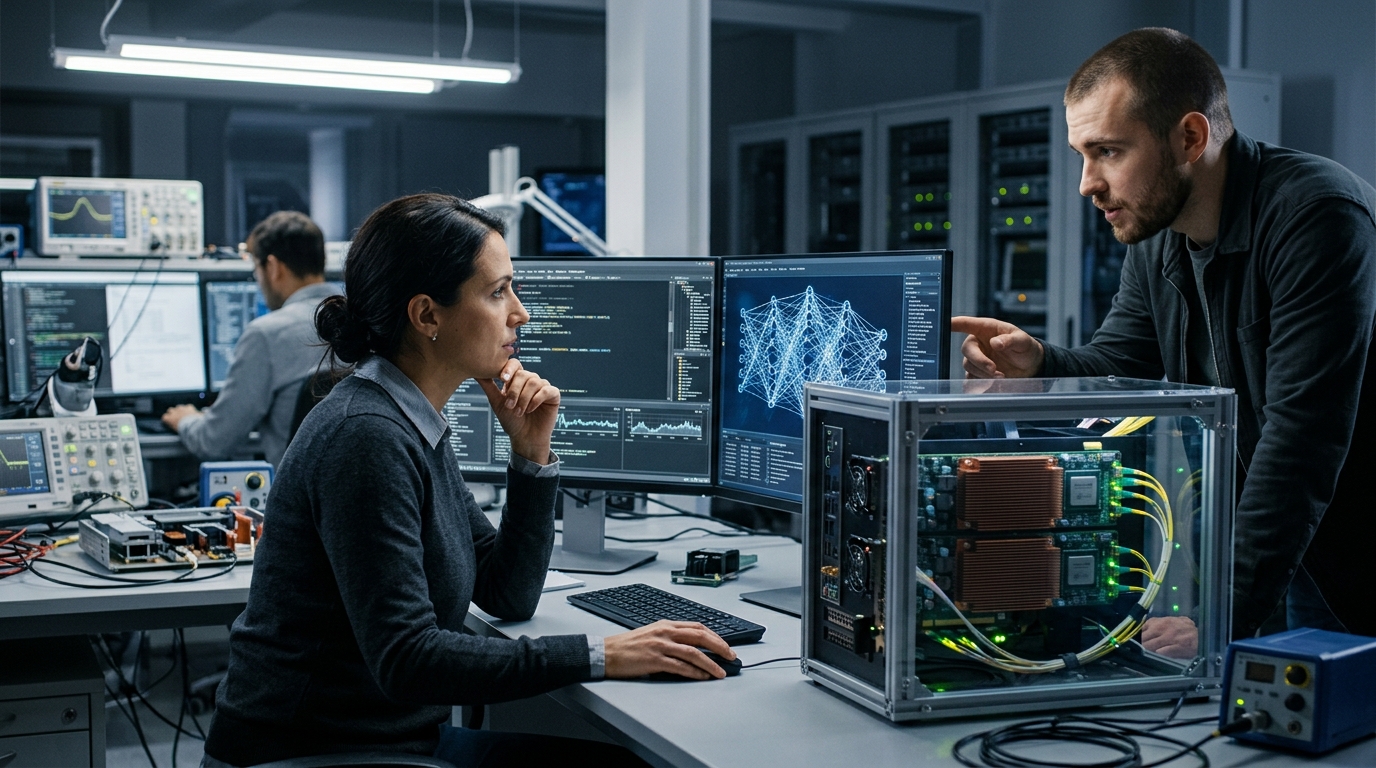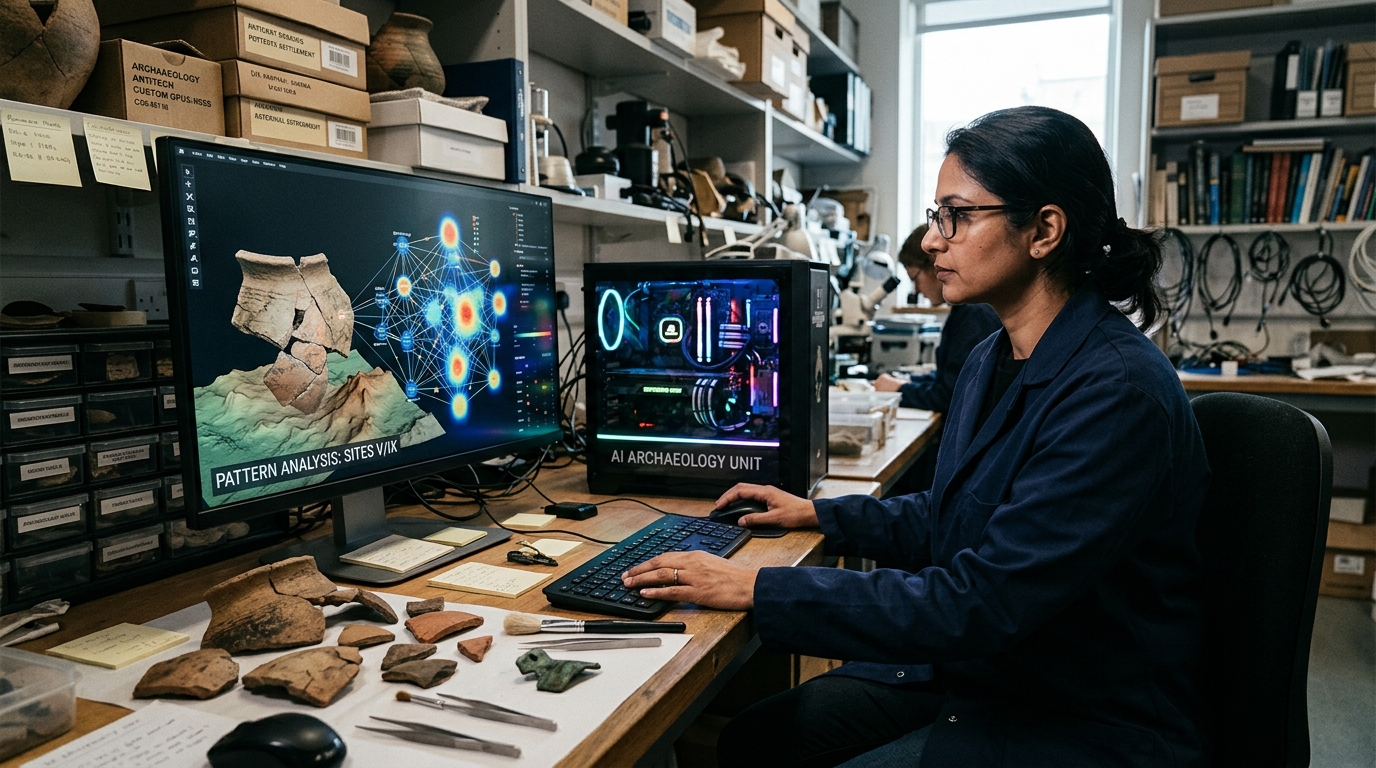
The traditional perception of Artificial Intelligence (AI) places it at the helm of our future trajectory: from predicting stock market trends to forecasting the weather. However, a fascinating new direction in AI research is flipping this perspective, turning the algorithms' gaze backward. The question posed by Bloomberg and the international scientific community is provocative: Can Artificial Intelligence be trained to "predict" the past?
The concept of "hindcasting" is not new to the hard sciences, but its application through Large Language Models (LLMs) and Neural Networks is a game-changer. Instead of trying to guess what will happen tomorrow, researchers are training models to fill in the gaps in historical records, decipher damaged manuscripts, and reconstruct the climate of past centuries with a precision previously thought impossible.
The Mechanics of Digital Reconstruction
The core principle behind predicting the past is pattern recognition. Just as a model like GPT can predict the next word in a sentence, it can also be trained to predict the "missing" word in an ancient inscription eroded by time. Project "Ithaka," a collaboration between DeepMind and the University of Venice, is the most prominent example. This system managed to restore ancient Greek texts with 62% accuracy and date inscriptions within 30 years of their actual age.
But the application is not limited to the humanities. In climatology, AI is being used to fill gaps in 19th-century meteorological data. By using scattered records from ship logs and early weather stations, algorithms create a complete, three-dimensional model of the global climate of the past, allowing us to better understand the evolution of global warming.
The Dangers of Digital Hallucination
Despite the impressive capabilities, using AI to reconstruct history carries significant risks. The primary problem is so-called "hallucinations." AI is designed to produce results that look probable, not necessarily true. When an algorithm is asked to fill a gap in a historical document, it might create a version that sounds convincing but has no basis in reality.
"The past is a foreign country," wrote L.P. Hartley, and AI risks becoming a tourist who invents their own memories of it.
Furthermore, there is the issue of data bias. If AI is trained on historical records that reflect only the perspective of the victors or specific social groups, the "prediction" of the past it produces will replicate and reinforce those biases, permanently erasing the voices that history itself attempted to silence.
The Philosophical Shift: History as Data
The ability of AI to predict the past forces us to re-examine what we consider "historical truth." If an algorithm can accurately simulate the social conditions of the Roman Empire and "predict" the outcome of an unknown battle based on data, history ceases to be a static narrative and turns into a dynamic system of probabilities.
This approach paves the way for "algorithmic historiography." Future historians might not only look for new finds in excavations but run Monte Carlo simulations to understand how grain shortages in ancient Egypt led to political instability. AI does not replace the historian but offers them a "digital telescope" to see through the darkness of the ages.
- Text Restoration: Using LLMs to complete missing papyri and inscriptions.
- Climate Hindcasting: Reconstructing old climate models to compare with today's crisis.
- Social Simulation: Analyzing economic and social trends of the past through big data.
- Ethical Dilemmas: The fine line between restoration and falsification of history.
In conclusion, training AI to predict the past is a double-edged sword. On one hand, it offers a unique opportunity to recover humanity's lost memory. On the other, it requires rigorous ethics to ensure that our "digital past" is not a fabricated illusion but a mirror of our actual evolution.