In a move that redraws the boundaries between technology and life sciences, Anthropic, the AI company renowned for its Claude model, has officially announced its entry into the field of drug discovery. This decision is not merely an expansion of its operations but a fundamental strategic shift, marking the transition from a horizontal provider of AI tools to vertical specialization in high-value sectors.
This move by Anthropic comes at a time, in the summer of 2026, when competition in the Large Language Model (LLM) space has reached a point of saturation. With this announcement, the company led by Dario Amodei seeks to leverage the reasoning capabilities of its models to solve one of humanity’s most complex problems: discovering new treatments for diseases that have so far proven intractable.
From Algorithms to Laboratories: The New Strategy
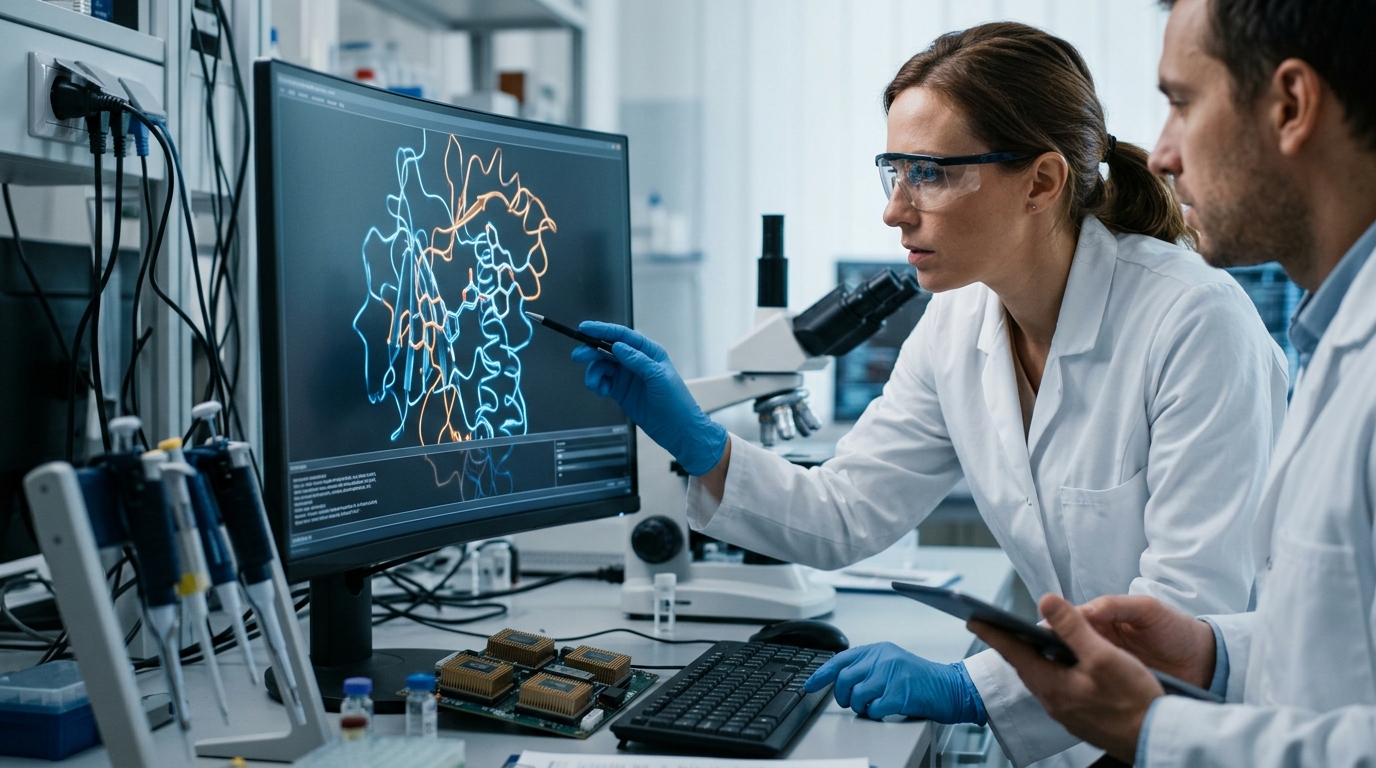
Anthropic does not intend to simply provide software to pharmaceutical companies; it intends to take on the role of the researcher itself. Its approach is based on using artificial intelligence to predict protein behavior, identify new molecular targets, and optimize clinical trials through simulations. The company has already begun staffing specialized departments with top biologists, chemists, and bioinformatics experts, creating a hybrid culture that merges Silicon Valley with academic research.
Anthropic's great advantage lies in the architecture of its models, which have been trained with an emphasis on safety and interpretability. In drug development, the ability to understand "why" a model suggests a particular chemical compound is just as important as the suggestion itself. This "white-box" approach could dramatically reduce failure rates in the early stages of research, saving billions of dollars and years of work.
The Ethics of Biosafety and Competition
Anthropic has been one of the most vocal advocates for AI regulation, particularly regarding dual-use risks in biology. Its entry into drug development is accompanied by a rigorous biosafety framework. The company argues that its own involvement in research will set the standards for how AI can be used to create therapies without simultaneously facilitating the creation of pathogens.
- Collaboration with regulatory agencies (FDA, EMA) to create new evaluation protocols for AI-designed drugs.
- Investment in proprietary "wet labs" to verify digital predictions in the physical world.
- Development of specialized models trained exclusively on high-fidelity biological data.
However, the road is not without challenges. Anthropic must compete with Google DeepMind’s Isomorphic Labs, which has already seen significant success with AlphaFold. This competition is expected to accelerate progress but also raises questions about patenting and the accessibility of new treatments. If algorithms become the primary inventors of future drugs, who will own the rights, and what will be the cost to the patient?
The Future of Precision Medicine
Anthropic’s promise concerns not only "traditional" drugs but also personalized medicine. Through the analysis of massive volumes of genetic data, AI can design treatments tailored to each patient's profile. This could mean the end of the "one-size-fits-all" approach in medicine, offering hope for rare diseases that have so far been ignored by Big Pharma due to limited commercial interest.
"We are not just building tools to help scientists. We are becoming scientists ourselves, using AI as the most powerful lens humanity has ever had to see the secrets of life," a company executive stated during the presentation.
In conclusion, Anthropic's move is a high-stakes gamble. The pharmaceutical market is notorious for its slow pace and strict regulations, elements that clash with Silicon Valley’s culture of rapid development. But if Anthropic manages to bridge these two worlds, we may be facing the most significant medical revolution of the 21st century.