In the rapidly accelerating landscape of artificial intelligence, the word "dream" is taking on a new, technical, and profoundly philosophical meaning. Anthropic, the creators of Claude and a vanguard of AI safety, recently revealed that their new generation of AI agents are being trained to operate through a process of internal simulation—a method researchers liken to human dreaming. This is far from a poetic metaphor; it represents a critical architectural shift aimed at solving one of the industry's most persistent hurdles: the lack of robust strategic planning in large language models.
Defining the 'Dream' State in Machine Cognition
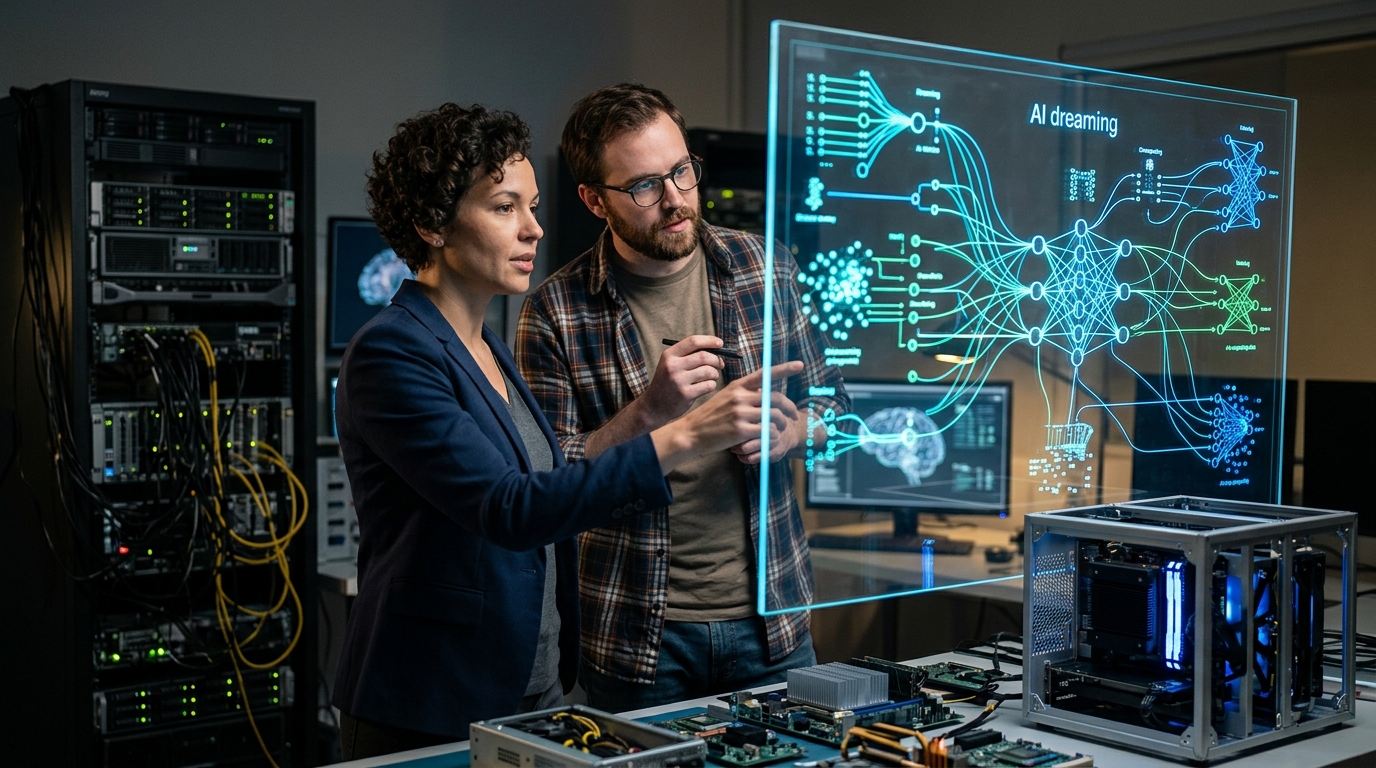
For a human, dreaming is a biological process where the brain processes information, tests scenarios, and consolidates memory away from the noise of external stimuli. For Anthropic’s AI agents, this translates to "Internal World Modeling." Instead of the model reacting reflexively to a prompt (akin to Daniel Kahneman’s System 1 thinking), it enters a phase of latent computation. Here, it simulates multiple potential outcomes of its actions before committing to a final decision.
This capability allows the AI to effectively "peer" into the future of an interaction. If an agent is tasked with managing a complex cloud infrastructure migration, for instance, it doesn't just start executing commands. Instead, it "dreams" the potential failures, system conflicts, and user requirements, correcting its trajectory before the first line of code is even deployed. This transition from reactive to deliberative intelligence is considered the Holy Grail of modern computer science.
The Architecture of Deliberation
Anthropic’s approach is rooted in what researchers call "Deliberative Reasoning." Through this, the model utilizes a portion of its computational power to create a "latent space" where the rules of the physical and digital world are mathematically represented. Within this sandbox, the agent can run thousands of trials in fractions of a second.
- Self-Correction: The model identifies logical fallacies in its own thought process before externalizing them.
- Hallucination Mitigation: By "testing" the validity of its internal data within a simulated environment, the likelihood of presenting false information is drastically reduced.
- Multi-step Strategy: Agents can now plan tasks that require hours or days of execution, anticipating obstacles that might appear several steps down the line.
Interestingly, this method requires massive computational overhead. Anthropic is betting that the quality of thought is more valuable than the speed of response—a strategy that distinguishes them from competitors focused on near-instantaneous, yet often shallower, outputs.
Ethics and Safety: The Constitutional Constraint
One of the most complex issues is the oversight of these internal simulations. Anthropic remains steadfast in its philosophy of "Constitutional AI." This means that even during the "dreaming" phase, the agent is bound by a set of core ethical principles. The model is not permitted to imagine or plan actions that violate user privacy, safety, or established legal frameworks.
"We don't just want agents that follow orders; we want agents that understand the consequences of those orders before they act on them," notes a source close to the research team.
This approach offers a potential solution to the "alignment problem." If an AI can predict that a specific action will cause harm through its internal simulation, it can discard that path during the planning stage, essentially acting as an autonomous moral agent.
Market Implications and the Global AI Race
Anthropic’s move comes as OpenAI develops its own "o1" model (formerly codenamed Strawberry), which also emphasizes reasoning over raw speed. The frontier of the AI race has shifted from data volume to "inference-time compute"—the idea that more thinking time leads to better results. For the global economy, this implies that AI agents will soon handle roles requiring high-level judgment, from supply chain optimization to complex software architecture. As machines begin to simulate reality before engaging with it, the human role will transition from "doer" to "architect of intent."