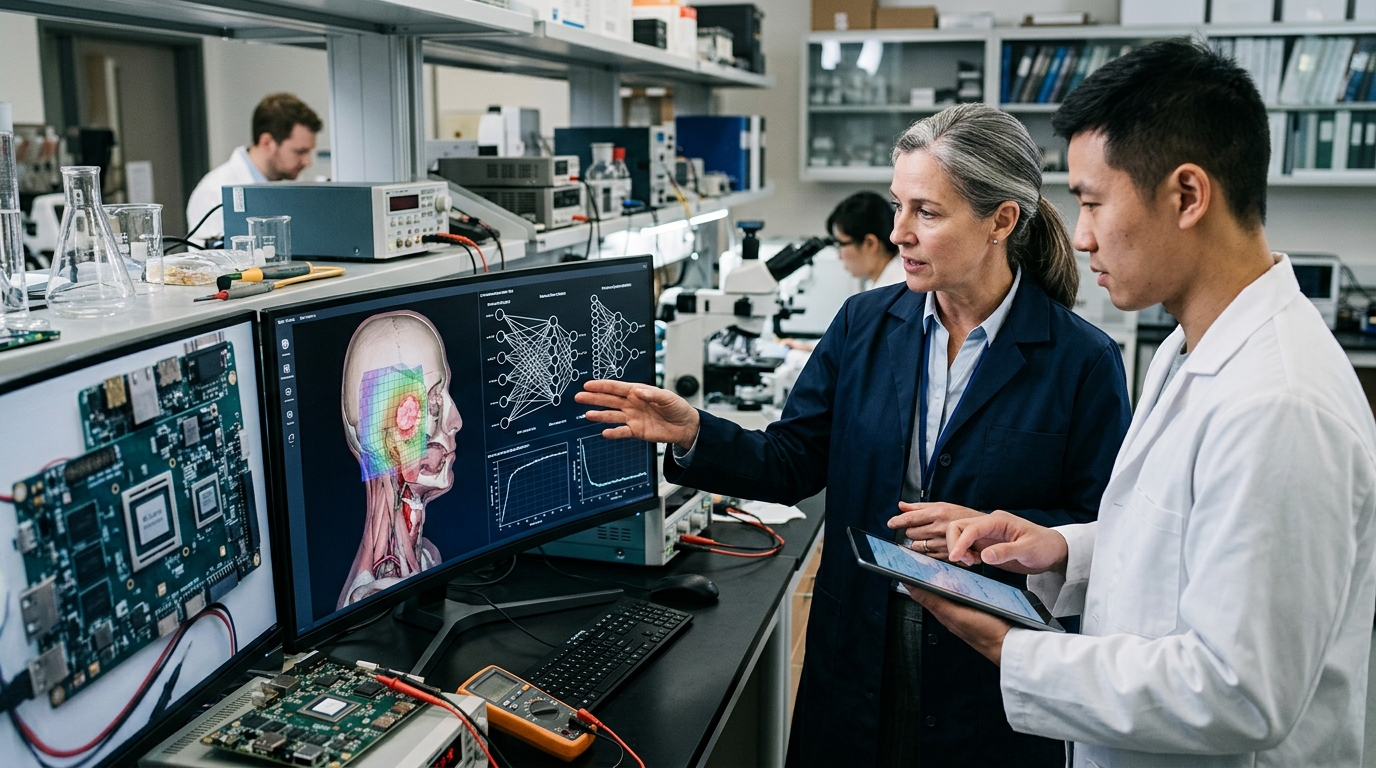
Oncology is standing at the threshold of a new era, where clinical intuition meets immense computational power. A recent umbrella review published in the journal Cureus sheds light on how Artificial Intelligence (AI) is reshaping the landscape for Head and Neck Squamous Cell Carcinoma (HNSCC). This remains one of the most complex forms of cancer due to the intricate anatomy of the region and the vital functions of the organs involved, such as the larynx, tongue, and salivary glands.
The Diagnostic Revolution Through Imaging
Traditional diagnosis in head and neck cancer relies heavily on the interpretation of medical imaging (CT, MRI, PET-CT) by radiologists. However, AI introduces the concept of 'radiomics,' which allows for the extraction of thousands of quantitative features from images that are invisible to the human eye. According to the review, machine learning algorithms achieve exceptionally high accuracy rates in identifying tumors, differentiating between benign and malignant lesions, and detecting lymph node metastases.
The significance of this development cannot be overstated. Early and accurate staging is the most decisive factor for patient survival. AI acts as a 'second reader' that never tires, reducing errors caused by fatigue or human subjectivity. Furthermore, the ability of algorithms to analyze histopathological slides with speed and precision accelerates the biopsy process, allowing for faster initiation of treatment protocols.
Personalized Prognosis and Treatment Planning
One of the most promising areas examined by the review is prognosis. AI can synthesize data from medical history, genetic tumor profiles, and imaging to predict how a patient will respond to specific treatments. This paves the way for truly personalized medicine. Instead of a one-size-fits-all protocol, physicians can now tailor radiation doses or chemotherapy regimens based on the success probabilities calculated by the system.
- Survival prediction and recurrence risk modeling with higher accuracy than traditional staging systems.
- Automated radiotherapy planning, which safeguards healthy tissues and critical organs.
- Detection of biomarkers indicating tumor sensitivity to immunotherapy.
In radiotherapy, for instance, defining tumor boundaries (contouring) is a laborious process that takes hours of an oncologist’s time. Deep learning models can complete this task in seconds, allowing clinicians to focus on critical decision-making rather than manual drawing. This shift not only improves efficiency but also enhances the precision of the treatment delivered.
Challenges to Clinical Integration
Despite the excitement, the Cureus review remains grounded regarding the obstacles. The primary issue is 'data heterogeneity.' AI models trained in one hospital often fail when applied to patients from a different geographic region or using different imaging equipment. This phenomenon, known as a lack of external validity, is the biggest hurdle for the widespread adoption of the technology.
"AI is not going to replace the oncologist, but the oncologist who uses AI will replace the one who does not," is a common refrain in medical technology circles.
Moreover, the 'black box' problem remains critical. Doctors and patients must understand why an algorithm reached a specific diagnosis or prediction. The need for 'Explainable AI' (XAI) is imperative to ensure transparency and trust in the decision-making process. Finally, ethical issues regarding data privacy and liability in the event of an error remain under intense debate in international bioethics forums.
Conclusions and Future Prospects
The review concludes that AI in head and neck cancer is no longer a theoretical exercise but a tool with tangible results. The transition from research to clinical practice requires more prospective studies and the standardization of data collection protocols. As these technologies mature, the promise of improved quality of life and increased survival rates for head and neck cancer patients seems more attainable than ever. The challenge for 2026 and beyond will be ensuring equitable access to these technologies, preventing a two-tier healthcare system where only the elite benefit from the digital revolution in medicine.