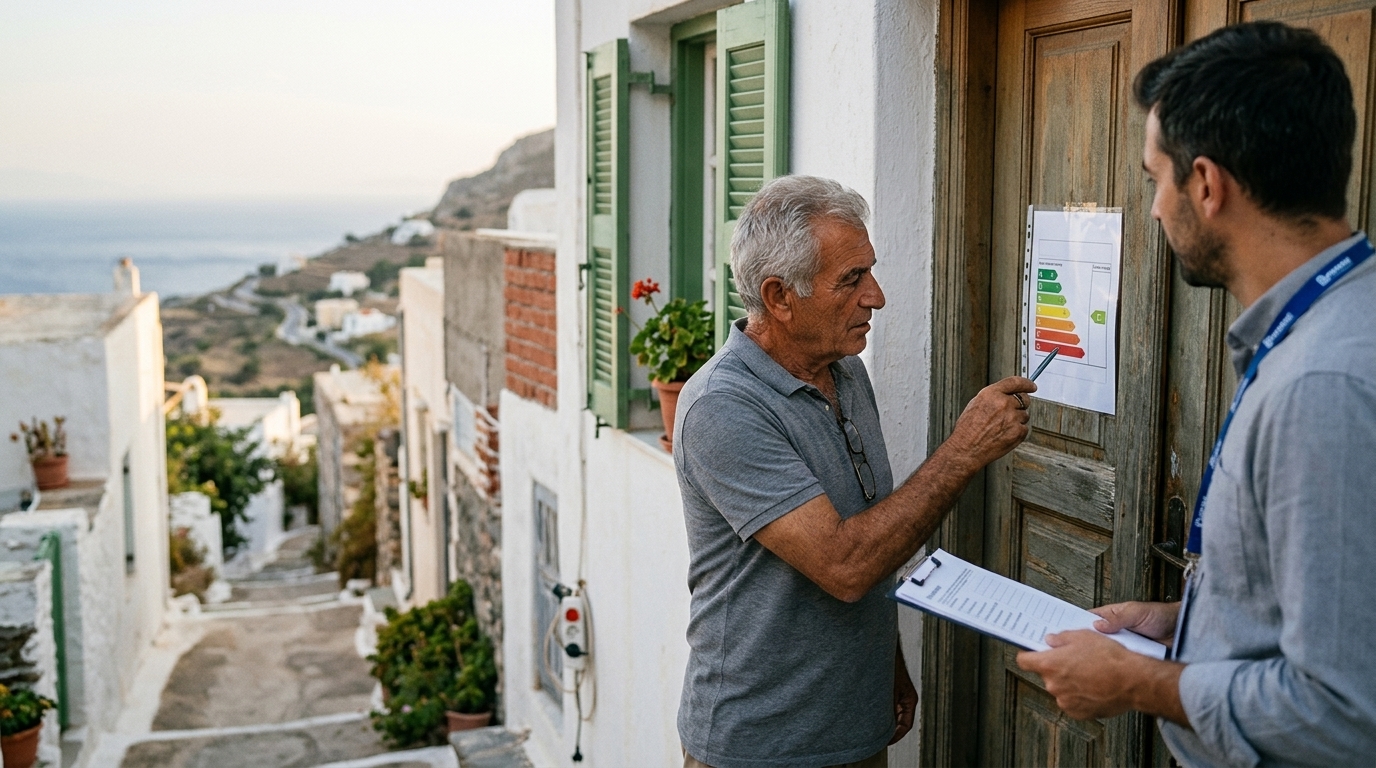
In a move widely anticipated by the market and thousands of beneficiaries, the Greek Ministry of Environment and Energy (YPEN) has announced extensions for the completion of works within the popular 'Exoikonomo' (Save - Renovate) energy efficiency programs. This decision is not merely a bureaucratic adjustment but a necessary adaptation to the harsh realities of the Greek economy, supply chain disruptions, and the technical challenges currently facing the construction sector. These programs, funded by the Recovery and Resilience Facility (RRF), represent Greece's primary vehicle for achieving the European Union's ambitious climate targets.
New Deadlines and Affected Programs
The leadership of YPEN, acknowledging the heavy workload of energy inspectors and delays in material procurement, has granted extra time for three core programs. Specifically, for 'Exoikonomo 2021', the deadline for completing works has been pushed forward, giving homeowners and contractors the necessary breathing room to finalize interventions without the looming fear of losing their subsidies. Similar provisions were made for 'Exoikonomo - Renovate for Youth', a program with a distinct social focus, aimed at supporting young homeowners and revitalizing the country's aging building stock.
Furthermore, 'Exoikonomo 2023' is also receiving an extension, allowing for the smooth progression of applications currently in the implementation phase. This move is deemed essential as the demand for specialized crews—ranging from insulation experts to heat pump installers—has far outstripped supply, leading to significant scheduling delays. The extension acts as a pressure relief valve for a market struggling to balance high demand with limited professional resources.
The Real-World Challenges of the Green Transition
Despite the optimism fueled by subsidies, the implementation of 'Exoikonomo' has exposed deep-seated structural weaknesses. The surge in the cost of construction materials, triggered by the global inflationary crisis and geopolitical instability, has rendered many initial budgets obsolete. Many beneficiaries found themselves in the difficult position of having to cover larger out-of-pocket expenses than originally estimated, leading to a temporary freeze on several projects.
- Acute shortage of specialized technical personnel in rural areas and islands.
- Bureaucratic bottlenecks in the approval of final disbursements.
- Difficulty in securing bank loans for the required private participation.
- Extended delivery times for high-tech heating and cooling systems.
These obstacles make the extension not just desirable but imperative for the effective absorption of RRF funds. Greece cannot afford to lose a single euro of European resources, especially when it concerns the energy shielding of households, which permanently reduces living costs and dependence on fossil fuels.
The Social and Economic Dimension of Energy Upgrades
Energy upgrading of buildings is not just an environmental issue; it is profoundly social. In Greece, the percentage of citizens unable to adequately heat their homes remains alarmingly high. The 'Exoikonomo' programs specifically target the mitigation of this 'energy poverty'. By transforming an old residence into an energy-efficient one, CO2 emissions are reduced, but more importantly, the household's long-term disposable income increases.
"Extending these programs is an act of responsibility toward the citizens who chose to invest in the future of their homes," ministry sources stated.
From an economic perspective, the construction sector has received a significant boost. Thousands of small and medium-sized enterprises (SMEs), from aluminum manufacturers to electricians, are actively engaged through these programs. The extension ensures that this economic activity continues smoothly, avoiding abrupt disruptions that could shake market confidence. Moreover, the integration of 'smart' technologies and AI-driven energy management systems is beginning to become part of the specifications, preparing the Greek building stock for the digital era.
Conclusion and the Future of Subsidies
The Ministry's decision to extend the deadlines is a victory for pragmatism over the strict adherence to timelines that no longer reflected reality. However, the ultimate challenge remains the simplification of procedures for future programs. Experience from current cycles shows that while digitizing the application process was a major leap forward, managing the implementation phase requires further flexibility. As we approach 2030, the need for mass energy upgrades will become even more pressing, and such extensions should ideally become the exception rather than the rule in a more mature and efficient system.