When ChatGPT burst onto the scene in late 2022, the academic world was thrust into a state of immediate disorientation. In the Oakland Unified School District (OUSD), as in many urban districts across the United States, the initial reaction oscillated between outright bans and bewildered silence. Today, in mid-2026, the landscape has shifted significantly. Artificial Intelligence is no longer a peripheral novelty; it is an embedded feature of the modern classroom. Yet, without a unified regulatory framework, teachers and students find themselves navigating what many describe as the 'Wild West' of educational technology.
The Chaos of the Unregulated Frontier
Currently, AI integration in Oakland schools is a matter of individual teacher discretion. This patchwork approach has created a starkly inconsistent educational experience. In one classroom, a tech-savvy instructor might be using AI to generate personalized reading materials for students with different learning needs. In the classroom next door, a student might be facing suspension for using the exact same tool to brainstorm an essay outline. This lack of standardization is more than just a logistical headache; it is a fundamental issue of fairness and pedagogical integrity.
Beyond the immediate concerns of academic honesty, the unregulated use of AI poses significant risks to student privacy. Without vetted tools, students may unknowingly feed sensitive personal data into commercial large language models (LLMs) that lack the rigorous protections required by federal laws like FERPA or COPPA. Furthermore, the inherent biases in AI—often reflecting the prejudices found in their training data—could reinforce harmful stereotypes among a diverse student population like Oakland's.
Crafting a Compass: The New OUSD Policy
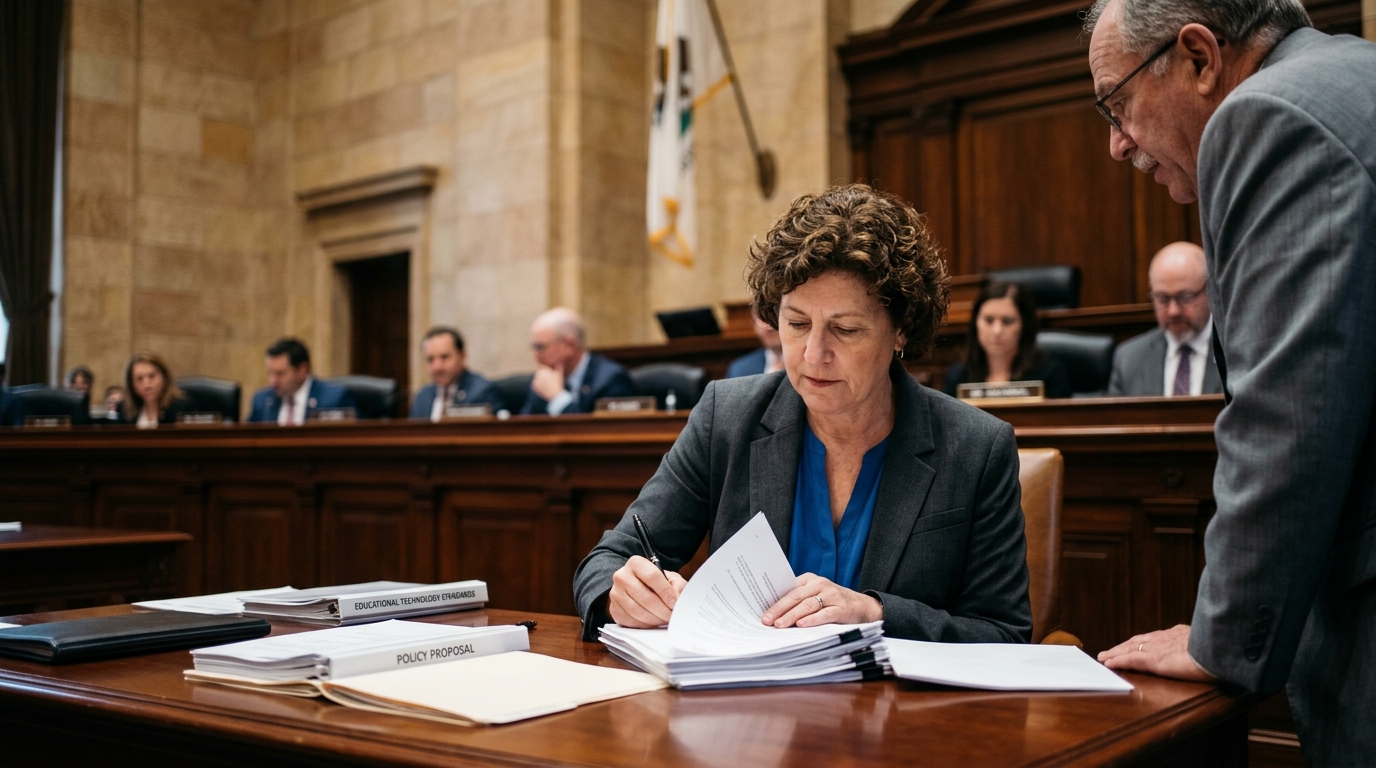
Recognizing that the 'cat is out of the bag,' OUSD is currently developing a comprehensive policy aimed at moving from a posture of prohibition to one of purposeful literacy. The emerging framework focuses on 'AI Literacy'—the ability to understand, use, and critically evaluate AI systems. The district’s goal is to empower students to be masters of the machine, rather than passive consumers of its output.
"We cannot teach for the 21st century by ignoring its most defining technology. Our responsibility is to provide a safe harbor for experimentation while maintaining the highest ethical standards," a district official noted during a recent town hall.
A cornerstone of the proposed policy is a shift in how student work is assessed. Educators are being encouraged to move away from the 'final product' model of grading. If an AI can write a five-paragraph essay in three seconds, the value of that specific assignment diminishes. Instead, the focus is shifting to the 'process'—including oral defenses of work, in-class handwritten assignments, and 'AI-assisted' projects where students must document and justify every prompt they used to reach their conclusion.
The Equity Mandate
In a city as socio-economically diverse as Oakland, the AI revolution threatens to create a new 'digital divide'—the AI divide. Students from affluent backgrounds often have access to high-end, paid AI tutors and tools at home, while lower-income students are left with limited, free versions or no access at all. The OUSD policy aims to address this by seeking district-wide licenses for vetted, ethical AI tools that ensure every student has a level playing field.
Furthermore, the district is taking a hard look at AI detection software. Research has shown that these detectors frequently produce false positives, particularly for English Language Learners (ELLs) whose structured writing style can mimic the patterns of an LLM. By discouraging the use of these unreliable 'bounty hunter' tools, the district hopes to protect its most vulnerable students from unfair disciplinary actions based on algorithmic error.
Conclusion: A New Era of Pedagogy
The efforts in Oakland represent a microcosm of a global challenge: how to integrate transformative technology into an institution built on centuries of tradition. The 'Wild West' phase of AI in education is coming to an end, but the era of AI-integrated learning is only beginning. Success will not be measured by the sophistication of the district's software, but by the depth of the human relationships in the classroom. As Oakland moves forward, the focus remains clear: technology must serve the teacher and the student, not the other way around. The policy is the first step toward a future where AI is not a threat to be feared, but a tool to be mastered for the common good.