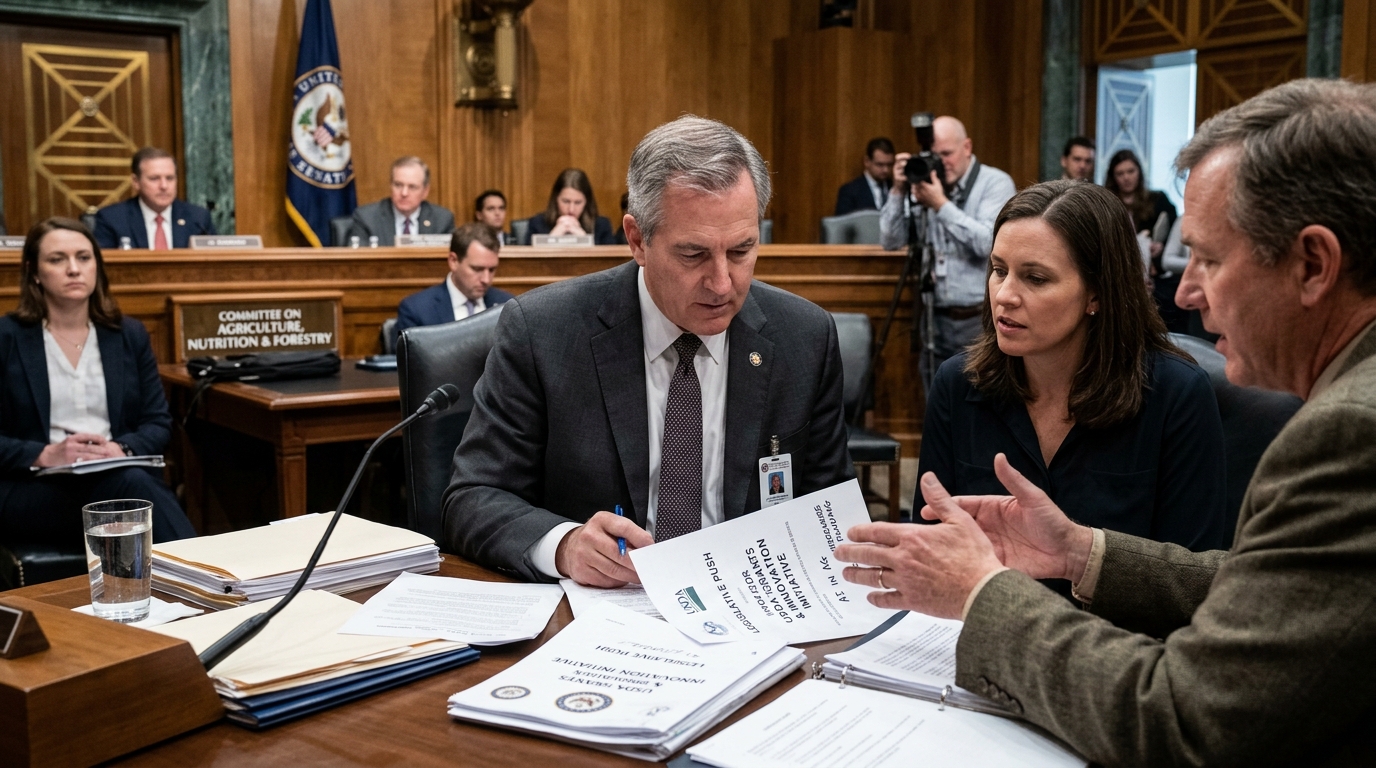
The image of the farmer relying solely on generational intuition and the vagaries of the weather is rapidly becoming a relic of the past. Today, agricultural production is transforming into a high-tech arena where data is as essential as water and fertilizer. A new legislative push in the US Congress aims to significantly increase funding for United States Department of Agriculture (USDA) grants tied to Artificial Intelligence (AI), signaling a new era for global food security and rural economic development.
The Strategic Imperative of Funding
The bill, supported by a bipartisan coalition of lawmakers, recognizes that American agriculture stands at a critical juncture. With climate change inducing extreme weather patterns and chronic labor shortages driving up production costs, AI is no longer viewed as a luxury but as a fundamental necessity. The proposed funding hike targets the Agriculture and Food Research Initiative (AFRI), the USDA's flagship program for competitive research grants.
Proponents of the legislation argue that investing in AI will empower farmers to make decisions with surgical precision. From autonomous pest management to predicting crop yields using satellite imagery, the applications are manifold. However, the crux of the matter lies in accessibility: without robust government support, small-scale farmers risk being left behind, leaving the field open only to the giants of agribusiness.
Precision Agriculture and Sustainability
AI in agriculture, often termed "precision agriculture," promises to resolve one of the great paradoxes of our time: how to increase food production while simultaneously reducing our environmental footprint. Machine learning algorithms can analyze soil composition in real-time, allowing for the application of fertilizers and water only where strictly necessary, thereby curbing resource waste.
- Autonomous Harvesting: Robotic systems capable of identifying fruit ripeness and harvesting crops without human intervention.
- Predictive Analytics: Models that forecast the spread of diseases and pests before they become visible to the naked eye.
- Resource Optimization: Smart irrigation systems that communicate with AI hubs to minimize water usage based on hyper-local weather data.
The new funding is also expected to support the creation of regional innovation hubs where academic researchers work directly with producers. This "democratized" access to technology is vital for maintaining social cohesion in rural areas, which often feel bypassed by the technological booms concentrated in urban centers.
Political Challenges and Geopolitical Competition
Beyond the technical merits, this legislative move carries significant geopolitical weight. The United States is in a race with China to dominate the standards of next-generation food systems. China has already poured billions into "smart villages" and automated farms. For Washington, bolstering the USDA isn't just about domestic economics; it's about national security. Reliance on foreign technologies for food production is increasingly viewed as a strategic vulnerability.
"We cannot afford to lose our lead in agricultural innovation. Artificial intelligence is the new tractor, and we must ensure every American farmer has the keys," remarked a member of the House Agriculture Committee.
However, skepticism remains. Some advocates express concerns over data privacy and ownership. Who owns the data harvested by a "smart" tractor? Is it the government, the manufacturer, or the farmer? The bill must incorporate clear safeguards to ensure that AI does not become a tool for surveillance or monopolistic control by Big Tech firms entering the agricultural space.
Conclusion: Sowing the Seeds of Tomorrow
The sought-after funding increase for the USDA is more than a budgetary line item; it is a statement of intent. Artificial intelligence has moved from the laboratory to the field, becoming a survival tool for the 21st century. As the global population nears 10 billion, our ability to feed ourselves sustainably will depend on how effectively we can marry the wisdom of the land with the power of the algorithm. The success of this bill may very well dictate the future of what ends up on our dinner tables.