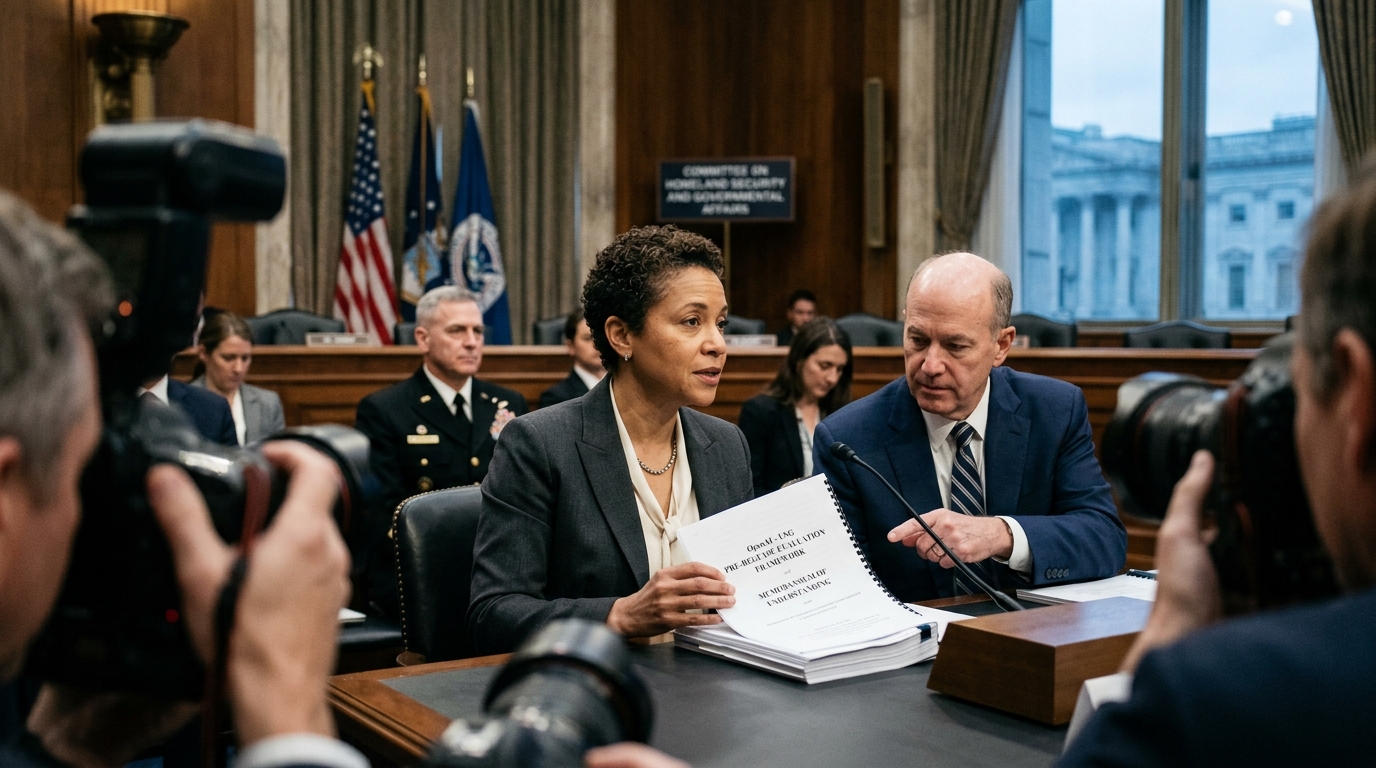
The global technological chessboard is vibrating with Washington's latest warnings, which speak of a coordinated effort by Chinese giants to appropriate American intellectual property in the field of Artificial Intelligence (AI). As we move through the first half of 2026, the confrontation between the two superpowers is no longer limited to hardware and semiconductors but extends to the very core of software intelligence: model weights and training algorithms.
The Digital Espionage Frontier
According to recent reports from US intelligence agencies and the Department of Justice, Chinese firms, with the support or acquiescence of Beijing, have developed sophisticated methods for acquiring non-public training data and AI architectures from American labs. The concern is not merely about commercial loss but also about national security implications, as AI is now considered the quintessential "dual-use technology" of the 21st century.
This rhetoric is not new, but its intensity has escalated. The US argues that the "shortest path" for China to bridge the gap with models like GPT-5 or Claude 4 is to intercept the parameters that make these systems effective. These allegations directly target Alibaba, which, through its cloud and AI division, is striving to establish itself as the dominant provider in Asia and the developing world.
Alibaba’s Strategic Vulnerability
Alibaba finds itself in a particularly precarious position. Its model, Qwen, has gained international acclaim for its performance, often outperforming Western models in specific benchmarks. However, Washington implies that part of this success may be due to "unfair methods" of data harvesting. The market impact is immediate: international investor confidence is shaken, and Western companies partnering with Alibaba Cloud are under intense scrutiny.
Analysts point out that if further sanctions are imposed, Alibaba could be excluded from critical international collaborations, limiting the reach of its models to within Chinese borders or to countries geopolitically aligned with Beijing. This creates a "digital iron curtain," where technological development will no longer be universal but fragmented into spheres of influence.
The Fragmentation of Global AI Standards
The US warning concerns not only the theft of code but also the use of American cloud infrastructure by Chinese entities. The US Department of Commerce is considering new "Know Your Customer" (KYC) regulations for cloud providers, forcing companies like Amazon and Microsoft to report when foreign customers train large language models on their platforms.
- Restricting access to advanced processors via the cloud.
- Stricter controls on open-source contributions from Chinese developers.
- Pressure on US allies to adopt similar restrictive measures.
This "decoupling" strategy threatens to slow the pace of innovation overall. Artificial Intelligence has historically relied on the open exchange of ideas. If the scientific community splits into two non-communicating camps, progress toward Artificial General Intelligence (AGI) may be delayed, while training costs will rise due to the need for redundant research.
"We are no longer in a competition of markets, but in a war of survival for information dominance," says a senior US government official.
In conclusion, the US warning signals a new phase in the technological standoff. Alibaba and other Chinese giants are called upon to prove the integrity of their methods in an environment where suspicion is the primary currency. For the global market, the message is clear: choosing an AI model is no longer a technical decision, but a deeply political act.