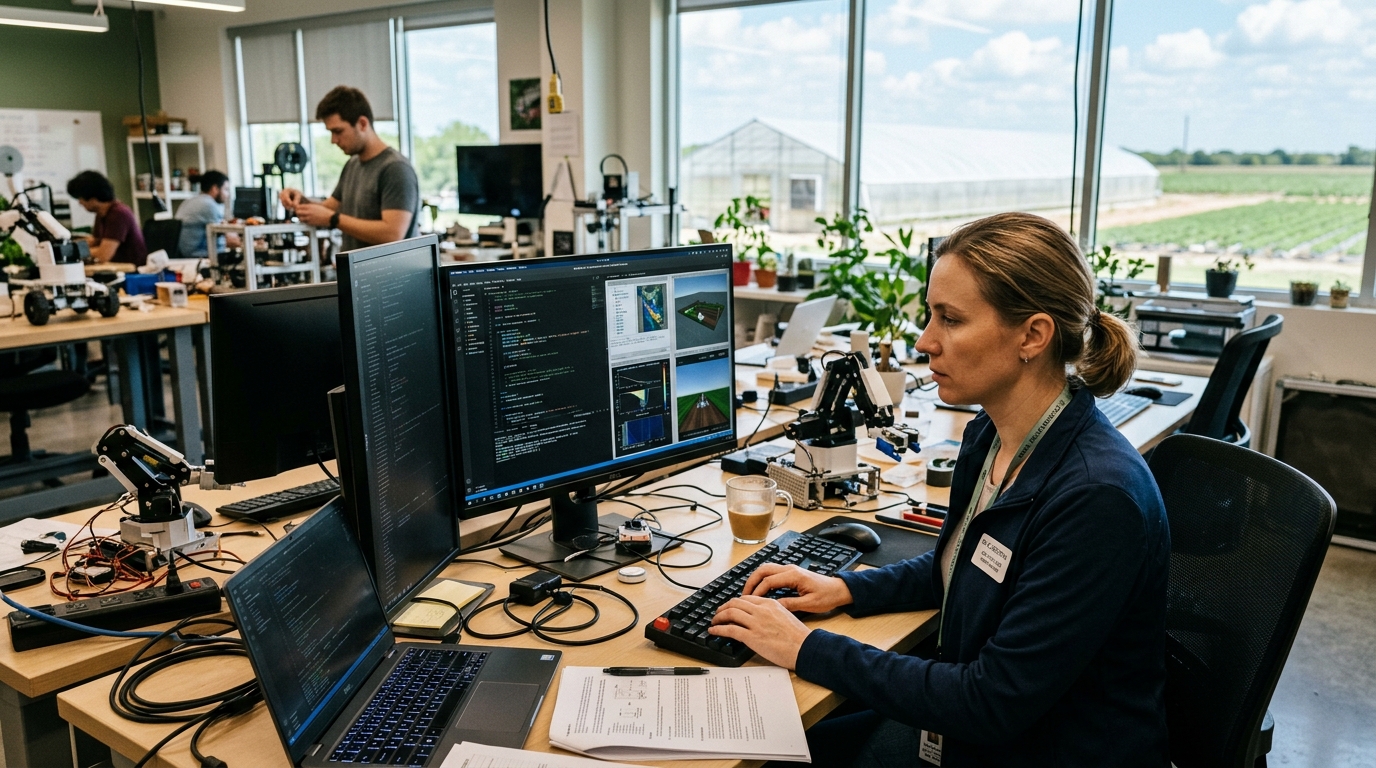
Filling out the university preference form (Michanografiko) has never been a simple bureaucratic task. In 2026, however, the challenge takes on existential proportions. This year's candidates are called to navigate an academic map reshaped by the full integration of Artificial Intelligence into the labor market and the first substantial operation of non-state universities in Greece. Choosing a department is no longer just about "where I can get in," but about "who I will be in an automating economy."
The Psychology of Choice: Moving Beyond Social Status
For decades, Greek families pushed candidates toward so-called "traditional" schools: Law, Medicine, Engineering. While these sciences remain pillars of society, their value in 2026 is judged by the graduate's ability to combine knowledge with technology. Experts advise young people not to be trapped by the social prestige of a title. A school of Digital Arts or Agriculture specializing in sustainability may today offer greater professional security than a saturated department of theoretical studies.
"The application form is a young person's first major investment decision. The capital invested is not money, but time and potential," note education analysts.
Technical Nuances: The Minimum Admission Base and Strategy
The Minimum Admission Base (EBE) remains the "filter" that determines choices. Candidates must be careful: listing departments based solely on last year's closing scores is the biggest trap. Admission cut-offs fluctuate depending on the difficulty of the exams and the preferences of fellow candidates. A sound strategy dictates classifying schools into three groups:
- Ambition Schools: Departments slightly above your score.
- Realism Schools: Departments with a high probability of admission.
- Safety Schools: Departments that act as a safety net to ensure entry into higher education.
The 2026 Revolution: AI's Impact on the Labor Market
In 2026, the discussion about Artificial Intelligence is no longer theoretical. Many professions considered "safe" in 2020 are now under pressure from automation. When completing the application, candidates should look for departments that offer horizontal skills (soft skills), critical thinking, and the ability to manage complex systems. Computer Science schools remain in high demand, but the real added value lies in interdisciplinary departments, such as Bioinformatics or Energy Economics.
The Parallel Application: An Undervalued Opportunity
One of the most significant additions in recent years is the Parallel Michanografiko for admission to Public Vocational Training Institutes (now SAΕK). Many candidates snub it, considering it "inferior." However, in the 2026 labor market, a specialized renewable energy technician or a cybersecurity analyst from a SAΕK may find work faster and with better pay than a university graduate without specialization. Completing the parallel application is not a defeat; it is an alternative strategy.
Private Universities: The New Landscape
With the implementation of the new institutional framework for non-state universities, 2026 is the year options expand. Candidates who have the financial means or are aiming for scholarships must compare the curricula of the new institutions with traditional public universities. Comparison should be based on international certifications, links with businesses, and infrastructure. Public universities in Greece remain strong, but competition is expected to raise the level of education provided overall.
Conclusions and Advice
The key to a successful application in 2026 is self-awareness. Do not let parents, teachers, or momentary trends decide for you. Study the course guides, look at the 3rd and 4th-year modules, and ask yourself if this subject excites you. Education is a marathon, not a sprint, and the application form is just the starting line.