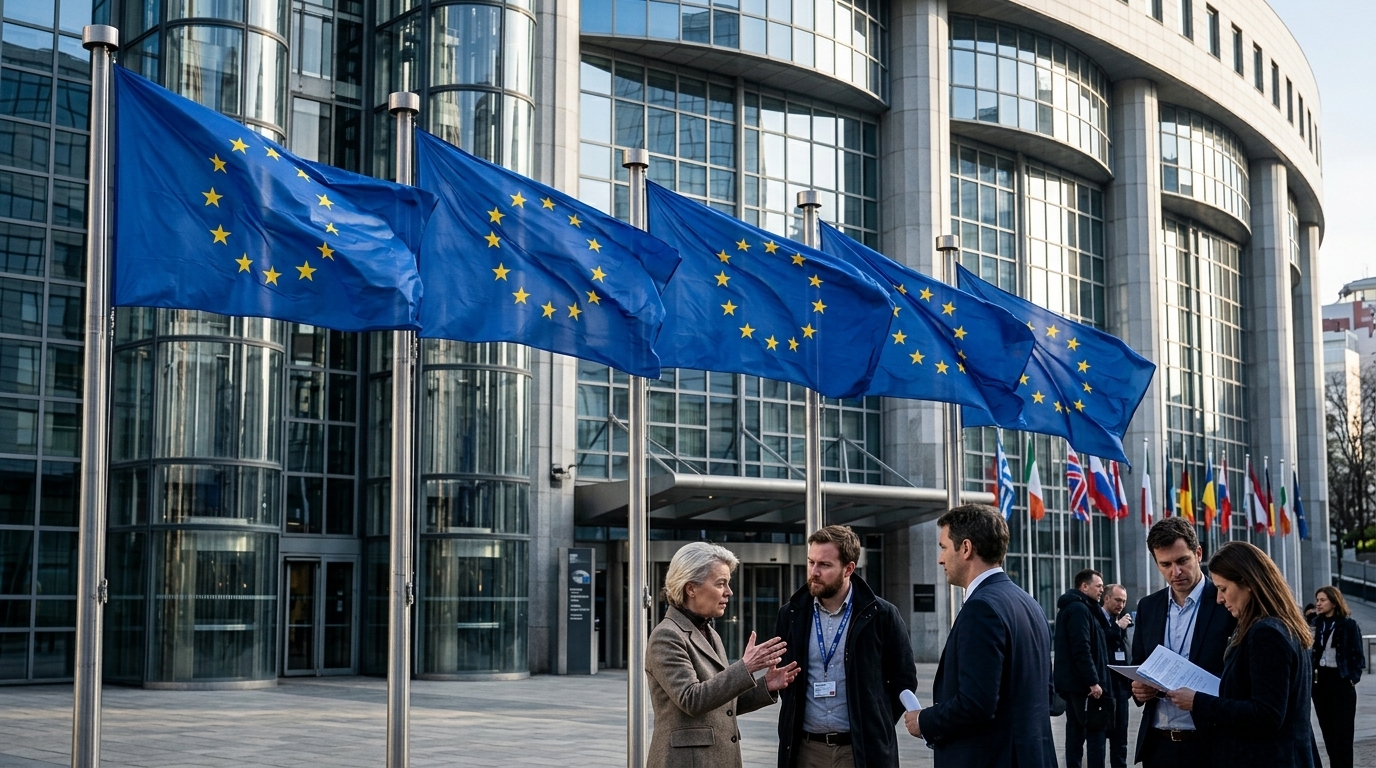
In Brussels, the atmosphere increasingly mirrors the dark days of the Eurozone crisis as the European Union enters the most critical phase of negotiations for the Multiannual Financial Framework (MFF) for the 2028-2034 period. At the heart of the confrontation lies a proposed mammoth budget of €2 trillion, against which Germany has erected a decisive wall of austerity, demanding horizontal cuts amounting to €400 billion.
This move by Berlin is not merely an accounting disagreement; it is a fundamental clash over the future of European integration. At a time when Europe is called upon to fund its digital transition, climate neutrality, and—for the first time with such intensity—its collective defense shield, German persistence on fiscal discipline is causing tremors in the foundations of the European project.
German Introversion and the 'Debt Brake'
Germany's stance is largely explained by its internal political and economic difficulties. With the German economy flirting with stagnation and the coalition government under pressure from the constitutionally mandated "Schuldenbremse" (debt brake), Berlin finds it impossible to justify to its domestic audience an increase in contributions to the EU budget. German officials argue that the EU must learn to "do more with less," focusing on repurposing existing funds rather than creating new debt or increasing national contributions.
However, this "frugal" approach clashes with the harsh reality of global competition. While the US and China pour trillions into subsidies for Artificial Intelligence and clean technologies, the proposal to cut €400 billion could leave Europe technologically crippled. The "Digital Europe" program and the Innovation Fund are on the front lines of potential cuts, causing deep concern among industrial circles.
Defense and Cohesion: The Two Poles of Conflict
One of the most thorny issues is the financing of European defense. Following the Russian invasion of Ukraine, the need for a robust European Defense Fund is universally accepted in rhetoric, but not in practice. Germany suggests that defense spending be covered by cuts to Cohesion Policy and the Common Agricultural Policy (CAP)—the two traditional pillars that consume the bulk of the budget.
This proposal meets fierce resistance from Southern and Eastern European countries, including Greece. For Athens, Cohesion Policy is not just a transfer of funds but the primary tool for converging its infrastructure and economy with the European average. A drastic reduction in these funds would mean fewer infrastructure projects, delays in the energy upgrade of buildings, and limited resources to combat the climate crisis, which disproportionately affects the Mediterranean.
The Dilemma of 'Own Resources'
The European Commission, for its part, is trying to balance the situation by proposing new "own resources"—taxes collected directly by the EU. Proposals for a financial transaction tax, a tax on corporate profits, or revenues from the Emissions Trading System (ETS) are on the table. Germany and the "Frugals" (Netherlands, Austria, Denmark, Sweden) remain skeptical, fearing this will lead to a "fiscal union" through the back door, without the necessary democratic oversight.
In conclusion, the battle for the 2028-2034 budget is not just about numbers. It is about whether Europe will choose to remain a global player with a strong industrial base and social cohesion, or if it will slide into a state of permanent austerity, missing the train of the technological revolution. Negotiations are expected to last at least two years, with the final outcome determining the survival of the European vision in an increasingly hostile world.