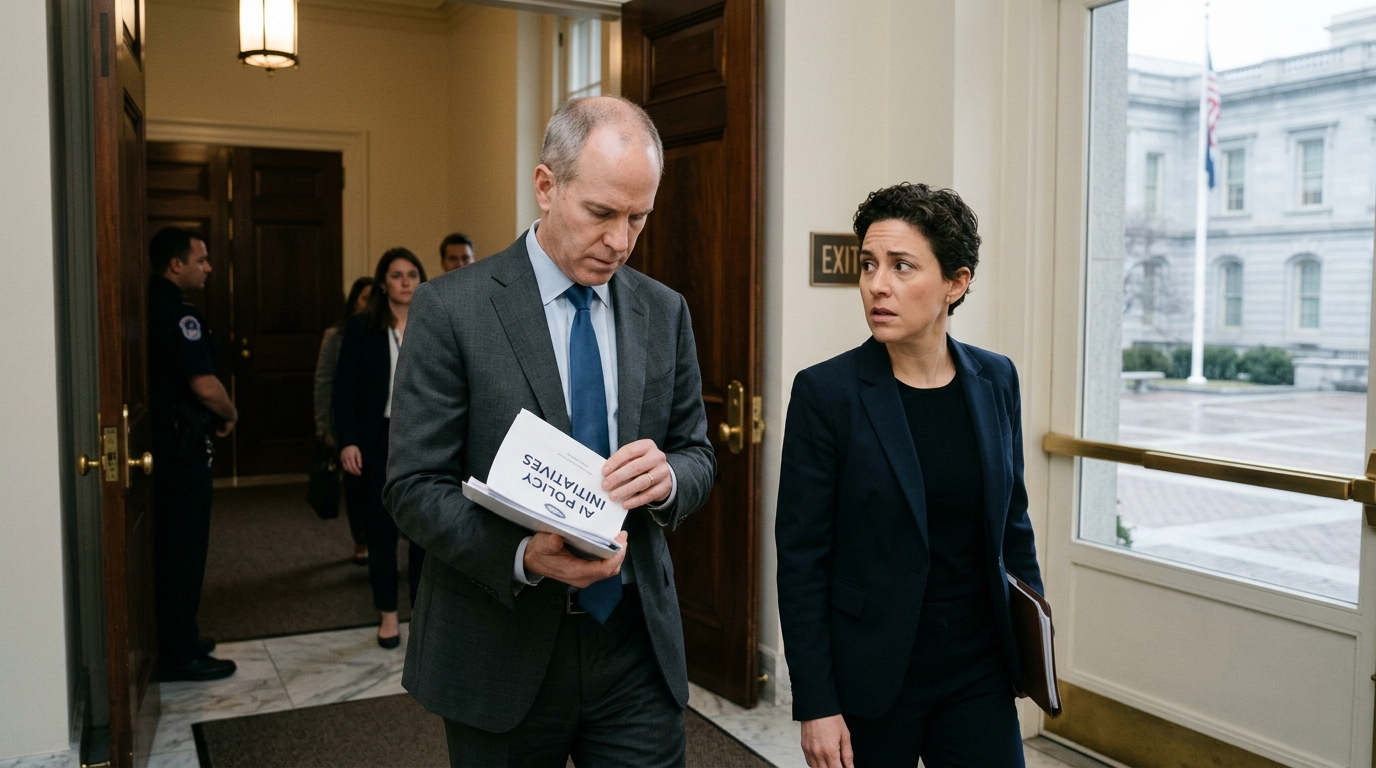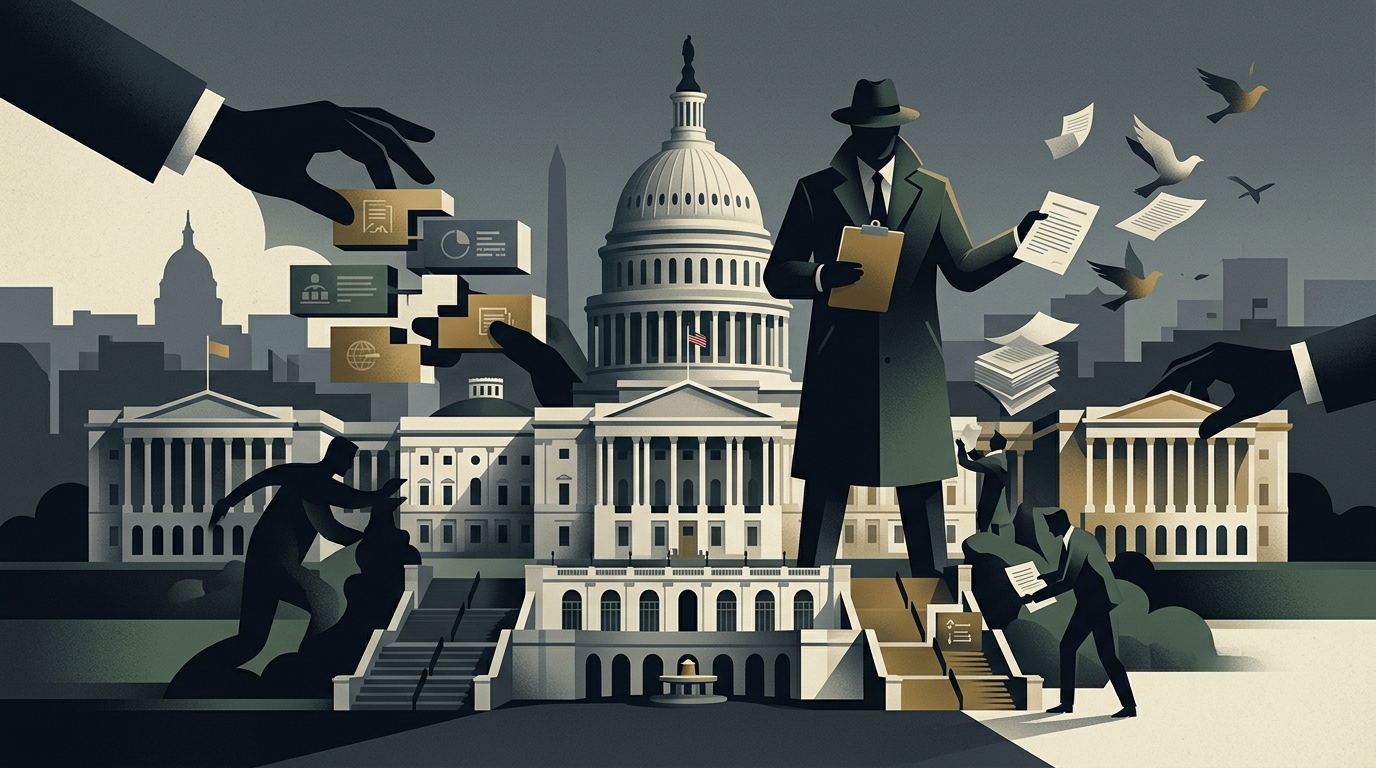
Donald Trump’s announced intentions for a fundamental restructuring of the U.S. Intelligence Community (IC) are not merely a campaign promise, but a strategic choice that threatens to alter the landscape of global security. At the heart of this plan lies Trump’s conviction that intelligence agencies—including the CIA, FBI, and NSA—have been "weaponized" against him by an anonymous "Deep State." The proposed solution? Mass layoffs, the abolition of civil service protections for thousands of employees, and an aggressive shift toward automating intelligence analysis.
The 'Schedule F' Mechanism and the Politicization of Management
The primary tool for implementing this plan is the reinstatement of the "Schedule F" executive order. This is an administrative classification that allows the President to strip civil service protections from thousands of career employees holding positions of a "confidential, policy-determining, or policy-advocating" nature. By applying this measure, employees traditionally viewed as non-partisan technocrats could be fired as easily as a political consultant.
According to analysts, the goal is not just cost reduction but ensuring absolute loyalty to the White House. The intelligence community, comprised of 18 different agencies, relies on the objective delivery of data to decision-makers. The threat of dismissal could lead to a culture of "self-censorship," where analysts fear presenting information that conflicts with the administration’s political objectives. This phenomenon, known as the "politicization of intelligence," has historically led to catastrophic failures, such as the case of weapons of mass destruction in Iraq.
Artificial Intelligence as a Trojan Horse for Layoffs
A particularly intriguing aspect of the Trump plan is the invocation of technological progress as a justification for workforce reduction. The new administration’s rhetoric suggests that thousands of analysts who examine satellite imagery, intercepts, and open sources can now be replaced by advanced Artificial Intelligence models. While it is true that AI can process vast amounts of data (Big Data) much faster than humans, the intelligence community warns that "human intuition" (HUMINT) and the ability to understand cultural context remain irreplaceable.
The use of AI in espionage is not new, but the intent to use it as a tool for mass cuts is unprecedented. Trump supporters argue that a "leaner and more technologically advanced" agency will be more effective. However, critics fear that removing experienced personnel with decades of knowledge will create a security vacuum that no algorithmic processing can fill. Furthermore, reliance on AI carries risks of "hallucinations" and vulnerability to hostile cyberattacks.
Impact on Global Security and Alliances
The United States leads the "Five Eyes" alliance (US, UK, Canada, Australia, New Zealand), which is built on absolute trust and the exchange of sensitive information. A mass purge in U.S. agencies could shatter this trust. If allies perceive that American intelligence agencies have been transformed into instruments of political propaganda, they will become far more hesitant to share their own secrets.
At the same time, adversaries such as China and Russia are closely monitoring these developments. A period of internal turmoil and administrative paralysis in Washington provides a golden opportunity for foreign intelligence services to penetrate American networks or advance their agendas on geopolitical fronts like Ukraine and Taiwan. The weakening of the FBI, in particular, which is responsible for domestic counterintelligence, could leave the country exposed to foreign interference.
"The intelligence community is not a private company that you can restructure overnight without consequences. Every experienced officer fired is an investment of millions of dollars and decades lost to the benefit of our enemies," says a former senior CIA official.
In conclusion, Trump’s plan for the intelligence services goes beyond simple bureaucratic reform. It is an attempt to redefine the relationship between executive power and the security state. If successful, Trump will have created an intelligence apparatus that is much more compliant, but potentially much less reliable. In a world becoming increasingly unstable, sacrificing accuracy on the altar of loyalty may prove to be the most dangerous experiment in modern American history.