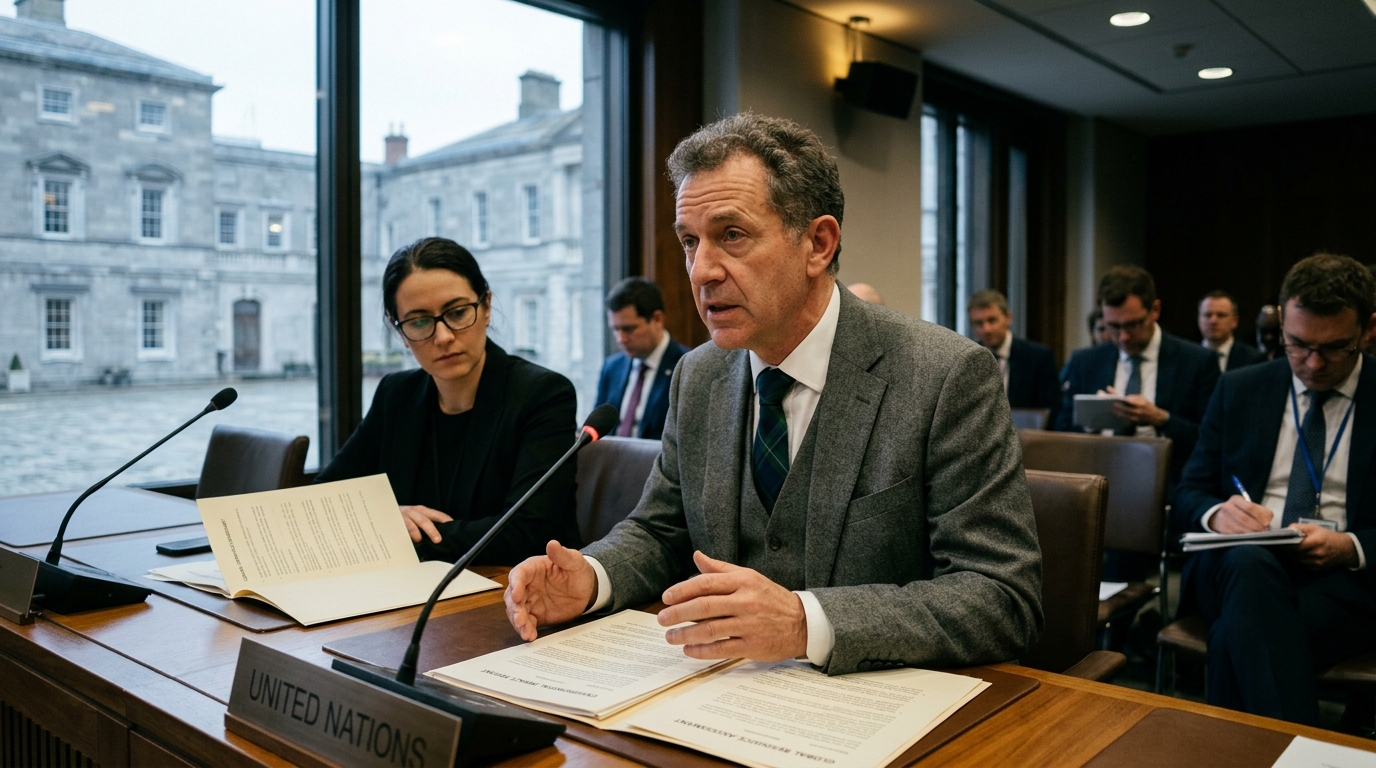
The recent Oval Office meeting between President Donald Trump and the crew of the Artemis II mission—the first crewed mission to orbit the Moon in over half a century—should have been a moment of profound national pride and scientific gravitas. Instead, the headlines were dominated by the President’s idiosyncratic rhetoric, as he chose to focus on physical traits and geopolitical tangents, causing visible awkwardness among the assembled officials and astronauts.
The "Beautiful Ears" Comment and the Semiotics of Power
During the briefing, Trump turned to NASA Administrator Bill Nelson, a veteran politician and former astronaut, to publicly comment on his "beautiful ears." While such a remark might seem like a mere eccentricity, in political analysis, it reflects a deeper trend: the deconstruction of institutional seriousness in favor of a personalized, almost televisual approach to power. Nelson, who leads an agency with a multi-billion dollar budget and critical strategic importance, found himself treated not as the architect of the lunar return, but as an object of aesthetic appraisal.
The awkwardness in the room was palpable. The Artemis II astronauts—who are training for one of the most dangerous and significant missions in human history—watched as their Commander-in-Chief spent time on superficial compliments. This move is not isolated; it is part of a broader Trumpian strategy to dominate a space through forced intimacy, often at the expense of established protocol and decorum.
From the Moon to Ukraine and UFOs
The meeting was far from confined to space exploration. In his signature style, President Trump pivoted the NASA briefing into a platform for his broader foreign policy agenda. He spoke at length about the situations in Ukraine and Iran, attempting to link U.S. technological supremacy in space with the need for "tough" diplomacy on Earth. While these connections exist geopolitically, the manner in which they were expressed tended to overshadow the scientific mission at hand.
Of particular note was his fascination with UFOs (or UAPs - Unidentified Aerial Phenomena). Trump, aware of the populist appeal of such topics, questioned the astronauts on whether they had "seen anything strange out there." This focus on the mysterious and the unknown often serves as a populist distraction from the actual, complex hurdles of space flight, such as the mounting costs of the SLS rocket and the technical delays surrounding SpaceX’s Human Landing System.
Jared Isaacman and the Privatization of Vision
Also present was billionaire Jared Isaacman, the commander of the Polaris Dawn mission and a key ally of Elon Musk. Trump’s high praise for Isaacman highlighted the administration's pivot toward the private sector. This signals a clear shift: NASA is no longer the sole protagonist in American spaceflight but a partner in an ecosystem where billionaires often hold the steering wheel.
Isaacman’s presence alongside NASA astronauts symbolizes the new world order in orbit. The Trump administration appears to favor a model where the state provides the prestige and legitimacy, while private entities provide the innovation and capital. However, this reliance raises questions about who ultimately sets the agenda: the scientific community or corporate interests?
Conclusions and Implications
The return to the Moon via the Artemis program is an endeavor that transcends presidential terms. It requires stability, international cooperation, and a deep respect for the scientific method. When leadership chooses to focus on "beautiful ears" and UFO conspiracy theories, it risks undermining the perceived seriousness of the project in the eyes of international partners like the ESA and JAXA.
Space remains the "final frontier," but to conquer it, the rhetoric on Earth must be worthy of our ambitions in the stars. The awkwardness at the White House may serve as a warning that U.S. space policy is entering a phase where spectacle outweighs substance, with unpredictable consequences for the global scientific community.