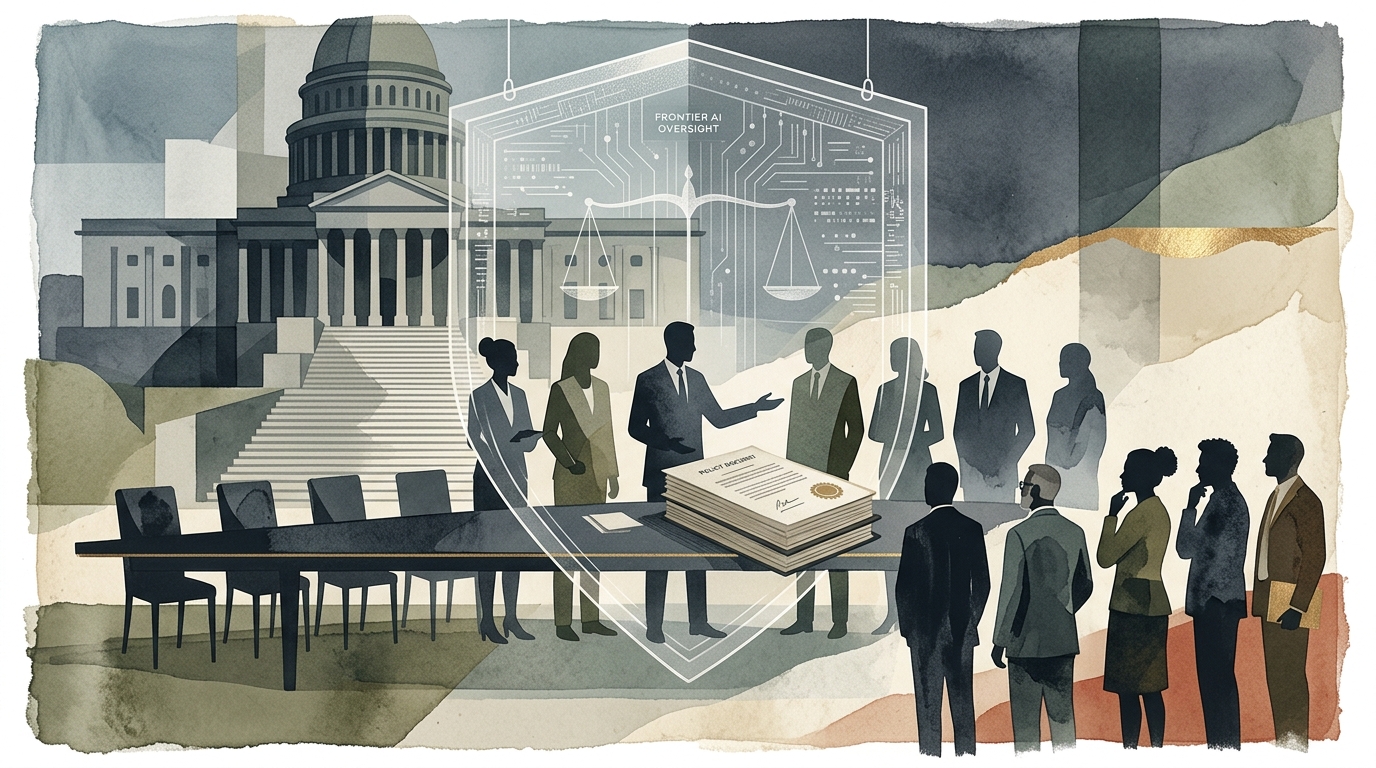
As we navigate the summer of 2026, the global technological landscape stands at a critical juncture. Washington, after years of deliberation and political maneuvering, has finally unveiled the "Great American Artificial Intelligence Act" (GAAIA). The Cato Institute, one of the world's most influential think tanks, recently released a comprehensive Primer deconstructing the implications of this landmark legislation. This analysis is not merely a domestic concern; it is a move that redraws the rules of the game for the global economy and geopolitical balance.
The Shift from Laissez-Faire to Federal Oversight
For nearly a decade, AI development in the United States followed a model of "permissionless innovation." Companies were free to experiment, develop, and deploy models without prior government approval. However, the rapid ascent of "frontier models" and escalating national security concerns necessitated a unified federal framework. The GAAIA aims to replace a fragmented patchwork of state-level regulations that had created significant compliance burdens and legal uncertainty.
According to the Cato Institute's Primer, the primary risk inherent in this shift is "regulatory capture." Large tech incumbents, possessing the vast resources required to navigate complex compliance landscapes, may leverage these regulations as a barrier to entry for startups. The analysis suggests that while safety is a legitimate concern, over-regulation could drive innovation to more permissive jurisdictions, potentially ceding the technological lead to competitors in Southeast Asia or even a more strategically flexible Europe.
The Three Pillars of the GAAIA
The Act is built upon three central pillars designed to balance protection with progress:
- Risk-Based Classification: Diverging from the EU's approach, the US framework focuses less on broadly "prohibited practices" and more on "high-impact applications," such as critical infrastructure management, healthcare diagnostics, and autonomous defense systems.
- Transparency and Accountability: Developers of large-scale models are now mandated to provide detailed reports on training datasets and the results of rigorous safety evaluations, commonly known as "red-teaming."
- National Competitiveness: The legislation includes significant provisions for federal R&D funding and academic access to high-performance computing, ensuring that the US maintains its edge against systemic rivals like China.
"Legislation should not be a brake on creativity, but rather the safety net that allows society to trust the unknown," the Cato report notes, highlighting the delicate balance required.
Cato’s Critique: The Specter of Bureaucratization
The Cato Institute remains staunchly skeptical of several key components. Their primary objection lies in the creation of a new federal agency dedicated to AI oversight. They argue that technology evolves at such a breakneck pace that any centralized bureaucratic structure is doomed to be perpetually behind, eventually imposing obsolete rules on novel breakthroughs. Furthermore, the Primer warns that the GAAIA could inadvertently foster a form of "digital protectionism," potentially isolating the US from international open-source collaboration due to fears of technology leakage.
A significant portion of the analysis is dedicated to the issue of liability. Who is responsible when an AI system causes harm? While the Act attempts to establish a framework of "proportional liability," Cato warns that vague definitions could trigger a deluge of litigation, ultimately benefiting only the legal departments of multinational corporations while stifling the risk-taking necessary for true innovation.
Geopolitical Implications and the Path Ahead
On the international stage, the GAAIA is Washington's definitive answer to the European Union's AI Act. While Europe prioritized the protection of individual rights and privacy, the US model appears focused on maintaining economic dominance and military superiority. The Cato Institute's analysis suggests that the success of the Act will be measured by its ability to mitigate existential risks without extinguishing the entrepreneurial spirit of Silicon Valley.
In conclusion, the Great American Artificial Intelligence Act is a bold experiment in technocratic governance. If successful, it will serve as the gold standard for 21st-century technology regulation. If it falters, it risks turning the most promising technology of our era into a hyper-regulated utility, devoid of the spark of innovation. The next two years will be instrumental as regulatory agencies begin the rulemaking process and the market adjusts to this new legislative reality.