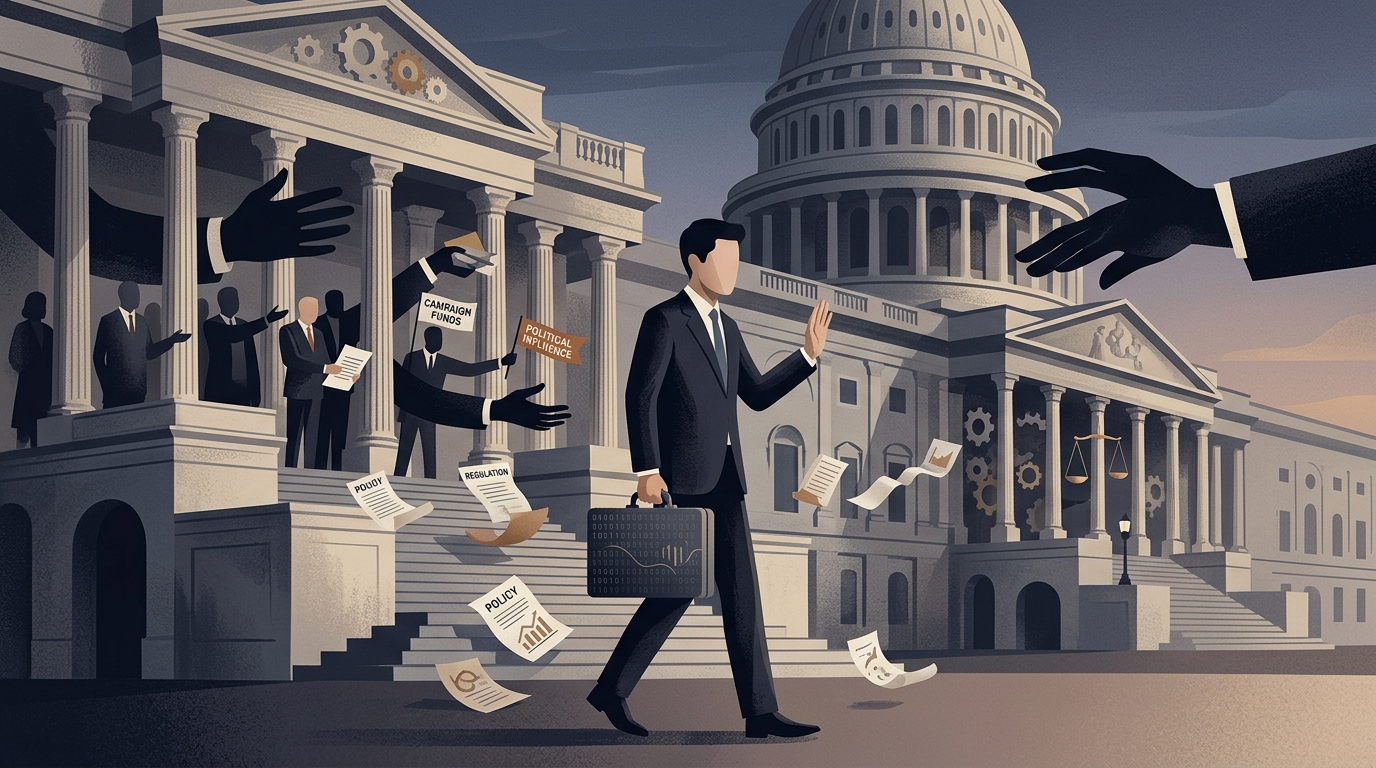
The history of financial markets is punctuated by cycles of euphoria followed by periods of intense litigation. Today, as we navigate 2026, Artificial Intelligence (AI) sits at the epicenter of this dynamic. A recent report from Bloomberg Law highlights an inevitable reality: AI-related securities suits are set to surge as corporate promises collide with real-world performance. What began as a technological revolution is rapidly transforming into a minefield of legal liabilities for boards of directors worldwide.
The Trap of 'AI Washing' and Investor Deception
The term 'AI washing'—analogous to greenwashing—describes the practice of companies exaggerating or misrepresenting their AI capabilities to bolster investor interest. In a market where the mere mention of 'AI' in an earnings call can trigger a stock price rally, the temptation to polish the truth is immense. However, the U.S. Securities and Exchange Commission (SEC) and international regulators have begun to tighten the noose. Investors who purchased shares based on promises of 'revolutionary algorithms' that turned out to be simple automation scripts are now seeking damages through class action lawsuits.
The legal basis for these suits typically rests on violations of disclosure rules and the provision of misleading information. When a company claims its AI will slash operating costs by 40% and the actual result is negligible, that discrepancy is deemed 'material' to investment decisions. Historically, we saw similar patterns with blockchain technology and the dot-com bubble. The difference today is the sheer speed at which AI is being integrated across every sector of the economy, from heavy industry to healthcare, broadening the scope of potential legal conflicts.
Lessons from History and the Hype Cycle
This is not the first time Wall Street and global markets have been swept away by a technological promise. In the late 1990s, any company that added '.com' to its name saw its valuation soar. When the bubble burst, a wave of litigation followed that lasted for years. The AI case presents striking similarities but with a crucial distinction: AI is a general-purpose technology with immediate applications, making its failures more visible and its economic impacts more direct. Plaintiff attorneys are now focusing not just on what was said, but on what was omitted regarding technology risks, such as algorithmic bias or copyright infringement during model training.
"The market forgives a mistake, but never a deception. Artificial Intelligence is not a legal sanctuary for baseless projections," notes a senior capital markets legal consultant.
Regulatory Response and the Global Landscape
While the U.S. leads in litigation due to its class-action system, Europe is moving through rigorous legislation like the AI Act. This creates a two-front battle for multinational corporations: on one hand, the need to comply with strict transparency rules in the EU, and on the other, the fear of litigation in the US. Companies are now required to maintain detailed records of their AI development processes to defend their statements in court. A lack of transparency is no longer just an ethical issue; it is a major financial threat that can lead to billions in fines and the collapse of shareholder value.
Strategic Implications for Corporate Governance
To navigate the coming storm of securities litigation, businesses must adopt a strategy of 'radical honesty.' This means that statements to investors must be accompanied by clear warnings about the risks and limitations of the technology. Boards of directors must be educated to understand exactly what they are purchasing or developing, rather than relying on marketing slogans. The era of 'move fast and break things' appears to be ending, as the legal consequences of breaking investor trust are now too expensive to ignore. Sustainable growth in the AI era will be judged not by who promises the most, but by who can prove the value of their systems with transparency and legal consistency.