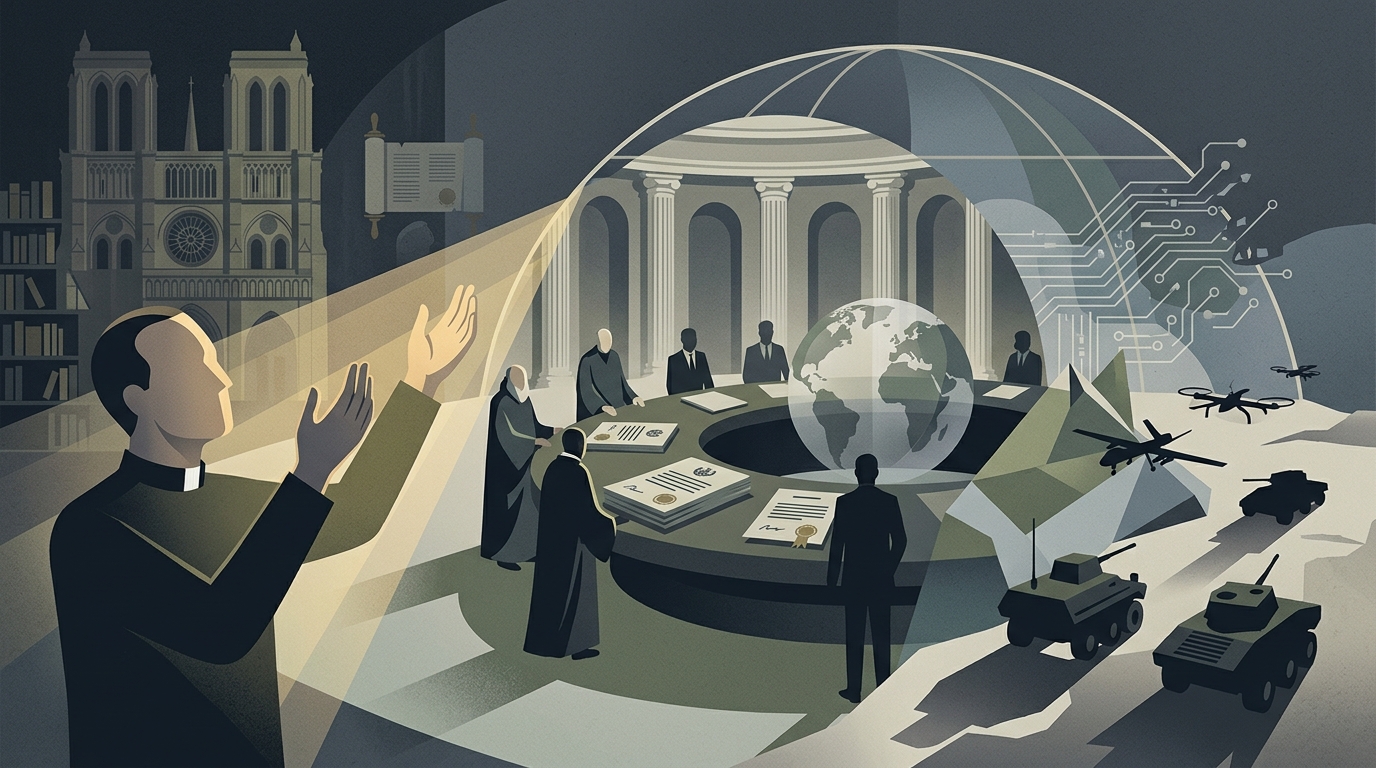
In an era where algorithms are reshaping every facet of human existence, Pope Francis’s intervention regarding the use of Artificial Intelligence (AI) in warfare is not merely a religious appeal, but a profound political and ethical warning. A clear message emanates from the Vatican: humanity stands on the brink of a new abyss, where the decision over life and death may be delegated to cold lines of code. The call for strict regulations and restrictions on AI for military purposes comes at a critical juncture, as global powers accelerate the integration of autonomous systems into their arsenals.
The Loss of Human Agency on the Battlefield
The Pontiff's central argument focuses on the concept of 'moral responsibility.' According to the Vatican’s position, war, however tragic, remains a human activity governed by rules, ethical dilemmas, and the possibility of mercy. When a weapons system gains the ability to select and eliminate targets without direct human intervention—so-called Lethal Autonomous Weapons Systems (LAWS)—the moral chain is broken. Who bears responsibility for a war crime committed by an algorithm? The programmer, the manufacturer, or the commander who pressed the activation button?
The Pope’s concern is not limited to technical failure but extends to the very nature of algorithmic decision-making. Machines lack empathy; they cannot understand the context of a surrender or the suffering of a civilian population beyond the data they process. The 'dehumanization' of warfare through AI risks turning conflicts into a process of statistical optimization, where human life is reduced to a mere variable in an equation model.
The Geopolitical Chessboard and the Arms Race
Despite the calls from the Vatican and numerous Non-Governmental Organizations, the reality on the international stage is far more complex. The United States, China, and Russia are investing billions of dollars in developing autonomous drones, submarines, and robotic ground systems. The defense industry’s argument is that AI can reduce casualties among their own soldiers and offer greater precision in strikes, thereby reducing collateral damage.
However, history has shown that every new technological 'solution' in warfare tends to lower the threshold for entering a conflict. If a leader knows they can wage war without risking the lives of their citizens, diplomatic solutions may be more easily cast aside. Furthermore, there is the risk of 'algorithmic escalation': two opposing AI systems interacting at millisecond speeds could lead to a generalized conflict before humans even realize what has happened.
The Need for a Binding International Framework
The Vatican proposes the creation of a binding international treaty that would prohibit full autonomy in weaponry. The key concept here is 'meaningful human control.' Every decision involving the use of force must remain in the hands of a human being, who will be accountable to international law and their own conscience.
- Transparency: Algorithms used in military systems must be auditable and not function as 'black boxes.'
- Accountability: Establishing clear legal frameworks for assigning blame in cases of malfunction or crimes.
- Ethics by Design: Integrating ethical principles into the very design phase of these systems.
In conclusion, Pope Francis’s warning invites us to reflect on what kind of civilization we wish to build. If we allow technology to bypass our ethical foundations in the name of military superiority, we risk losing the very essence of our humanity. Controlling Artificial Intelligence in warfare is not just a technical issue; it is the ultimate test of our wisdom as a species in the 21st century.