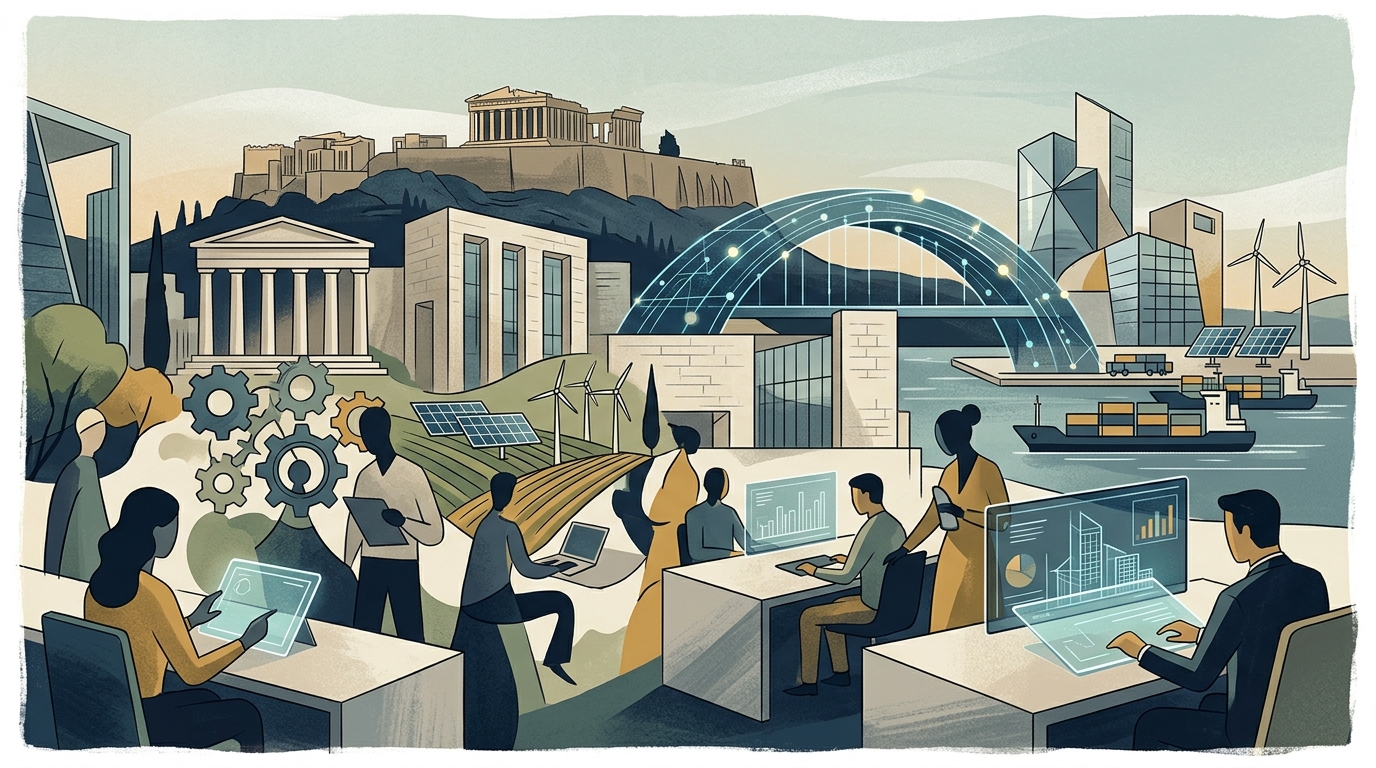
In an era where technological evolution often outpaces society's capacity to absorb it, the Greek Ministry of Digital Governance is making a move of strategic importance. The release of the free guide titled "Artificial Intelligence: A Practical Guide for Citizens" is not merely an informational initiative but a concerted effort to bridge the digital divide that threatens to split society into the "tech-savvy" and the "excluded."
The Democratization of Knowledge in Digital Greece
This initiative arrives at a critical juncture for Greece. As the country strives to establish itself as a digital hub in Southeast Europe, the need for a population literate in emerging technologies has become imperative. The guide, available digitally, seeks to demystify Artificial Intelligence (AI), stripping away the veil of mystery and fear that often surrounds it. Eschewing dense technical jargon, the text uses clear, accessible language to explain how Large Language Models (LLMs) and Generative AI are already reshaping our lives.
The guide’s content ranges from the basic principles of how algorithms function to practical applications in daily work, education, and creativity. A significant emphasis is placed on "prompt engineering"—the art of giving the right instructions to machines—a skill that is emerging as a cornerstone for the future labor market. The government appears to recognize that AI is not just another IT tool but a fundamental paradigm shift in how we interact with information.
From Theory to Practice: What’s Inside the Guide
The guide is structured around four central pillars. The first concerns understanding the technology: what AI is, how it is trained, and why today's models differ so radically from those of the past. The second pillar focuses on daily life, demonstrating how AI can assist in drafting emails, planning trips, or managing personal schedules. The third pillar analyzes the impact on the workplace, preparing citizens for human-machine collaboration, while the fourth—and perhaps most vital—tackles ethical implications.
"Artificial Intelligence is not the future; it is the present. We have a duty to provide citizens with the tools so they are not mere observers, but active participants in this change," the initiative’s presentation notes.
The mention of risks, such as deepfakes, misinformation, and algorithmic bias, signals a willingness for honest dialogue. The Ministry does not present AI as a panacea but as a powerful tool requiring critical thinking and ethical vigilance. The section on data security and privacy is particularly timely, given the stringent European regulations (AI Act) that are gradually coming into force.
Strategic Importance and the Future of Education
This move is part of the broader National Strategy for Artificial Intelligence. Greece, having already made significant strides in digitizing the state through gov.gr, is now called to invest in human capital. Digital illiteracy is no longer just about using a computer or the internet; it is about the ability to understand and utilize intelligent systems. Educating citizens is the only safeguard against growing inequality.
However, the challenge remains immense. A guide in PDF format or a website is only the beginning. The question is how this knowledge will reach older generations or social groups without easy access to technology. Collaboration with local government, Citizen Service Centers (KEP), and educational institutions will be decisive for the project's success. Artificial Intelligence can become the great equalizer, provided that access to knowledge is universal and free, exactly as this initiative promises.
Conclusions and Challenges
In summary, the Ministry of Digital Governance’s guide is a step in the right direction. It recognizes that technology without education is hazardous and that the state has a responsibility to guide citizens through uncharted waters. The success of the initiative will be judged by its longevity and the level of engagement it fosters with society. In a rapidly changing world, knowledge is the only constant, and Greece seems to understand this, investing in information as a means of citizen empowerment.